

Take advantage of our half-price sale on some classic, award-winning and bestselling Spinifex Press books written by local and international authors. We have a great selection of non fiction, fiction and poetry books for you to choose from. Website sales only. Search the full online catalogue for more books!
NON-FICTION

New edition
Under the guise of liberatory science, the biomedical establishment is using women's bodies as the biological laboratories of the future. In Women as Wombs leading feminist ethicist Janice Raymond's scathing analysis of high-tech biomedical reproductive techniques contributes groundbreaking insights into the raging debate over reproductive technology and its ethical, legal, and political implications. Raymond asserts that far from being liberatory issues of ‘choice’, these techniques – including in vitro fertilization, surrogacy, and sex selection – are a threat to women’s basic human rights.
A tough brilliant mind at dance, a mind propelled by a passion for justice.
—Gena Corea, author of The Mother Machine
2019 | ISBN 9781925581874 | Paperback | 216 x 140 mm | 296 pages

The Great Climate Robbery provides valuable information about how the industrial food system causes climate change, how food and agribusiness corporations are getting away with it, and what can be done to turn things around. The various chapters in this collection document the ill effects of this industrial food system such as the growing hunger, the destruction of rural peoples’ livelihoods, the loss of biodiversity and cultures, the exploitation of labour and a range of health calamities.
This timely anthology by the international NGO Grain shows how food sovereignty is critical to any lasting and just solution to climate change. With governments, particularly those from the main polluting countries, abdicating their responsibility to deal with the problem, it has become ever more critical for people to take action into their own hands. Changing the food system is perhaps the most important and effective place to start.
2016 | ISBN 9781742199917 | Paperback | 246 pp

Mélissa Blais, Translated by Phyllis Aronoff and Howard Scott
On December 6, 1989, a man walked into the engineering school École Polytechnique de Montréal, armed with a semi-automatic rifle. Declaring “I hate feminists,” Marc Lépine killed fourteen young women.
Originally published in French in 2009, “I Hate Feminists!” examines the collective memory that emerged in the aftermath of the massacre as Canadians struggled to make sense of this tragic event and to understand the motivations of the killer.
Analyzing stories and editorials in Montréal and Toronto newspapers, texts distributed within anti-feminist “masculinist” networks, discourses about memorials in major Canadian cities and the film Polytechnique, which was released on the twentieth anniversary of the massacre in 2009, Mélissa Blais argues that feminist analyses and the killer’s own statements have been set aside in favour of interpretations that absolve the killer of responsibility or even shift the blame onto women and feminists. “He was mad” gets more media approval than “this is an act of male violence against women as a social group.”
In the end, Blais contends that the collective memory that has been constructed through various media has functioned not as a denunciation of violence against women but as a catalyst for anti-feminist discourse.
2014 | 9781742199443 | Paperback | 136 pages

In a globalised world, megacorp publishing is all about numbers, about sameness, about following a formula based on the latest megasuccess. Each book is expected to pay for itself and all the externalities of publishing such as offices and CEO salaries. It means that books which take off slowly but have long lives, the books that change social norms, are less likely to be published.
Independent publishers are seeking another way. A way of engagement with society and methods that reflect something important about the locale or the niche they inhabit. Independent and small publishers are like rare plants that pop up among the larger growth but add something different, perhaps they feed the soil, bring colour or scent into the world.
Bibliodiversity is a term invented by Chilean publishers in the 1990s as a way of envisioning a different kind of publishing. In this manifesto, Susan Hawthorne provides a scathing critique of the global publishing industry set against a visionary proposal for organic publishing. She looks at free speech and fair speech, at the environmental costs of mainstream publishing and at the promises and challenges of the move to digital.
2014 | 9781742199306 | Paperback | 104 pages
THIS BOOK IS PART OF THE SPINIFEX SHORTS COMPLETE COLLECTION
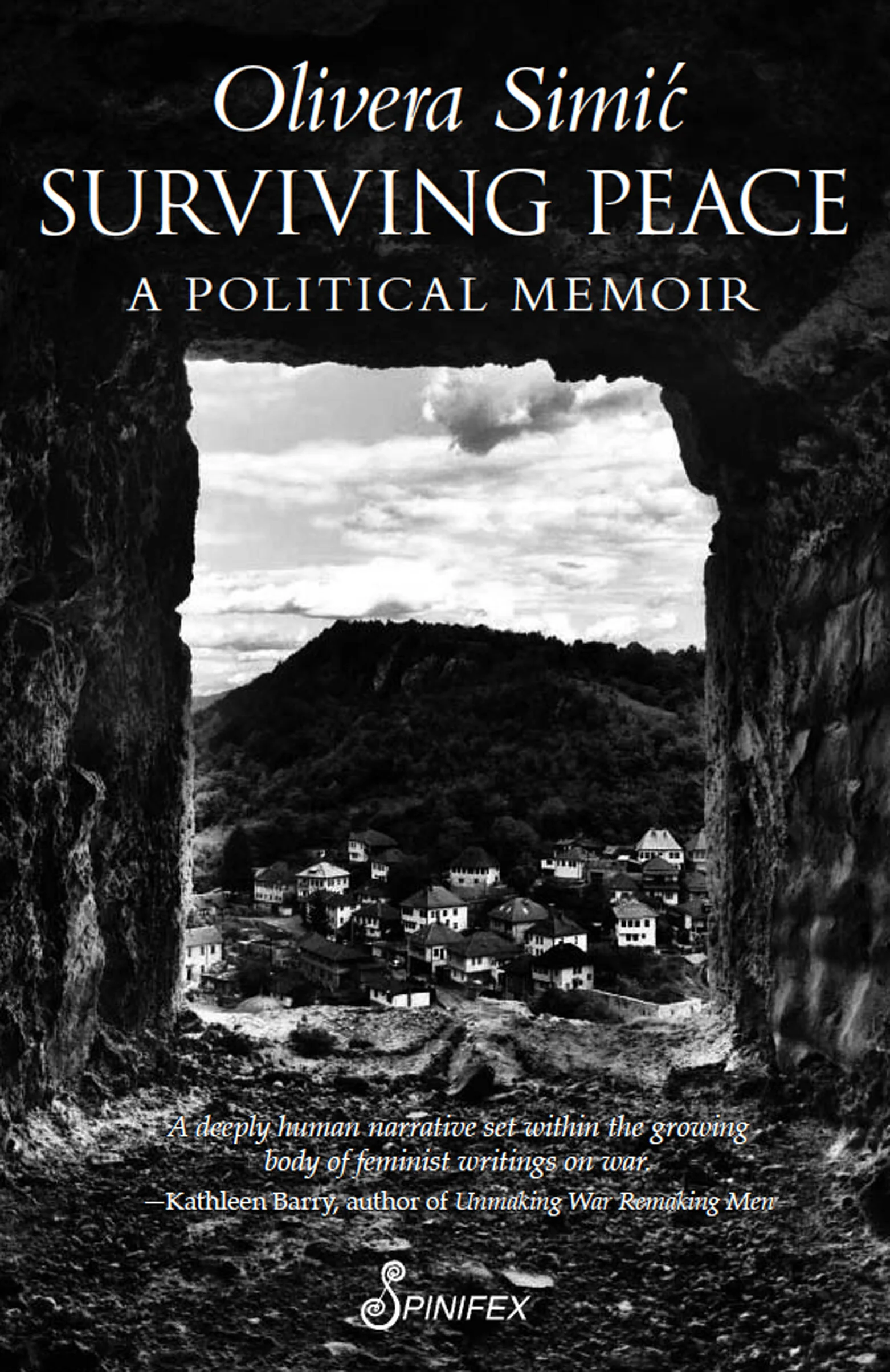
How do you pick up the pieces after your life is shattered by war? How do you continue living when your country no longer exists, your language is no longer spoken and your family is divided, not just by distance but by politics too? What happens when your old identity is taken from you and a new one imposed, one that you never asked for?
When Olivera Simić was seven years old, President Tito died. Old divisions re-emerged as bitter ethnic conflicts unfolded. War arrived in 1992. People were no longer Yugoslavs but Serbs, Croatians, Bosniaks. Old friends became enemies overnight.
In this heartfelt account of life before, during and after the Bosnian War and the NATO bombing of Serbia in 1999, Simić talks of her transition from peace to war and back again. She shows how she found the determination to build a new life when the old one was irretrievable.
Traversing four continents, she takes us on her winding journey from Bosnia to Australia, revealing the complex challenges of adjusting to life in a new country and exposing the harsh reality of the post-traumatic stress that accompanies her.
Simić strives to find the balance between wanting to move on to a different future and a pressing need to look back at a past that won’t go away. The pull of her homeland remains irresistible despite it being ravaged by destruction, and her exposure of the war crimes that took place there means she is labelled both a ‘traitor’ and a ‘truth seeker’.
Surviving Peace is one woman’s story of courage that echoes the stories of millions of people whose lives have been displaced by war. As we still face a world rife with armed conflict, this book is a timely reminder that once the last gunshot has been fired and the last bomb dropped, the new challenge of surviving peace begins.
2014 | 9781742198941 | Paperback | 188 pp

Misogyny Re-loaded is an explosive manifesto against the resurgent sexual fascism of the new world order. By exposing the casual acceptance of snuff pornography in gore culture through to the framing of rape as slapstick, Abigail Bray links the celebration of sexual sadism to the rise of an authoritarian culture of militarised violence. Arguing that a meaningful collective resistance has been scattered by the mass destruction of genuine social and economic security for ordinary women, Misogyny Re-loaded presents a scathing critique of the political drool of mainstream billionaire-friendly feminism.
Drawing on a wide range of resources from popular culture, literature, economics, psychiatry, psychology, philosophy and environmental science, this book offers a warning about the growing social and environmental threat of an out-of-control military industrial complex.
2013 | 9781876756901 | Paperback | 215 x 138 mm | 161 pp

A generation ago, most people did not know how ubiquitous and grave human trafficking was. Now many people agree that the $35.7 billion business is an appalling violation of human rights. But when confronted with prostitution, many people experience an odd disconnect because prostitution is shrouded in myths, among them the claims that “prostitution is inevitable,” and “prostitution is a job or service like any other.” In Not a Choice, Not a Job, Janice Raymond challenges both the myths and their perpetrators.
Raymond demonstrates that prostitution is not sex but sexual exploitation, and that legalizing and decriminalizing the system of prostitution—as opposed to the prostituted women—promotes sex trafficking, expands the sex industry, and invites organized crime. Specifically, Raymond exposes how legalized prostitution in the Netherlands, Germany, Australia, and Nevada worsens crime and endangers women. In contrast, she reveals, when governments work to prevent the demand for prostitution by prosecuting pimps, brothels, and prostitution users—as in Norway, Sweden, and Iceland—trafficking does not increase, women are better protected, and fewer men buy sex. Raymond expands the boundaries of scholarship in women’s studies, making this book indispensable to human rights advocates around the world.
2013 | ISBN 9781742198682 | Paperback | 230 x 150 mm | 249 pp

An award-winner when first published, this book has become a classic text for health activists and feminists interested in the complexities of how drugs are developed, marketed and sold to women around the world. In this book the authors review the unusual history of the French abortion pill, RU 486 (mifepristone). They scrutinize the science and politics from inception through to its use on women.
• Is RU 486 a miracle drug for abortion that is a safe and effective alternative to conventional abortion procedures?
• Does it privatize and de-medicalize the abortion experience?
• Is its availability a ‘victory’ for women?
• Is RU 486 safe for use in Third World countries and remote rural areas?
• Who benefits from chemical abortion and how does RU 486 affect existing abortion services?
The authors argue that the positive claims made for RU 486 (mifepristone) are filled with myths and misconceptions. RU 486 used on its own is a failed abortifacient and needs the addition of a prostaglandin, a dangerous drug. But the 'success' rates of the drug cocktail RU 486/prostaglandin remain at 92 to 95 per cent compared with 98 to 99 per cent for suction abortions. Suction abortions, which are best done with a local anesthetic, involve no harmful drugs and are completed in 30 minutes. By contrast, RU 486/PG abortions last for days, sometimes weeks.
Heavy bleeding, transfusions, vomiting, severe pain and infection are among the unpredictable adverse effects. Women have died from sepsis and cardiovascular events. RU 486/PG abortion benefits the medical profession, drug companies and government health economies.
Through painstaking research and analysis the authors uncover the truth that chemical abortion is ill-conceived and unethical. They caution that low-tech abortion services are under threat as the mainstream hails RU 486 abortion as 'safe and effective' which it is not.
2013 | ISBN 9781742198408 | Paperback | 200 x 130 mm | 149 pp

SPINIFEX FEMINIST CLASSIC COLLECTOR'S EDITION
The first observation is that the imagination is how you do what you know. A person who says he is a writer and uses many words to say that imagination beats experience has no imagination, especially if he cannot toss a sald, lets his wife buy his clothes.
Gertrude Stein in her 1926 lecture on ‘Composition as Explanation’ wrote: 'the creator of the new composition in the arts is an outlaw, until [s]he is a classic ...
In the tradition of Gertrude Stein, Finola Moorhead set about writing A Handwritten Modern Classic in 1977. The result is musings and criticisms on protestors clashing with police over freeways, political change, conservatism, Malcolm Fraser, what love can do for you, and whether the old hate the young. With discussions on the politics of suicide and unshaven armpits, one of Australia’s most intriguing experimental writers has set her thoughts to writing, with mention of such famed writers as Socrates and Jane Austen, Coleridge and Tolstoy, as well as the battles between romanticism and jingoism in Australian writing. Written—by hand—in the tradition of European and American manifestos, this document challenges readers and writers alike not to fall for a romantic view of the world.
2013 | ISBN 9781742197999 | Paperback | 203 x 148 mm | 75 pp
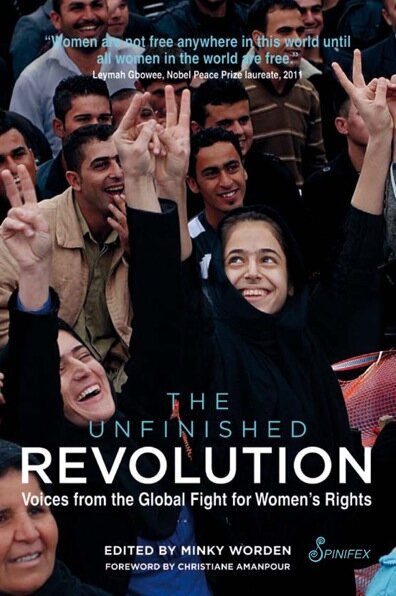
Foreword by Christiane Amanpour
The Unfinished Revolution tells the story of the global struggle to secure basic rights for women and girls, including in the Middle East where the Arab Spring raised high hopes, but the political revolutions are so far insufficient to guarantee progress.
Around the world, women and girls are trafficked into forced labour and sex slavery, trapped in conflict zones where rape is a weapon of war, prevented from attending school, and kept from making deeply personal choices in their private lives, such as whom and when to marry. In many countries, women are second-class citizens by law. In others, religion and traditions block freedoms such as the right to work, study or access health care. Even in the United States, women who are victims of sexual violence often do not see their attackers brought to justice.
More than 30 writers — Nobel Prize laureates, leading activists, top policy makers, and former victims— have contributed to this anthology. Drawing from their rich personal experiences, they tackle some of the toughest questions and offer bold new approaches to problems affecting hundreds of millions of women.
This volume is indispensable reading, providing thoughtful analysis from a never-before assembled group of advocates. It shows that the fight for women’s equality is far from over. As Leymah Gbowee, 2011 Nobel Peace Prize Laureate says, “Women are not free anywhere in this world until all women in the world are free.”
2012 | ISBN 9781742198224 | Paperback | 211 x 140 mm | 410 pages

"Palestine-in-exile," says Rana Barakat, "is an idea, a love, a goal, a movement, a massacre, a march, a parade, a poem, a thesis, a novel and yes, a commodity, as well as a people scattered, displaced, dispossessed and determined."
How do Palestinians live, imagine and reflect on home and exile in this period of a stateless and transitory Palestine, a deeply contested and crisis-ridden national project, and a sharp escalation in Israeli state violence and accompanying Palestinian oppression? How can exile and home be written?
Fifteen innovative and outstanding Palestinian writers–essayists, poets, novelists, critics, artists and memorists–respond with their reflections, experiences, memories and polemics. What is it like, in the words of Lila Abu-Lughod to be "drafted into being Palestinian?" What happenes when you take your American children, as Sharif Elmusa does, to the refugee camp where you were raised? And how can you convince, as Suad Amiry attempts to do, a weary airport official to continue searching for a code for a country that isn't recognised.
Contributors probe the past through unconventional memories, reflecting on 1948 when it all began. But they are also deeply interested in beginnings, imagining, in the words of Mischa Hiller, "a Palestine that reflects who we are now and who we hope to become." Their contributions–poignant, humorous, intimate, reflective, intensely political–make an offering that is remarkable for the candour and grace with which it explores the many individual and collective experiences of waiting, living for, and seeking Palestine.
2012 | ISBN 9781742198231 | Paperback | 210 x 137 mm | 220 pp

One day at a beach Kathleen Barry witnessed an accidental death. Seeing how empathy drew together the bystanders - strangers until that moment - in shared human consciousness, she asked: "Why do we value human lives in everyday moments but accept the killing in war as inevitable ?"
In Unmaking War, Remaking Men, Kathleen Barry explores soldiers' experiences through a politics of empathy. By revealing how men’s lives are made expendable for combat, she shows how military training drives to them kill without thinking and without remorse, only to suffer both trauma and loss of their own souls. With the politics of empathy, she sheds new light on the experiences of those who are invaded and occupied and shows how resistance rises among them.
And what of the state leaders and the generals who make war? In 2001, a fateful year for the world, George W. Bush became President of the US; Ariel Sharon became Prime Minister of Israel; and Osama bin Laden became the de facto world terrorist leader. Analyzing their leadership and failure of empathy, Unmaking War, Remaking Men reveals a common psychopathology of those driven to ongoing war, first making enemies, then labeling them as terrorists or infidels.
Kathleen Barry asks: "What would it take to unmake war?" She scrutinizes the demilitarized state of Costa Rica and compares its claims of peace with its high rate of violence against women. She then turns to the urgent problem of how might men remake themselves by unmaking masculinity. She offers models for a new masculinity drawing on the experiences of men who have resisted war and have in turn transformed their lives into a new kind of humanity; into a place where the value of being human counts.
2010 | ISBN 9781876756864 | Paperback | 229 x 151 mm | 210 pp

An urgent, passionate memoir of the author’s discovery of her Muslim grandmother’s true Armenian Christian identity.
When Fethiye Çetin was growing up in the small Turkish town of Maden, she knew her grandmother as a happy and universally respected Muslim housewife. It would be decades before her grandmother told her the truth: that she was by birth a Christian and an Armenian, that her name was not Seher but Heranush, that most of the men in her village had been slaughtered in 1915, that she, along with most of the women and children, had been sent on a death march.
She had been saved (and torn from her mother’s arms) by the Turkish gendarme captain, who went on to adopt her. But she knew she still had family in America. Could Fethiye help her find her lost relations before she died?
There are countless Turks whose grandparents could tell them similar stories. But in a country that maintains the Armenian genocide never happened, such talk can be dangerous.
In her heartwrenching memoir, Fethiye Çetin breaks the silence.
2010 | ISBN 9781876756857 | Paperback | 200 x 130 mm | 115 pp

Winner of the Rachel Carson Prize, this explosive expose details the disturbing practices of one of the world's most influential multinational agricultural corporations.
The result of a remarkable three-year-long investigation that took award-winning journalist and documentary filmmaker Marie-Monique Robin across four continents, The World According to Monsanto tells the little-known yet shocking story of this agribusiness giant—the world’s leading producer of GMOs (genetically modified organisms)— its new and dubious “green” face and its problematic PCB– and Agent Orange–soaked past.
Robin reports that, following its long history of manufacturing hazardous chemicals and lethal herbicides, Monsanto is now marketing itself as a “life sciences” company, seemingly convinced about the virtues of sustainable development. However, Monsanto now controls the majority of the yield of the world’s genetically modified corn and soy—ingredients found in a high percentage of households—and its legal and political tactics to maintain this monopoly are the subject of worldwide concern.
Released to great acclaim and controversy in France, throughout Europe, and in Latin America, alongside the documentary film of the same name, The World According to Monsanto is sure to change the way we think about food safety and our food supply.
2010 | ISBN 9781876756833 | Paperback | 229 x 155 mm | 384 pages

A SPINIFEX FEMINIST CLASSIC
A new release of Vandana Shiva’s classic with a new introduction. Shiva links the violation of nature with the violation and marginalisation of women in the Third World by examining the position of women in relation to nature – the forests, the food chain and water supplies. She shows how science, technology and politics, along with the workings of the economy itself, are inherently exploitative. Every area of human activity marginalises and burdens both women and nature.
Shiva suggests that there is only one path to survival and liberation for nature, women and men: the ecological path of harmony, sustainability and diversity. She explores the unique place of women in the environment of India in particular, both as its saviours and as victims of maldevelopment.
Her analysis is an innovative statement of the challenge that women in ecology movements are creating and she shows how their efforts constitute a non-violent and humanly inclusive alternative to the dominant paradigm of contemporary scientific and development thought.
2010 | ISBN 9781876756161 | Paperback | 215 x 140 mm | 234 pp
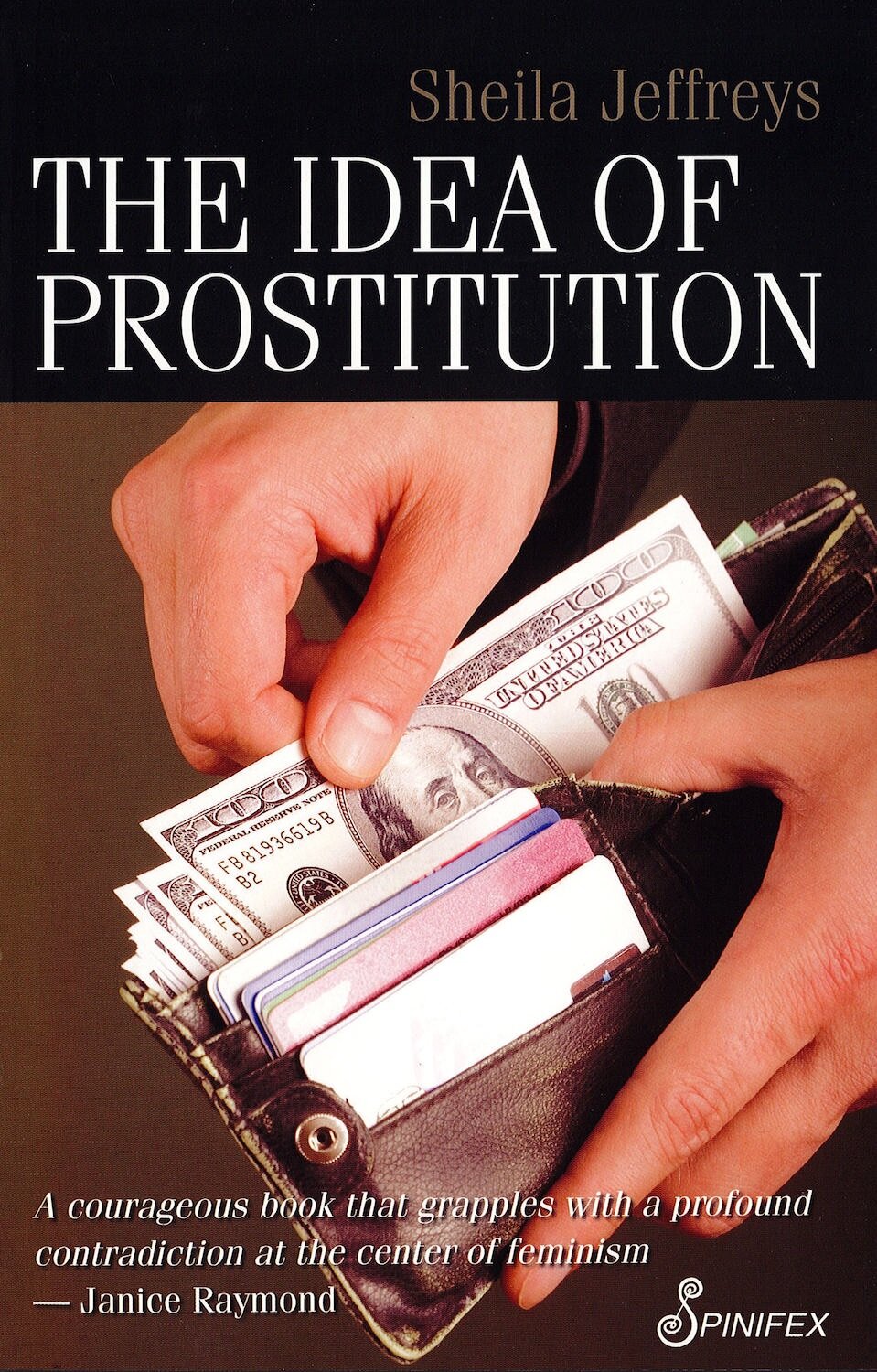
There are (at least) two competing views on prostitution: Prostitution as a legitimate and acceptable form of employment, freely chosen by women; And men’s use of prostitution as a form of degrading the women and causing grave psychological damage.
In The Idea of Prostitution, Sheila Jeffreys explodes the distinction between forced and free prostitution, and documents the expanding international traffic in women. She examines the claims of the prostitutes’ rights movement and the sex industry, while supporting prostituted women. Her argument is threefold: the sex of prostitution is not just sex; the work of prostitution is not ordinary work; and prostitution is a choice not for the prostituted women, but for the men who abuse them.
2008 | ISBN 9781876756673 | Paperback | 217 x 140 mm | 394 pp

Zillah Eisenstein continues her unforgiving critique of the United States from the point of view of a US citizen. She charts its most recent forays into wars in Afghanistan and Iraq, as well as the violations at Guantanamo and Abu Ghraib. She argues that these share much with the domestic problems of the 2004 US Presidential election, and Hurricane Katrina. She warns that women’s rights rhetoric is being manipulated and that this distorts the way women in political life are used by the system and that they threaten genuine democratic rule. Eisenstein argues for women to counter fascistic elements and envisages a politics that heightens democracy around the globe and believes that feminism must be at the centre of the changes.
2007 | ISBN 9781876756635 | Paperback | 218 x 140 mm | 142 pp

Can a prostitute be raped? Are pregnancy and STIs an Occupational Health and Safety issue? What sort of society buys and sells women and children for sex? Does legalisation solve the dangers of sex work? Sex worker advocates have argued for many years that legalising prostitution is the way to make the industry safer both for workers and clients. In 1984, the State of Victoria did just that. Making Sex Work shows with great clarity that the legalisation of prostitution backfires. It further hurts prostituted people and encourages illegal sex industry activities that grow at three times the rate of the legal industry. In this book, Mary Lucille Sullivan looks at the evidence of Victoria’s experience, and asks whether the concept of sex work as ‘a job like any other’ matches the reality.
Discussing the practicalities of brothels as regular businesses, the author unearths astounding facts about both the legal and illegal sectors. Covering issues such as violence, organised crime, women’s health, and mainstream businesses’ involvement in the sex trade, Making Sex Work is a compelling read. This book gives an insight into the sex industry, and into a society where women and children have become just another consumer item. If you’ve ever thought of prostitution as simply a choice some women make, read this book and then ask yourself: Could you do this job? How would you feel if your friend, sister, or daughter chose this career?
Mary Lucille Sullivan is the author of What Happens When Prostitution Becomes Work: An update on legalised prostitution in Australia (2006). She has written two other books on social justice issues, An Australian Pilgrimage: Muslims in Australia from the Seventeenth Century to the Present (1993) and Colony to Community (1997). Mary Lucille Sullivan has a PhD in Political Science from the University of Melbourne. She has toured the US, Britain and Norway discussing the impact of legalised prostitution.
2007 | ISBN 9781876756604 | Paperback | 217 x 140 mm | 413 pp

Are you tired of finding towels on the bathroom floor? Have you ever walked through a supermarket with a thirty-five-year-old child who wants only the most expensive things on the shelves? How do you go about making men understand the difference between helping out with the housework and doing it? And what about violence? Help! I'm Living with a Man Boy has forty-one practical scenarios that many women will identify with immediately, plus suggestions for dealing with these situations. Others, she admits, have a long way to go.
2006 | ISBN 9781876756628 | Paperback | 200 x 130 mm | 265 pp

Norma Khouri brought the issue of honour killings into the news in Australia. Whatever one thinks of Khouri, the story she had to tell was based on the reality of many women’s lives, not only in Jordan but also in Italy, Kurdistan, Latin America, the UK, South Asian and Nordic countries. The purpose of this book is to support human rights activists, policy-makers and lawyers by explaining what constitutes honour crimes and how they vary across different country contexts. It develops a human rights framework as an alternative to a cultural relativist approach. It urges the reform of many national legal systems which enable men to rely on the pretext of ‘honour crimes’ in order to get a reduced sentence. Like other acts of violence against women, they have no justification.
In the Australian context, the provocation rule could be considered a descendent of the ‘honour’ defence. This rule has enabled men to claim provocation – an insult to their honour – as an excuse for murdering wives, girlfriends and former partners. Amnesty International is running a massive campaign dealing with violence against women. This book draws out those further connections by focussing on the legal protections, the social ‘obligations’ and the deadly consequences for women.
This marvellous collection of essays is an important contribution to our collective understanding of the range of violence, mainly against women, that goes under the shorthand of 'honour crimes'. Like many such terms, it silences and conceals structures of domination, of violence and sexual regulation as much as it reveals the kind of defences that patriarchy summons to its aid.
2006 | ISBN 9781876756611 | Paperback | 236 x 158 mm | 400 pp

Zillah Eisenstein grew up against the background of the civil rights movement in the USA. The daughter of communist, atheist, Jewish parents, her worldview has been shaped by this unusual background of politics. She writes: I have never known God as an explanation for what people do, or for what happens to them. I was brought up to believe in people: that people make the world through their struggle and pain. Her questioning attitude results in a book that is thoughtful, sometimes complex, but never complacent. She asks why it is that Bush can speak of good and evil in biblical terms, see no moral ambiguity in dropping bombs on Iraq, and yet be regarded as the leader of a secular state, while on the other hand Islamic leaders are defined as religious fanatics.
Her analyses of colonisation and of how the West is defined are illuminating. She brings to it skepticism about the language of racism and whiteness, of slavery and how this is both racialised and sexualised in the US context. Eisenstein examines the effect of September 11, the appropriations of Afghan women and the variety of feminist responses. Her vision for the future includes a theory of anti-racist feminism, and polyversal feminisms which take account of location and situatedness in terms of language, culture, class and a host of other defining identities. This book is timely in its trenchant critique of globalisation and US unilateralism. Her take, as a US citizen, on US imperial irresponsibility is refreshing.
2004 | ISBN 9781876756536 | Paperback | 218 x 140 mm | 236 pp

Horses and women have always shared a bond. Why else do little girls plaster their schoolbooks with pony pictures? Why do women spend weekends devotedly mucking out paddocks? Or willingly go out in public wearing tight, unforgiving, pale jodhpurs? How is it that otherwise fastidious females cheerfully fill their cars with hay, their nails with dirt and their boots with mud, while turning out gleaming horses, with barely a tail-hair out of place? It seems that in days when urban sprawl is overtaking paddocks and trails, and country life seems so far away, little girls (and big ones!) still dream of horses.
HorseDreams explores the beautiful, intense and often funny relationships between women and horses – creatures that carry their female friends through life, offering strong, silent companionship, and the chance to escape, if only in their imagination. Humour, devotion, warmth and enthusiasm shine through tales of scruffy childhood ponies, sleek brave thoroughbreds and even the occasional donkey, seahorse or carousel steed.
Contributors include: Marge Piercy, Caroline Taylor, Rebecca Gorman, Jenny Barnes, Di Gatehouse, Julie Copeland, Tatyana Mamonova, Pat Hodgell.
2004 | ISBN 9781876756475 | Paperback | 212 x 212 mm | 220 pp

A sister volume to the internationally successful A Girl's Best Friend, this book explores the relationships between women and their cats - or more aptly, cats and their women.
There are cats of all colours and sizes - from the city, the farm, the bush; cats who can open fridges, sign contracts, and cats-in-drag. They get stuck in strange places and survive amazing ordeals. Some disappear only to return mysteriously; others live on as most treasured memories. They entertain, amuse, frustrate and delight us; they tug at our hearts and offer insight into our lives.
Cat Tales: The Meaning Of Cats In Women's Lives is a delightful collection of writing from women and girls all around the world, accompanied by beautiful photographs of their feline friends.
2003 | ISBN 9781876756376 | Paperback | 212 x 210 mm | 219 pp

An illuminating story of motherhood, Fear of Food is Carol Bacchi's account of the first two years of her son's life. She battles his rejection of food, encounters dismissive health professionals, and struggles with sleep deprivation and the uncertainties of doing it alone. Provocative and deeply personal, Fear of Food is a compelling read.
2003 | ISBN 9781876756321 | Paperback | 200 x 130 mm | 145 pp

When a small community agency, the Preston Creative Living Centre embarked upon the risky and exciting venture of engaging local people in artistic programs, it became a thriving centre for performances of theatre, music, circus, dance, visual arts, weaving and the crossover between factory production and artwork. The authors aim to inspire the reader, and give practical support in the development and administration of exciting, viable and fruitful community art. Beginning with a philosophy that informs decision-making and confronting the nitty-gritty of daily practice. A powerful discussion of the value of community arts and guide to creating partnerships between organisations, artists and communities to create community-based art.
2002 | ISBN 9781876756260 | Paperback | 242 x 177 mm | 183 pp

After September 11, feminists around the world spoke out, wrote for newspapers, for email lists and for the Internet. But in the male-dominated mass media, it was hard to find feminist perspectives. This collection brings together women who discuss the connections between war, terrorism, fundamentalism, racism, global capitalism and male violence. From the USA to Afghanistan, from Pakistan to Palestine, from Australia to Europe they have deconstructed this story and retold it from a feminist perspective in a powerful indictment of current global politics. Contributors include Barbara Kingsolver and Ani DiFranco, Naomi Klein.
2002 | ISBN 9781876756277 | Paperback | 228 x 152 mm | 538 pp

Nawal El Saadawi, internationally known for her novels, short stories and writings on women, now writes about her life, about the reactions in the Arab world to her writings on sex; about her imprisonment under Sadat and her struggles against oppression and discrimination. Beginning her working life as a rural doctor, she goes on to set up women’s organisations and publish magazines later banned or endangered by fundamentalist threats. After her name goes on a death list, Nawal El Saadawi flees into exile.
2002 | ISBN 9781876756314 | Paperback | 235 x 160 mm | 251 pp

The best-selling book that started the series exploring the significance of animals in women’s lives. Eighty-six women and girls from all across the globe contributed to this beautiful collection of stories, letters, poems and photographs, sharing the funny, sad and amazing tales of their relationships with dogs. Readers will cry and laugh as they enjoy this homage to their best friends: dogs they’ve grown up with; dogs with incredible character; dogs who’ve changed – even saved – women’s lives.
2001 | ISBN 9781876756109 | Paperback | 212 x 212 mm | 208 pp

This thought-provoking collection of essays from radical speakers from around the world moves beyond criticism of the current trends of globalization and deregulation to challenge Thatcher-inspired economic rationalists with both theoretical and practical alternatives for our world. If there is no alternative to corporate globalization, doesn’t that mean this society, and our current military struggles are as good as life is going to get?
Inspired by the ground-breaking work of Maria Mies and her colleagues in developing the elaboration of the ‘subsistence perspective’, There is an Alternative defies popular Western thought with concrete cases of resistance to globalization in Africa, Asia, the Americas, Australia and the Pacific. Anyone who refuses to believe that corporate globalization is our inevitable destiny will find this book a solid basis for formulating ideas and implementing strategies for the creation of a future in the image and interest of the world’s people.
Featuring pieces by Vandana Shiva, Christa Muller, Gustavo Esteva, Helena Norberg-Hodge, Fradia Akhter, Theresa Wolfwood, Susan Hawthorne and Renate Klein.
2001 | ISBN 9781876756178 | Paperback | 210 x 137 mm | 240 pp
FICTION

She inspected her knitting. “A yarn imagines itself, you know,” she murmured,” from separate strands. Every story is made of strands, too, of worlds that keep unfolding simultaneously along the same yarn. You can spot one at a time or, rarely, a multitude swarming—though no yarner can ever glimpse both the individual tale and the swarm at the same moment. Imagination can conceal while it reveals. Sooner or later, though, everything gets used.”
In Parallax, Robin Morgan’s most radiant prose, spare but sensuous, welcomes you into her dazzling imagination. This is a story about storytelling––a set of shorter tales which, like Russian dolls, nest and fit together to reveal a larger one.
A fable for the future, a prediction about the past, Parallax is a luscious story that enfolds you and demands immediate rereading the moment you finish, a story that surprises you and invites you to play with the patterns inside its paradoxes, a story whose characters will accompany you for the rest of your life.
2019 | ISBN 9781925581959 | Paperback | 192 pages | 232 x 154 mm

Carol Lefevre is an Adelaide-based writer whose book, The Happiness Glass, explores the imaginative terrain between essays and short fiction. The narrative takes us from remote NSW to New Zealand and England through a series of deeply affecting experiences of poverty, domestic violence, loneliness, infertility, adoption and grief. Her writing is sharp, moving, insightful and beautifully poetic.
But what did teenage girls in country towns want with Latin and French and art? What use would it be to them?
The literary longings of a studious girl born into a working class family, hot afternoons in a dust-plain Wilcannia schoolhouse; the temptation to stay, and the perils of breaking free - The Happiness Glass reflects complex griefs in the life of Lily Brennan.
Lily’s story allows the author to navigate some of the difficulties of memoir, and out of its bittersweet blend of real, remembered, and imagined life, the portrait of a writer gradually emerges.
In fiction that forms around a core of memory, life writing that acknowledges the elusiveness of truth, Carol Lefevre has written a remarkable, risk-taking book that explores questions of homesickness, infertility, adoption, and family estrangement, in Lily Brennan's life, and in her own.
A superb collection I read with relish and grief.
–Brian Castro, author of Shanghai Dancing
2018 | ISBN 9781925581638 | Paperback | 210 x 148 mm | 154 pp
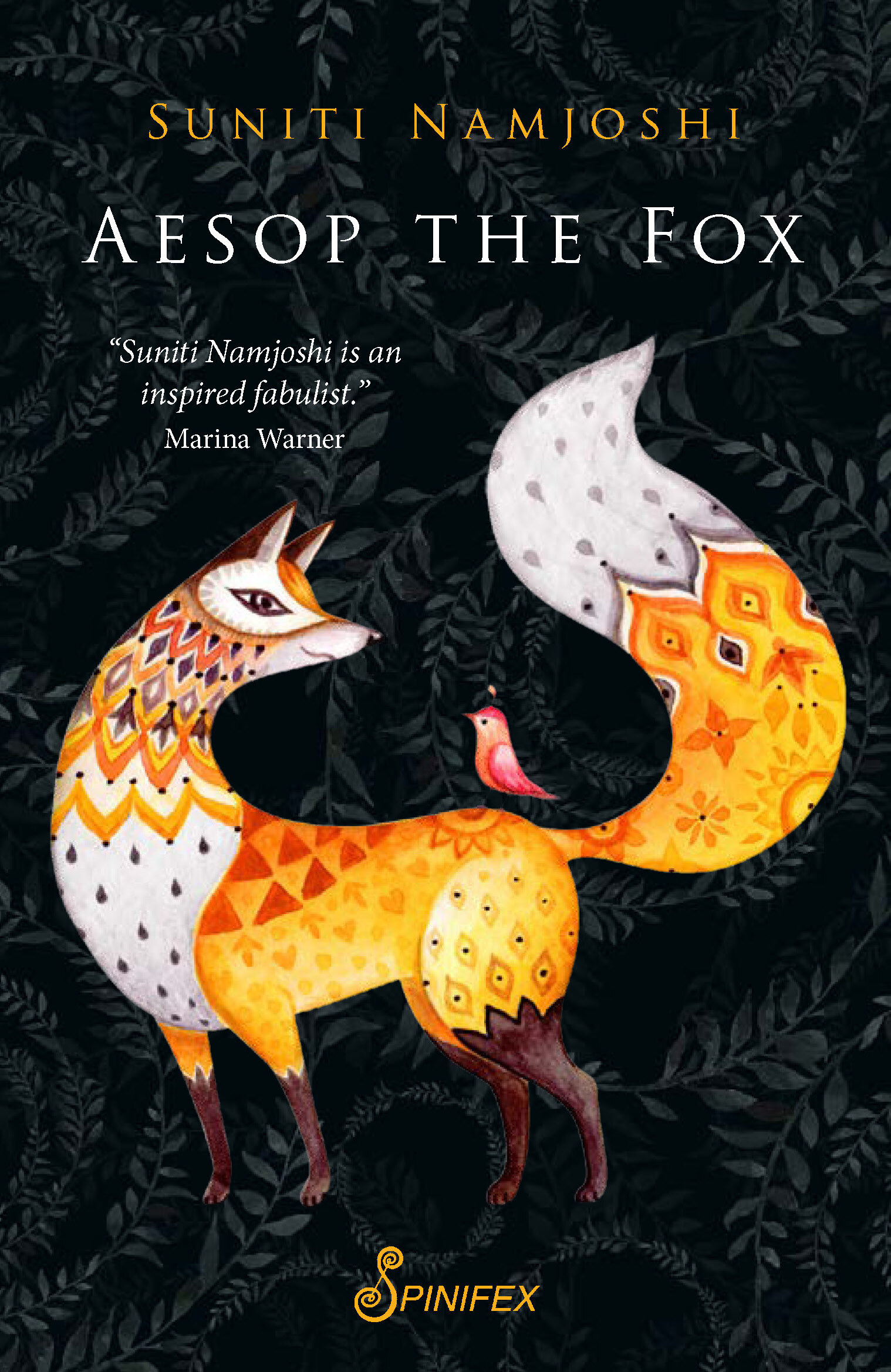
Aesop’s fables are brought to life by the timely intervention of Sprite from the future, who prods Aesop into debate about the meaning of stories: are they for fun, or do they have the chance to change the world? This book offers a virtuoso display into how the building blocks of fables can enchant, enrage, enlighten and educate us all.
Very little is known about Aesop who was supposed to have been a slave on the island of Samos in the sixth century BCE. It is his fables (and those attributed to him) that have come down to us through the centuries. In these tales, a fabulist from the future, referred to as Sprite, hoicks herself back to his century. “Why didn’t you save the world?” That’s the Sprite’s cry. Aesop, meanwhile, is trying to save his skin, make up his fables and live his life. Given the pitfalls of human nature, are the fables an Instruction Manual for staying out of trouble? What about morals, what about reform, what about the castigation of social evils? Sprite nags and cajoles and begins to wonder how much power a writer really has.
The book offers a virtuoso display of how the building blocks of a fable can be used in a variety of ways. It’s witty, it’s satirical and the Sprite herself is a comical figure. But at the end, when she has to return to her own time, that is to our own time and to our broken world, her central question suddenly seems less absurd, and far more urgent.
Suniti Namjoshi is an inspired fabulist.
—Marina Warner
2018 | ISBN 9781925581515 | Paperback | 130 pages | 198 x 128 mm

This stunning literary debut, voiced by a lesbian gangster Donna and her streetwise daughter Aurora, is steeped in the gang and gun culture of Manchester's criminal underworld. It is both an unforgettable love story and an unputdownable revenge thriller.
Donna and Carla run the all-female Bronte Close Gang, carving out their own empire in the toughest streets of Manchester. But when Carla is gunned down for seducing the wife of a local gangster, it is left to Donna to keep the gang together, take care of Carla's ten-year-old daughter, Aurora, and seek retribution for her murder.
A tale of friendship, survival and finding out how far you'd go to avenge and protect those you love, We Go Around in the Night and Are Consumed by Fire is a thrillingly original crime novel that unfolds at breakneck speed - at once furious, tender and heartbreaking.
2017 | ISBN 9781925581188 | Paperback | 288 pages | 195 x 130mm

Most everything has dried up: water, the womb, even the love among lovers. Hunger is rife, except across the border. One night, a village is bombed after its men attempt to cross the border. Nine-year old Amedea is buried underground and sleeps to survive. Ten years later, she wakes with a locust embedded in her brow. This political fable is a girl’s magical journey through the border. The border has cut the human heart. Can she repair it with the story of a small life? This is the Locust Girl’s dream, her lovesong—
For those walking to the border for dear life
And those guarding the border for dear life
Awards
Winner, Christina Stead Prize for Fiction, 2016
Winner, Philippine National Book Award for Best Novel in English
Shortlisted, ACT Book of the Year Award, 2016
2015 | ISBN 9781742199627 | Paperback | 192 pages

I remember how you were,
not how you are. We were we
until we became you and I.
Midori and Âu Cô are international
university students tasting freedom
from family for the first time. They
discover Melbourne and each other.
All is well until the tsunami that
swamps their world...
We were we until you made us me and you… .
Midori and Âu Cô are international university students in Melbourne. They play at being silver dragons birthing pearls from their mouths. They are united by loneliness. Midori’s parents are killed by the tsunami in Fukushima and soon after Midori and Âu Cô witness a university shooting. Midori ends up in a psychiatric hospital, not able to cope with the double blow.
Âu Cô is courted by a Vietnamese-Australian boy (Dzung) who has also survived the shooting. Dzung is unaware of Midori and Âu Cô’s relationship and pressured by his parents asks Au Co to marry him. Midori is silenced and unable to out herself and Âu Cô she understands too well the pressures of family. Âu Cô accepts since her own family wants to migrate to Australia. Midori absconds before the wedding to the Blue Mountains. She suicides close to the Three Sisters. Âu Cô is left to work through her guilt. She falls pregnant to Dzung and after she gives birth she looks closely at his skin. The little baby has silver dragon scales running down his neck.
2015 | ISBN 9781742199689 | Paperback | 192 pages | 198 x 128 mm

In Suki, fabulist Suniti Namjoshi weaves a witty and delightful tapestry from threads of longing, loss, memory, metaphor, and contemplation. Suki is a lightly fictionalised memoir of one woman and her cat. Comparable to J.R. Ackerley’s My Dog Tulip, Nilanjana Roy’s The Wildings and Paul Auster’s Mr Bones, the book is full of tender wisdom and sharp insight into the unique relationship between human and animal.
“Let’s face it, “ I told her one day. “The reason we get on is because we’re a pair of murderous animals and we acknowledge it.” I had lapsed – once again – from being vegetarian and was trying to think profound and moral thoughts about the food chain. Suki wasn’t having any of it. “I don’t spend my time committing murder,” she told me. “I spend it sleeping.”
“Well, that’s a waste of time!”
“When I sleep, I dream.”
“What do you dream about?”
“About life,” she replied in a superior fashion.
2014 | 9781742198880 | Paperback | 132 pp
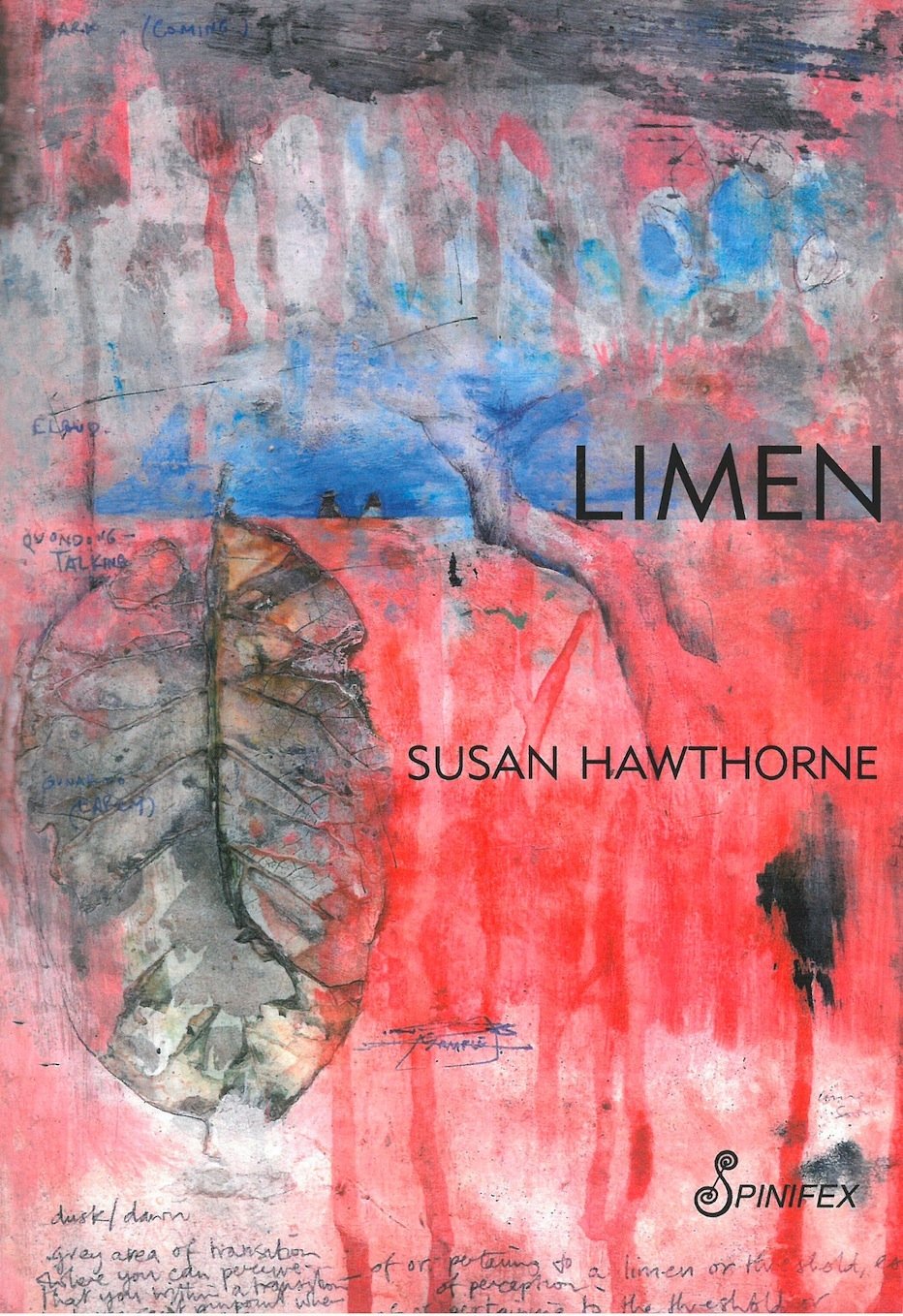
Jeanné Browne (Art)
this tiny crack
in our lives
wind and rain strewn
stranded on the limen
that space between
water and sky
rain and sun
cold and heat
When two women and a dog set off on a holiday they have no inkling of what’s to come.
They wake to find the river has crept up silently during the night. Trapped by floodwater, they devise escape routes only to be faced with more obstacles at every turn.
Only the dog remains calm.
This novella grips you with its language, its pace, its anxieties.
2013 | ISBN 9781742198606 | Paperback | 220 x 150 mm | 166 pp

They call them ‘women of love,’ but the lyrical beauty of the term has a hidden dark side: a workforce of very young girls tasked with feeding their families by offering up their bodies for sale. The girls belong to the Nat which includes some of India’s very poorest. For centuries, the Nat men have sent their daughters, sisters, and wives into sex trafficking. Baby girls are welcome arrivals in these towns of love—everyone knows that one day, they will be the breadwinners. As a Nat, you are untouchable, despised by Indian society. How would anyone dare break free of this legacy of prostitution, when it also would mean being shunned by your entire family?
Tamanna dares. As a nineteen-year-old, she breaks free and runs away. But it costs her dearly—she is forced to leave her five-year-old daughter Rupa behind with Jabbar, in the house with the big gleaming knife. Eight years later, Tamanna knows that time is running out for Rupa. She demands help, both from the police and from the underfunded aid organization Pukaar. And who could look a mother in the face and argue that saving her daughter isn’t worth risking everything?
With insight and brutal honesty, Anne Ch. Ostby paints a vivid picture of some of the world’s most vulnerable women and children. And the “women of love” do exist in India today, in the northern state of Bihar, where the author has travelled extensively and come to know them. Town of Love is a raw and gripping story that is guaranteed to leave you breathless.
With a Preface by Ruchira Gupta, founder of the Indian NGO Apne Aap on which Pukaar is based.
2013 | ISBN 9781742198477 | Paperback | 135 x 208 mm | 278 pages

1920, deep in the New Zealand bush, a settlement of Christian fundamentalists live a life of austerity and isolation. It is a place where there is little space for compassion, particularly for the women who can never rid themselves of Eve’s original sin. The elders rule over the women, children and young men, meting out punishments for transgressions as ordinary as self-reflection.
Sisters Juno and Hannah have grown up in the community, but when a stranger washes up on the river bank and Hannah goes to his aid, she finds herself accused of necromancy. The girls flee but are quickly forced to accept help. Hannah, unsure who is friend or foe, finds herself dependent upon and attracted to the man into whose lips she breathed life.
Juno and Hannah is a remarkable novella. The vivid New Zealand landscape reflects the journey of the sisters with its bounty of beauty and resources but also with its scars, wrought during the early days of colonisation.
2013 | ISBN 9781742198750 | Paperback | 200 x 130 mm | 160 pp

At thirty-nine, Deola Bello, a Nigerian expatriate in London, is dissatisfied with being single and working overseas. Deola works as a financial reviewer for an international charity. When her job takes her back to Nigeria in time for her father’s five-year memorial service, she finds herself turning her scrutiny inward. In Nigeria, Deola encounters changes in her family and in the urban landscape of her home, and new acquaintances who offer unexpected possibilities. Deola’s journey is as much about evading others’ expectations to get to the heart of her frustration as it is about exposing the differences between foreign images of Africa and the realities of contemporary Nigerian life.
2012 | ISBN 9781876756994 | Paperback | 205 x 135 mm | 222 pp
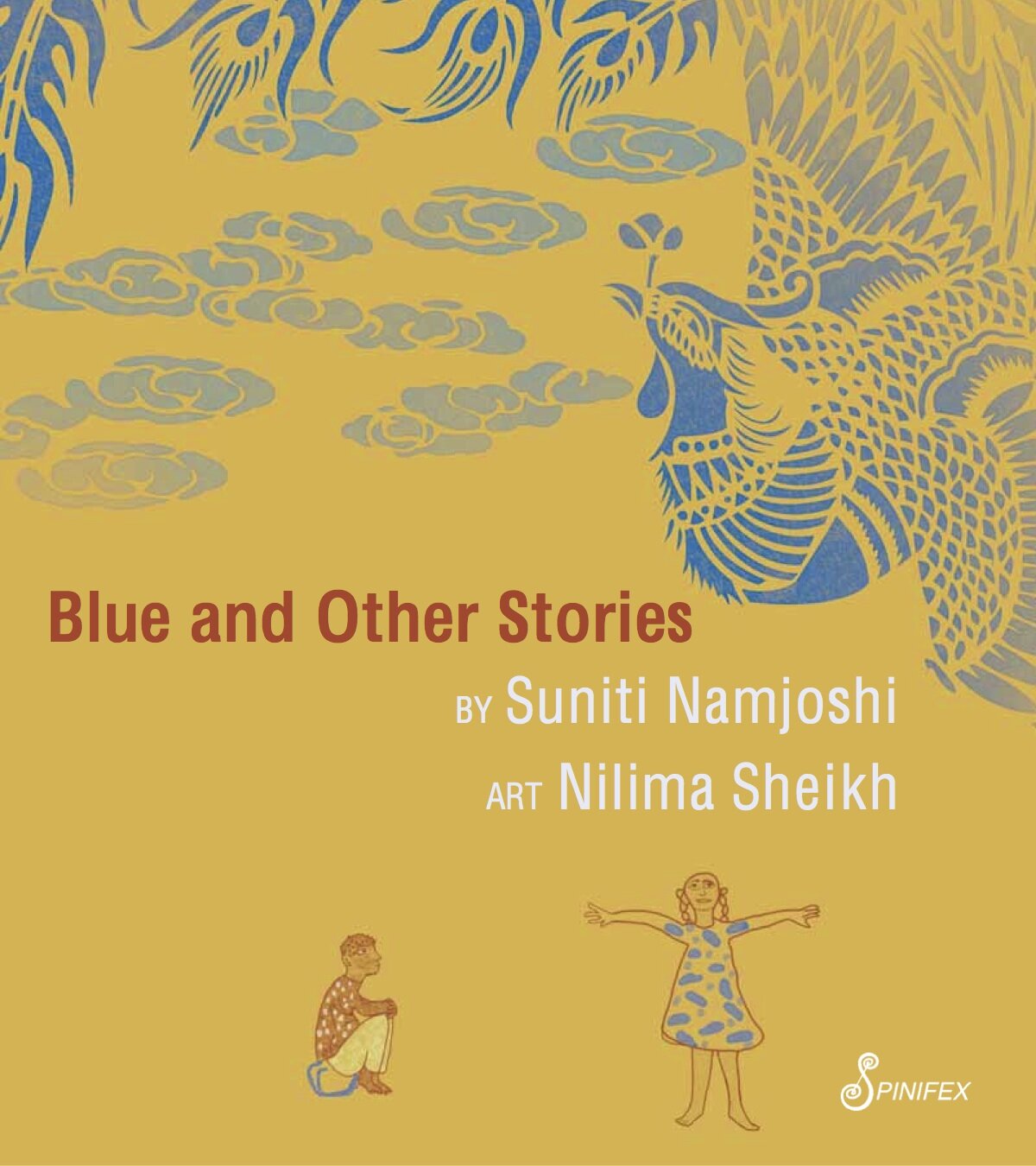
Nilima Sheikh (Artist)
Suniti Namjoshi, internationally acclaimed fabulist and poet, brings both depth and lightness of touch to Blue and Other Stories. Playful and gentle, each of these stories effectively traverses layers of myth to speak to both children and adults.
Nilima Sheikh’s paintings hang in galleries all over the world, including Australia. The sensuous colours and delicate textures of her art match and enhance Suniti’s subtlety. Blue and Other Stories is the coming together of two fine minds to create a contemporary classic.
2012 | ISBN 9781742198392 | Paperback | 222 x 200 mm | 36 pp

Fish-Hair Woman is a novel of many rooms running between love and war. In 1987 the Philippine government fights a total war against communist insurgency. The village of Iraya is militarised. The days are violent and the nights heavy with fireflies in the river where the dead are dumped. With her twelve-metre hair, Estrella the Fish-Hair Woman trawls the corpses from the water, which now tastes of lemongrass. She falls in love with the visiting Australian writer Tony McIntyre who disappears in the conflict.
2012 | ISBN 9781876756970 | Paperback | 230 x 155 mm | 206 pp

Mrs Angel Rendle-Short said that a book given to her daughter, Francesca, as an English textbook at school would teach her to be a permissive rebel.—Courier Mail, 1975
Bite Your Tongue is a story of great heart. It is the story of a teenage girl’s growing up in Queensland during the 1970s, the daughter of a morals crusader: Angel Rendle-Short / Mother Joy Solider. The tale is thoroughly embedded in Premier Joh Bjelke-Petersen’s conservative Queensland; a time of great social change for the whole of Australia.
The narrator’s family is characterised by the fervour of religious fundamentalism and extremism, which manifested itself in Angel’s highly public, right wing activism. Bite Your Tongue is also the story of the daughter as an adult and a writer, facing her mother’s mortality while at the same time ‘discovering’ her in archival materials.
These threads are woven together in a mix of novel and memoir, each informing and illuminating the other with their different voices, making Bite Your Tongue a highly original work. Using this unusual and fascinating form, Francesca presents a personal social history, documenting a strong, conservative protest movement with a very real list of books to ban and to burn.
While harrowing at times, Bite Your Tongue also displays a superb lightness of touch, and a great joy in the power of language. It is an investigation into the very nature of storytelling, displaying great humour and heart.
In Francesca Rendle-Short’s family, silence was golden. So to break ranks and tell stories about her peculiar family life and her mother’s moral crusading should send this daughter straight to hell in a ball of smoke and flame along with all those books her mother wanted to burn. Some stories are hard to tell. But like reading, writing stories changes everything. Set in 1970s Queensland and also contemporary times, Bite Your Tongue is an elegant mix of novel and memoir that is in turn harrowing and delightful. It threads together the childhood story of the fictional Glory Solider, with the thoughts and experiences of the adult author, Francesca Rendle-Short, as she looks more deeply into her mother’s activism at the time of facing her mother’s death. Can a daughter forgive her mother for making her a pawn in her conservative moral crusades? Can greater understanding reinstate love? What does a mother owe a daughter and a daughter a mother?
2011 | ISBN 9781876756963 | Paperback | 230 x 155 mm | 246 pp
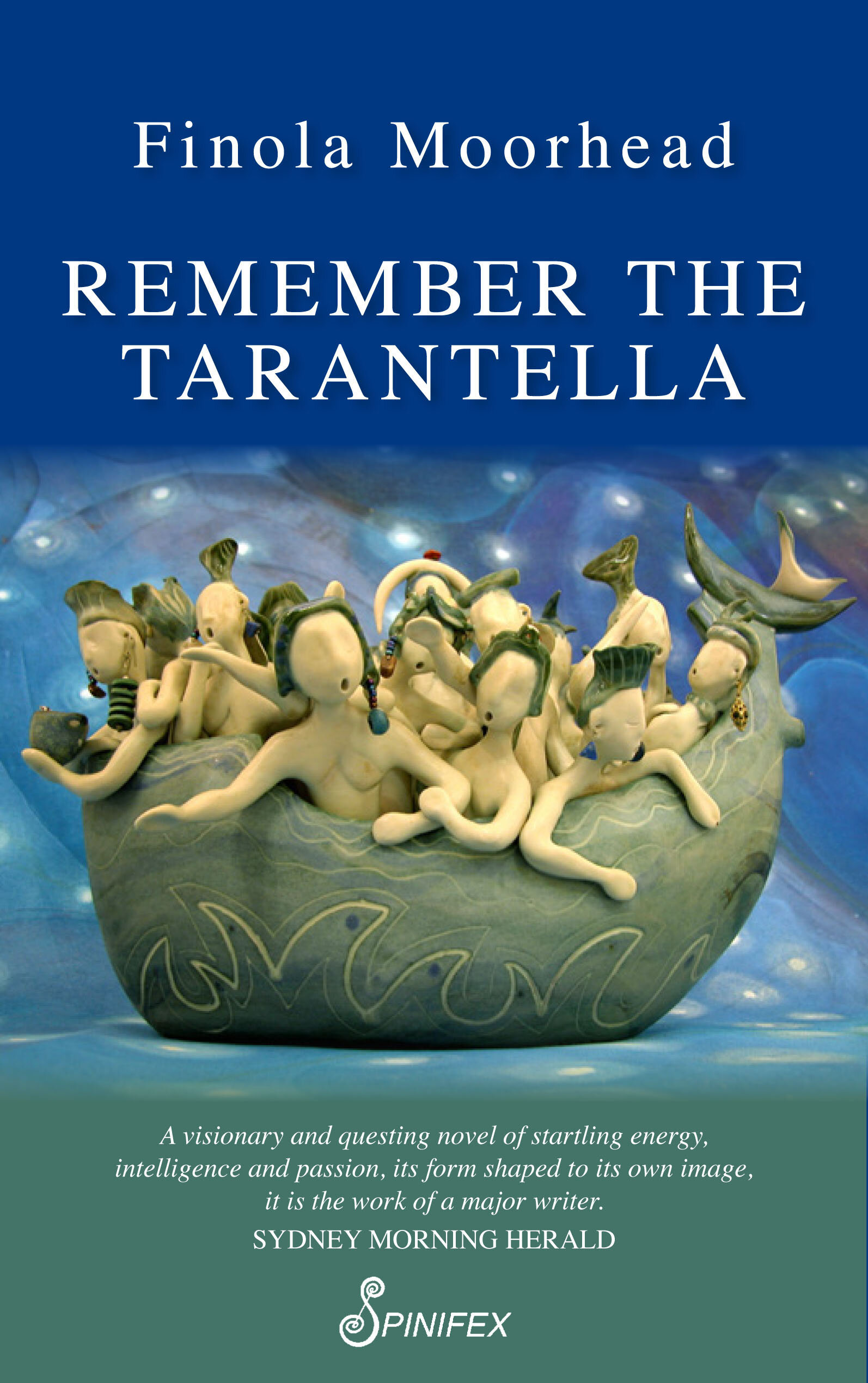
Remember The Tarantella is a remarkable work. It's learned and frivolous, female not feminine, silly and serious. Written in several strands of narrative, the many characters create a space as if reading were a dance party. Story is not the main objective. Private conversations and thoughts are always within earshot of the rhythm of others, like the stamping of feet and the beat of the music. This is concerto-like poetry; many instruments of different tones assist the reader to know who is who.
2011 | ISBN 9781876756932 | Paperback | 204 x 132 mm | 300 pages

You will not elude me. I will measure your every dimension, I will trace your smallest lines. I will undo you from the inside. You will feel it like waves running across your floorboards, you will feel it like water rising through your walls, you will feel it like a sudden disorientation, you will wonder what happened to your foundations.
An obsessive-compulsive cartographer trapped in the mapping of her own house. A painter turned codebreaker trying to find the lover she lost in the war. Two sisters on a collision course.
In My Sister Chaos two sisters escape an unnamed war-torn country into separate lives of exile. The cartographer is obsessed with keeping the world in order, but finds it unraveling under her own demands. Her sister, an artist, arrives unexpectedly. Her very presence is a sign of chaos for the cartographer. But in spite of this, the sister has a firm grip on the real world, and a greater connection to the past. Chaos and order in tension provide the scaffolding for this compelling work of fiction. Presented within a world of obsession and trauma it asks whether any of us is immune to the forces of destruction.
Winner: Edmund White Award for Debut Fiction (USA)
Shortlisted: Dobbie Literary Award
Finalist: Lambda Literary Award for Lesbian Debut Fiction (USA)
2010 | ISBN 9781876756840 | Paperback | 200 x 130 mm | 214 pages

An international prize-winning novel by Nigerian-born Sefi Atta, Everything Good Will Come is a powerful and eloquent story of a young woman’s coming of age. It is 1971, and Nigeria is under military rule and eleven-year-old Enitan Taiwo is tired of waiting for school to start. Will her mother, who has become deeply religious since the death of Enitan’s brother, allow her to be friends with the new girl next door, Sheri Bakare? The two girls’ paths traverse this novel, one manipulates the traditional system, the other attempts to defy it.
2008 | ISBN 9781876756666 | Paperback | 202 x 134 mm | 336 pp

Senior Detective Margot Gorman has been assigned to watch over a raving woman in an asylum. What could a madwoman know? And Peter, the sportsman, can he become a warrior in Vietnam? With a deft hand, the author challenges the traditional stereotypes of a crime novel with questions of politics, patriarchy, sanity and murder. First published in 1991, Still Murder was widely praised by reviewers for being a ‘cross-over’ novel, bringing together literary and crime styles of writing and narrative. This feminist classic edition has an Introduction by Marion Campbell and an Afterword by the author.
2002 | ISBN 9781876756338 | Paperback | 200 x 130 mm | 305 pp

Poppy Sinclair is approaching fifty, and mostly loves her life; teaching young children, living in her Auckland home, intimately connected to family and friends. After a fairytale romance with Kate ends tragically, she reshapes her life to living alone. Still, you can't shut out love, and with the arrival of a surprise visitor, anything can happen. An evocative look like at life and love, Poppy's Progress is a delightful story of a woman coming to terms with loss and discovering that you can be surprised, even by those you are closest to.
2002 | ISBN 9781876756284 | Paperback | 200 x 130 mm | 184 pages

There doesn’t seem much point in drawing attention to blackbirds or high tides when five thousand people are said to have died in the towers, when people in wheelchairs had to be left by the able-bodied because the lifts weren’t working and there was no time to step a wheelchair down the flights and flights of stairs … The images play on, over and over, as though if they are repeated enough times the world might actually get a grip on it … Tap, tap go the feet of the Skeleton Woman tap tap, tap tap, as everyone’s life changes forever.
Rose Anthony’s life has just become much more complicated. There’s a baby abandoned on her doorstep, and long kept secrets are about to fly into the open. But Rose has no room for this latest dilemma.
2002 | ISBN 9781876756307 | Paperback | 205 x 130 mm | 265 pages

Rose Zwi’s stories embrace people from different countries and cultures drawn together by a common humanity. Her characters range from a political activist who is house-arrested, to the child of immigrant parents caught between two cultures; from a city-educated woman returning to the arid homeland of her tribal grandfather, to a Rabbi and his wife in an East European shtetl; from a solitary dingo in a small Australian town, pursued to its inevitable end to a farmer obsessed with returning his land to its natural state.
Rose Zwi enchants the reader in her struggle to arrive at the truth of a situation. With a delicate but ironic touch, leavened with gentle humour, the award-winning author of Another Year in Africa, Safe Houses and Last Walk in Naryshkin Park opens our eyes to the world around us and captures our hearts.
The title comes from Horace's Satires:
"Furthermore, that I may not run over this matter with a laugh in the manner of those who rattle off jokes – and yet what is to prevent one from telling the truth with laughter, as coaxing teachers sometimes give their pupils cookies to make them willing to learn their ABCs."
2002 | ISBN 9781876756215 | Paperback | 200 x 130 mm | 197 pages

She lies in the bed and she is sick. Sicker than she’s ever been. But with the sickness comes a pain and in that pain she finds a glory. And it’s the glory that gets her through. When her body heals and she is out of hospital and home with her family, she needs to seek out a new glory, a stronger glory. She finds it in starvation. A story of one girl’s struggle with herself, her life and her family. And the story of a family’s struggle with a daughter/sister they can never hope to understand.
2002 | ISBN 9781876756253 | Paperback | 200 x 130 mm | 157 pp

How do you decide to live? Or do others make that decision for you? In this lyrical novel, Beryl Fletcher explores the paradoxes of modern life. As a new academic, Julia finds her beliefs challenged by her students, reinforced by her friend’s mistreatment and dismissed by her family. Just as her mother sought freedom from her family’s rural poverty, Julia and her sister Isobel, search for their own solace finding it in different and disparate places.
2002 | ISBN 9781876756239 | Paperback | 200 x 132 mm | 312 pages

My Aunt Anna came back from India With stories of places to which she had been. To warm me through winter she sewed me a quilt With pictures of all the things she had seen. Under the quilt I closed my eyes And I found I was in for a big surprise … This absurd and fantastic story of travel through a child's imagination is illustrated with exquisite art. Put together with fabric collected during the artist's visit to India, it echoes old quilting forms which have traditionally held women's memories, art and labour.
A brilliantly coloured rhyming book following the adventures of an intrepid mouse.
Suitable for ages 3 - 7 years.
2001 | ISBN 9781876756130 | Paperback | 235 x 240 mm | 23 pp

Molly and Finn are passionate friends – and have been for over twenty years. They write to each other about lovers, risotto, mothering, and the many pleasures of the body. They write feisty letters – gossiping outrageously, arguing fiercely, exchanging present intimacies and past secrets. Finn, at Molly’s insistence, tells of her past love affairs in delicious detail. But there is one story that Finn cannot bear to tell. That is, until outside events force this secret from her. There are contradictions and difficulties within this friendship, yet it survives. It billows out – as tough, beautiful and necessary as parachute silk to a pair of skydivers.
2001 | ISBN 9781876756116 | Paperback | 200 x 130 mm | 209 pages

The Edinburgh Festival brings together artists from all over the world, and Cowrie is among them, telling stories and giving readings. But even Cowrie can’t anticipate the chemistry that will begin when a group of traditional storytellers sets off to the Orkney Islands with Ellen, to stay at her coastal family cottages. For Ellen turns out to be Morrigan, and Morrigan is a selkie, living in the sea and on land. As an ancient mystery unravels, Cowrie and Sasha must turn detective to discover the truth behind Morrigan and the song of the selkies.
2001 | ISBN 9781876756093 | Paperback | 197 x 130 mm | 200 pp

In the nineteenth century Charles Dickens wrote his novels as serials; in the late twentieth century Merrilee Moss conjures up a new kind of serial fiction: of ghosts, of crime, of satire and of lesbian desire.
When the ghostly Fedora interrupts Julie Barnard's morning coffee in Brunswick Street, Julie's life is set to change. An out-of-work PI, Julie is seduced by Fedora's French accent and flamboyant hats, but soon discovers that wearing beautiful hats is a dangerous activity.
2001 | ISBN 9781876756048 | Paperback | 200 x 130 mm | 88 pages

When Margot Gorman finds a body in the women's toilets a tangle of mysteries opens up. Margot Gorman, ex-cop, is now a free agent, a triathlete and has the equivalent of perfect pitch in the sense of smell and, naturally, is a connoisseur of good wine. From murder and kidnap, drug dealing and gay bashing, to illegal mining and an underground network of cyberfeminists - the Solanacites - there are many skeins to be unravelled. A complex and intriguing novel that deals with the selfhood of women, it ranges from musings on the Amazons to a self-sufficient community in Australia's womenslands. There is mystery and philosophical enquiry in money, madness, motherhood and much more.
Finola Moorhead is the author of the award winning novel, Still Murder, the classic feminist novel, Remember the Tarantella and of a collection of essays and stories, Quilt.
2000 | ISBN 9781875559602 | Paperback | 232 x 153 mm | 650 pp

‘Marion Molteno’s stories concern one community and her relationship with it that has been sustained and practical over the years… Their chief and overwhelming characteristic is her compassion and her talent for sensitive perception.’ —Anita Desai
A vivid collection of stories based on the author’s nine years as an adult education worker, mainly among women from India and Pakistan living in Britain. These women have as yet no common language; and the society in which they find themselves is alien and often hostile. As they discover more about each other, friendships develop across the boundaries of language and culture.
2000 | ISBN 9780958218603 | Paperback | 198 x 130 mm | 148 pages

Cowrie boards a ship bound for Moruroa Atoll during the French nuclear tests. She is in for a rough ride. As international attention is focused on the Pacific and the environment, the stakes rise. She is joined by Sahara, a young peace activist from England and Marie-Louise, a French nuclear physicist. But can they be trusted? Can anyone be trusted? With sensuous writing and a deep knowledge of the traditions, the reader can feel the rock of the sea, taste the food, and fear the attacks on the peace flotilla as it approaches Moruroa Atoll. Dive into a luscious feast of language and imagery.
2000 | ISBN 9781875559695 | Paperback | 120 x 130 mm | 195 pp
BIOGRAPHY

I am the statistic that I read about. I am the thing I always feared most. I am rape.
That morning, Michelle had presented her psychology thesis on rape. It began: ‘A woman born in South Africa has a greater chance of being raped than learning how to read …’ That evening, celebrating her degree, she and a friend go to the beach, where they are robbed, assaulted and raped.
Despite the support and resources of her successful middle-class family at her disposal, Michelle has to fight to regain her life, losing friendships, jobs and her identity along the way. She realises she’ll never be the same again.
This story is one shared by women throughout the world — of living through a nightmare and trying to hold onto sanity. This is the story of the girl who was raped.
Like a helpless cow, caught in barbed wire, I struggle for life and air but I’m defeated. I am blind with pain and I’m no longer me. Tears, tears, so many tears.
2017 | ISBN 9781925581331 | Paperback | 197 x 128 mm | 200 pages

Ann Hannah was an ordinary, no-nonsense, practical woman. While a constant and caring presence in the life of her granddaughter Betty McLellan, she remained emotionally distant.
In an effort to understand her grandmother, Betty has used Ann Hannah’s everyday expressions as a starting point to uncover the truth about her life. These words and phrases, heard countless times during Betty’s childhood, are the clues to a life that, like those of many working-class women in the early 1900s, was fraught with challenges and difficulties and ignored by historians.
What did Ann Hannah mean when she said that she was forced to migrate to Australia from England in the 1920s? Why did she remember her husband as a ‘wickid’ man? How did she cope with the death of those close to her, including her own son? How did she manage to overcome the struggles and disappointments that punctuated her life?
Written with a sharp feminist consciousness that displays both compassion and intellect, this astute psychological biography tells the story of a resilient woman who, when placed in circumstances beyond her control, managed to live a good life. It provides valuable insight into the lives of many (un)remarkable women whose lives may have gone unnoticed but whose experiences shed so much light on the realities faced by women throughout the 1900s.
2017 | ISBN 9781925581287 | Paperback | 228 x 198 mm | 180 pp
How do you pick up the pieces after your life is shattered by war? How do you continue living when your country no longer exists, your language is no longer spoken and your family is divided, not just by distance but by politics too? What happens when your old identity is taken from you and a new one imposed, one that you never asked for?
When Olivera Simić was seven years old, President Tito died. Old divisions re-emerged as bitter ethnic conflicts unfolded. War arrived in 1992. People were no longer Yugoslavs but Serbs, Croatians, Bosniaks. Old friends became enemies overnight.
In this heartfelt account of life before, during and after the Bosnian War and the NATO bombing of Serbia in 1999, Simić talks of her transition from peace to war and back again. She shows how she found the determination to build a new life when the old one was irretrievable.
Traversing four continents, she takes us on her winding journey from Bosnia to Australia, revealing the complex challenges of adjusting to life in a new country and exposing the harsh reality of the post-traumatic stress that accompanies her.
Simić strives to find the balance between wanting to move on to a different future and a pressing need to look back at a past that won’t go away. The pull of her homeland remains irresistible despite it being ravaged by destruction, and her exposure of the war crimes that took place there means she is labelled both a ‘traitor’ and a ‘truth seeker’.
Surviving Peace is one woman’s story of courage that echoes the stories of millions of people whose lives have been displaced by war. As we still face a world rife with armed conflict, this book is a timely reminder that once the last gunshot has been fired and the last bomb dropped, the new challenge of surviving peace begins.
2014 | 9781742198941 | Paperback | 188 pp

Inspired by rare strength and courage, this gripping narrative tells the story of a young woman —known variously as “Khwezi” and “the complainant” — who made a principled decision to lay a charge of rape against Jacob Zuma, a man who was a father-figure, a family friend, a comrade — and the Deputy President of South Africa. She took on the fight against considerable odds, Zuma being one of the most popular and powerful political leaders of his time. Enduring prolonged public attacks, she listened to Zuma supporters chant “Burn the Bitch” outside the courtroom during her trial. Her accusers and the judge concurred that having worn a kanga that evening, the complainant had, like so many other women, “asked for it.” Crushed and conquered by the mechanics of power, she was forced to flee into exile. By using the trial of Jacob Zuma as a mirror, this account reveals the hidden yet public forms of violence against women in their homes, marriages, and churches. Caught in the crossfire of the nation’s political succession battle, this young woman refused to back down. Her story outlines the particular ways in which women can be subjugated by power, and by speaking out, she amplified the muffled screams of the countless victims of those who parade their authority in parliament, government, and religion.
2007 | ISBN 9781876756642 | Paperback | 234 x 135 mm | 208 pp

Jonathan Morgan
South Africa is in the throes of a new struggle brought on by the AIDS pandemic. Long Life shines a light behind the grim statistics to illuminate the human face of HIV/AIDS in Cape Town's largest township, Khayelitsha. Long Life tells the stories of thirteen remarkable women who are all HIV positive. These women, all part of the Memory Box Project, relate their stories through the use of body maps that reflect their life histories. Through personal stories, photographs and paintings they share their insights with humour and frankness. Woven between are the daily struggles of health-care workers and campaigners.
2003 | ISBN 9781876756420 | Paperback | 282 x 210 mm | 176 pp

This is a powerful feminist critique of the Western concept of development, which has brought profound changes to the lives of women in the South over the last thirty years. It is also an attempt to rediscover and rehabilitate traditional indigenous knowledge as an important basis for empowering women and re-establishing the foundation of reciprocity in the North-South dialogue. Sinith Sittirak looks at the wreckage "progress" has wreaked on the lives of Thai sex workers and of Indigenous peoples globally and contrasts this a portrait - in words and pictures - of her own ‘undeveloped’ mother: gardener, agriculturalist, cook, entertainer, tool and toy inventor and maker, traditional doctor, resources manager, energy conservationists, food scientist, home economist, sustainable developer, ecologist and environmentalist. In exploring the possibilities for an appropriate development path, Sinith Sittirak applies the framework of a political economy of development which acknowledges the politics of identity and difference. Central to her framework is the recognition that development is part of that universalizing process which imposes sameness by speaking for or naming the Other by excluding difference.
2001 | ISBN 9781876756000 | Paperback | 218 x 137 mm | 153 pp

The C-Word is an honest and forthright account of cancer. It deals with the loneliness the partner of a sufferer faces, the gruelling treatments of radiotherapy and chemotherapy, and the terror and calm of facing death. A story of a powerful lesbian partnership, as well as the strengths and weaknesses of community.
2000 | ISBN 9781875559992 | Paperback | 200 x 130 mm | 291 pages
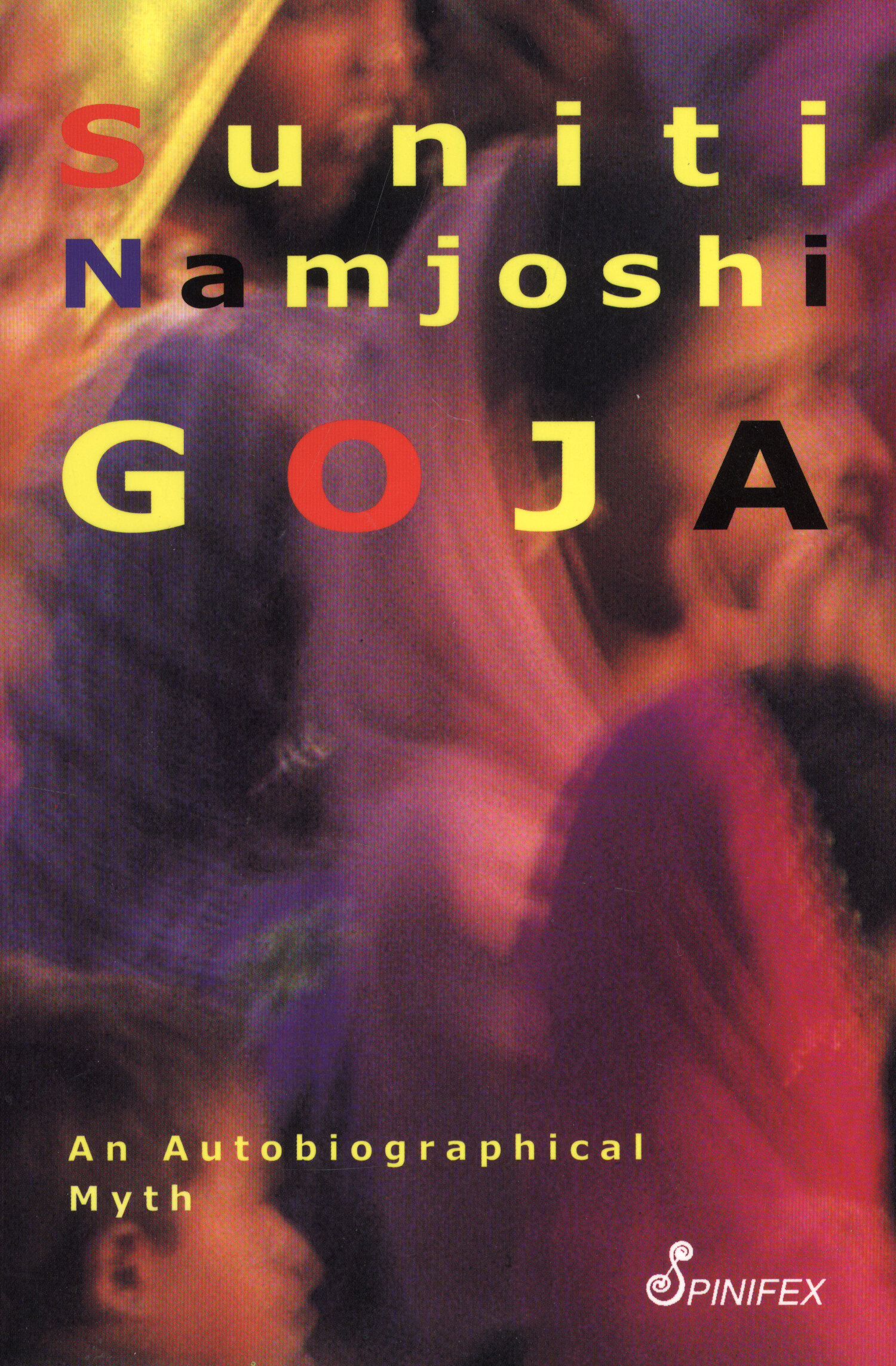
I had thought once that I felt most at home in a plane in mid-air, but that isn't true. I belong to India and to the West. Both belong to me and both reject me. I have to make sense of what has been and what there is.
Suniti Namjoshi traverses the cultures of the East and of the West. She muses on the patterns of her life, and of the impact of colonisation, both the resistances and the acceptances of it. Growing up a princess in the ruling house of Maharashtra, the two most important relationships in her life were with her grandmother, the Ranisaheb, and with Goja, the servant woman who slept beside her bed. When she was ten, her test pilot father was killed in an air accident and Suniti was sent away to boarding school. After working in the Indian Civil Service for some years, she decided that she wanted to be a poet and she moved to the West. In the US and Canada she became just another brown-skinned immigrant without the privileges of her childhood. In beautifully crafted prose, Suniti Namjoshi converses in her head with Goja and grandmother Goldie. They talk about the East and the West, about class privilege and poverty, about language and literacy, and about all the contradictions which Suniti’s life has brought into their relationship. Suniti Namjoshi has a marvellously rich story to tell and she tells it with poetic charm and a light touch. She delves deeply into the paradoxes of her life, and has much to share with others. She is articulate and a fine conversationalist. Suniti Namjoshi is a fabulist, poet, novelist, and now, autobiographer.
2000 | ISBN 9781875559978 | Paperback | 200 x 132 mm | 157 pages

When I paint I can move myself to a space of freedom that I’ve never felt before.
Expressing oneself through creativity can be an immensely challenging and satisfying experience. Nina Mariette, a survivor of childhood abuse, uses painting to make sense of her past, and tells her story with pictures and words.
1997 | ISBN 9781875559732 | Paperback | 215 x 150 mm | 86 pp

In this one-of-a-kind anthology, lesbian sisters from several countries explore their relationships with one another. Through their words and photographs, both well-known and less-famous siblings reveal the many faces of lesbian sisterhood. Here is a fascinating chronicle of what it is like to grow up, come out, laugh, cry, work and live together, as sisters in a family and as lesbians in a world.
1995 | ISBN 9781875559480 | Paperback | 215 x 140 mm | 243 pp

Our house was a single-fronted cottage in the slum area of Carlton. There were no distinctive features to differentiate it from most of the small cottages ...
Zelda D'Aprano, a working-class woman at the forefront of the Women's Liberation Movement in Australia, shows in her autobiography the same raw spirit she evidenced when chaining herself to the Commonwealth Building in Melbourne to protest unequal pay on 21 October 1969. The life of a remarkable woman who often battled alone for what women today take for granted.
Zelda is a moving, down-to-earth recounting of the past, an insightful criticism of how society is structured and reminds us of the exuberance of the Women's Liberation Movement.
1995 | ISBN 9781875559305 | Paperback | 200 x 130 mm | 408 pp
POETRY

the Muses have been sacked
their role in the pantheon
sold up for some new
real estate venture
When the Muses are sacked, what are we to do? The Muses who inspire poetry, astronomy, history and daily living bring their song and dance into present-day political struggles. These Muses are for rebellion.
Susan Hawthorne’s poems span millennia of resistance by women. The earth itself is implicated. She writes about women's bodies, how they are used, abused and celebrated in birthing, in sexual pleasure, in grief, in imagining. She draws on stories from ancient and contemporary India, from Greece and Rome, through language, storytelling and translation.
we embrace our double lives
like actors and their alter egos
some say śleṣa a is unnatural
I've heard the same said about us
2019 | ISBN 9781925950007 | Paperback | 215 x 141 mm | 96 pp

between wind and water, is to be in a vulnerable place, the place where people and planet are. When industrial wind arrives in the neighbourhood, some locals find that living with their new neighbour has brought a whirlwind of troubles. Their health and that of the community take a nosedive. Their complaints are filed into obscurity, their stories dismissed and they belittled. What sort of world do we want? We ask how can we have a better world if people and planet are not equally respected?
These poems speak the stories of people who have been denied a voice. A local story told with a global perspective … these are small fragments of a very complex story, an attempt to distil the experiences of some people in small rural locations across the world.
At the heart of between wind and water is an intimate portrayal of the vulnerable place people and planet find themselves. When home no longer feels safe as houses, when health has so deteriorated, and the local community divided and toxic, people leave their homes and the lives they have known.
between wind and water, a series of poems, tells the stories of people who, after a windfarm is built in their neighbourhood, find that they begin to experience problems: among others sleep disruption, headaches, nausea, anxiety. They complain to the Company, local council, and government. Lost in the labyrinth of doublespeak and duplicity, anxiety, disillusionment and a sense of abandonment grow. These poems tell of their experience and try to make sense of what is happening.
The broader ideological framework that these stories are set in: the earth is being plundered; consumerism is rife; bias and zealotry on all sides are rampant. Who do you believe? Where do we go from here, when respect for people and the planet is at such a low ebb?
2018 | ISBN 9781925581591 | Paperback | 230 x 190 mm | 96 pp
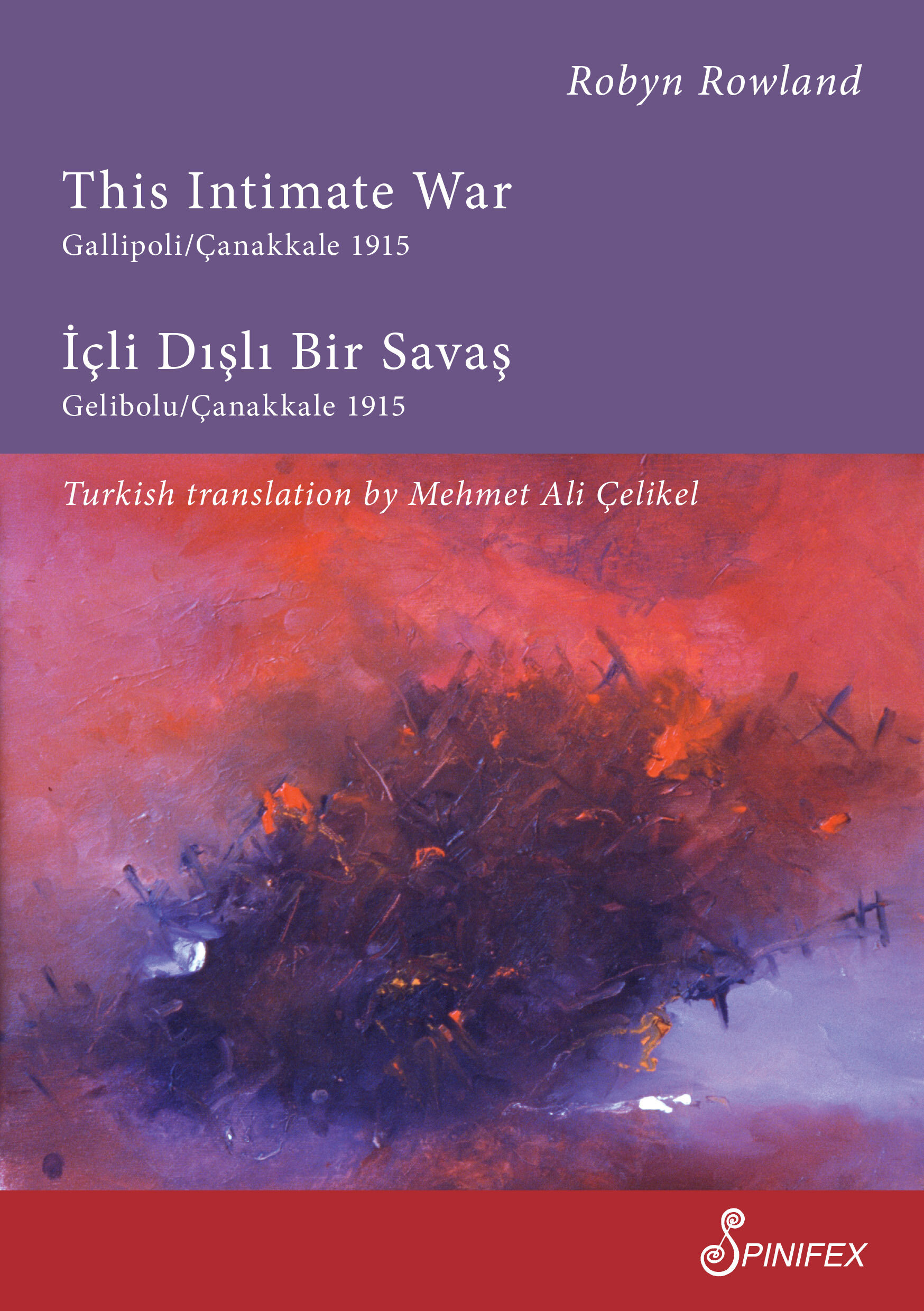
Turkish translations by Dr Mehmet Ali Çelikel
‘Very few collections bring home so powerfully the vulnerability of individuals in the face of history’ writes Lisa Gorton of Robyn Rowland’s powerful poems recording the experiences of soldiers, nurses and doctors, women munitions workers, wives, mothers, composers, painters and poets during the Gallipoli War, 1915.
It began with the Battle of Çanakkale and the defeat of the British navy. The land battle was hand-to-hand killing, the physical closeness of its soldiers unmasking the depersonalisation of the propaganda of war.
Stories of Australian, Turkish and Irish men and women in these poems show the intimate nature of war; not from the perspective of victory but from the perspective of those caught up in war, who, whichever side they were on, lost. —Lisa Gorton
Both the English and Turkish languages face each other across the pages as the men faced each other across narrow spaces between the trenches. ‘In translating impeccably Dr Rowland’s poems into Turkish, Professor M. Ali Çelikel has commendably conveyed the epic depth and literary qualities embodied in the poems’. —Himmet Umunç
Importantly, the book finishes with a poem on women’s friendship 100 years after the war, and the healing nature of love.
2018 | ISBN 9781925581386 | Paperback | 210 x 150 mm | 120 pp

The eyes catch a black bird close to an eerie sun. Instantly, a poem: an accident of composition. Or a tree, rock, light from a story heard, dreamt, read or remembered returns as if it were the only tree, rock, light in the planet. The poet is caught, returned to her first heart: poetry.
After four novels, Merlinda offers seventy-six poems from the stillness of contemplation to the spinning of tales, then to passage across different histories. Glass becomes eternal greens underwater, fish gossip about colonisation, a gumnut turns dissident, and the dreams of Captain Cook and Pigafetta circumnavigate the globe leaving a trail of blood, beads, and the scent of cloves. But in between, the poet hopes: ‘there could be accidents / of kindness here.’
In her latest collection of poetry, award-winning author Merlinda Bobis traces the accidents of art and life. Drawing on the journal of Pigafetta whose writings have become an accident of history, Merlinda Bobis composes with an attuned ear and her poems are rich with imagery; with breath and heart.
2017 | ISBN 9781742199986 | Paperback | 210 x 148 mm | 184 pp

This collection of imagist poems combines mythology, archaeology and translation. Susan Hawthorne draws on the history and prehistory of Rome and its neighbours to explore how the past is remembered. Under the guidance of Curatrix, Director of the Musæum Matricum, and Latin poet, Sulpicia, travellers Diana and Agnese are led through the mythic archives about wolves and sheep before attending an epoch-breaking party to which they are invited by Empress Livia.
2014 | 9781742199245 | Paperback | 172 pages

Valence: Considering war through poetry and theory is a powerful rage against the brutality and greed of war; against the particular suffering of women in war; against our indifference but more importantly, our sense of powerless in the face of wars most of us neither support nor would ever instigate. Here is a poet of moral conscience in the fine tradition of Adrienne Rich; a poet writing across boundaries; striving with each form to elucidate, illuminate, change.
2011 | ISBN 9781876756987 | Paperback | 210 x 148 mm | 16 pages
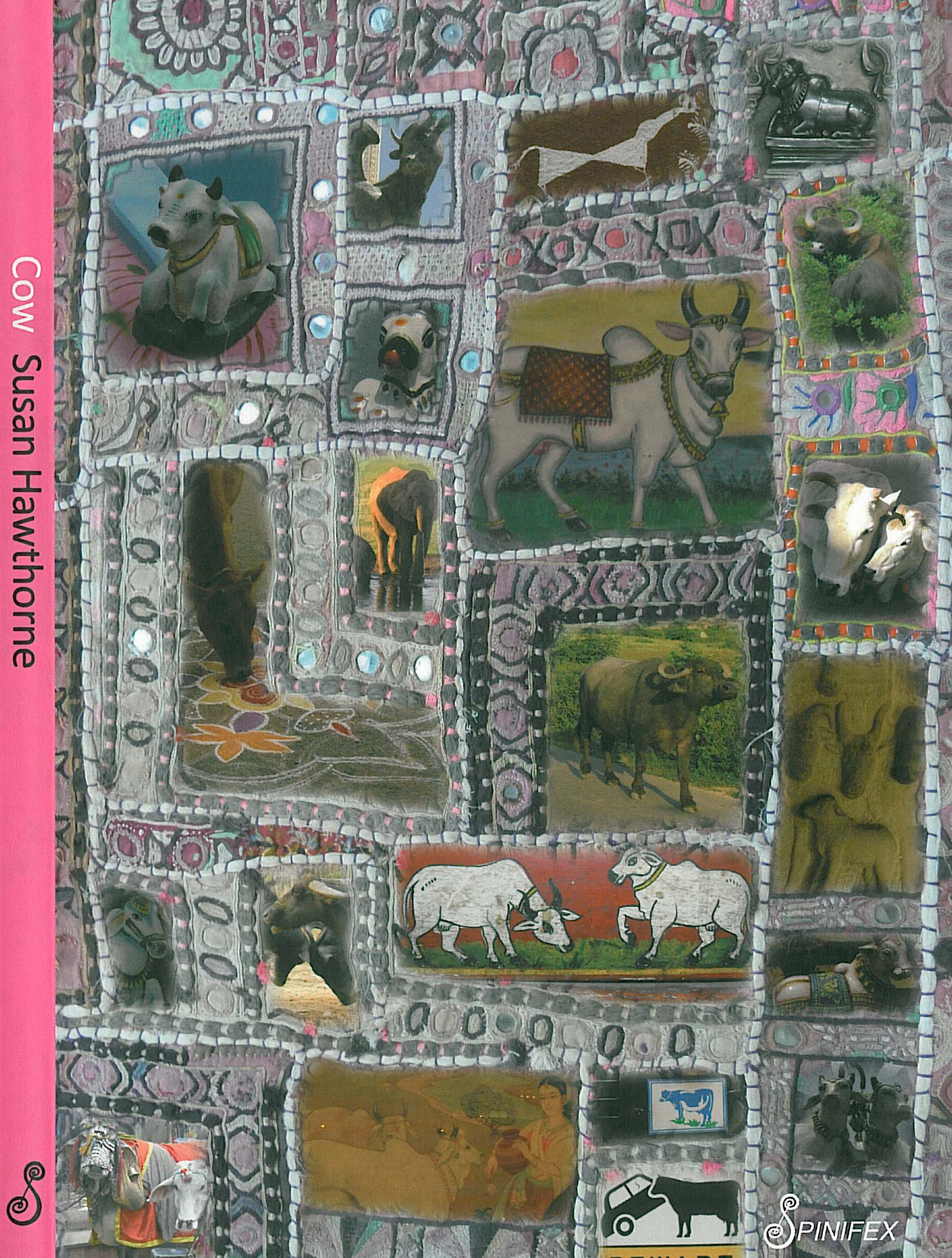
I am nothing special just a cow who wants to change the world a cow whose eyes are on the sky
Cow leaps and flies into imaginative realms carrying mythology and language. Cow creates the universe, the galaxies and travels through the sky as a herd of stars. Cow writes love poetry and ponders lost histories.
An intriguing approach to the rewriting of myth, this book takes the reader on a journey through the history of languages and symbolic traditions.
Through a main character, Queenie, a cow of many abilities and a history that takes in the creation of the universe, readers come to see the world in new ways. The collection draws on the author’s knowledge of ancient languages and its structure draws on philosophy and the Sangam poetry tradition of South India.
Finalist: Audre Lorde Award for Lesbian Poetry (USA)
Shortlisted: Kenneth Slessor Prize for Poetry, NSW Premier's Literary and History Awards
2011 | ISBN 9781876756888 | Paperback | 210 x 150 mm | 166 pp

Cyclonic storms inform the still eye of Earth's Breath. It's an eye that radiates out from the personal to the communal, tracking its subject matter through the lenses of history and myth. Susan Hawthorne's poetry shifts with seismic intensity, from tranquility to roar, bureaucratic inertia to survival, and the slow recovery from destruction to regeneration.
2009 | ISBN 9781876756734 | Paperback | 200 x 130 mm | 84 pp

This chapbook, Unsettling the Land, is a celebration of a marvellous thirty-year friendship between Suzanne Bellamy and Susan Hawthorne. They have produced many combined performance works in Australia and overseas, combining image, music, circus and text. The Drought Project curated by Lella Cariddi, opened up a new way of joint production with Susan's poem taking visual form in Suzanne's art which in turn created additional poetic text.
2008 | ISBN 9781876756703| Paperback | 210 x 149 mm | 13 pages

No, here there's not a
straight line to be seen anywhere - chaos
in the shape of two vulval wings -
the butterfly effect.
The butterfly effect is a concept from physics in which it is surmised that small actions can have enormous consequences, and that the flutter of a butterfly's wing on one side of the world can cause devastating storms on the other side. Susan Hawthorne explores the impact of the love between lesbians. The butterfly effect is a force that can destroy families and bring down governments, but also a force full of vitality and world changing creativity.
She evokes the ancient worlds of pre-Vedic and Sapphic lovers, of Mediaeval jonglaresas and nuns 'fingering petals and hips' as well as the contemporary world of circuses and global politics.
2005 | ISBN 9781876756567 | Paperback | 200 x 130 mm | 248 pp

Modewarre is the Indigenous Wathaurong word for musk duck. Through this icon of land and water, Patricia Sykes explores various histories – her own, her forebears, the wider histories of identity and place – in poems that are as concentrated as pearls. Three roads meeting in the one bird: modewarre (the Indigenous), biziura lobata (the colonial), musk duck (the common). It sweeps its subjects along in a flow of striking images and strong feelings, these buoyed by an intelligent sense of poetic structure and modulated by a sometimes ironic eye.
2004 | ISBN 9781876756505 | Paperback | 200 x 130 mm | 120 pp

Not since Sylvia Plath and Anne Sexton has anyone written so candidly about madness. Sandy Jeffs' poetry has a stark dignity, capable of conveying "shudders of intense fear". Yet in the midst of her rigours, she can access a voice both wild and funny. Sandy Jeffs' leavening sense of humour peoples her darkness with the sirens of the supermarket, a tinsel paradise and high-tech technicolour Armageddon. After all, God is only a word and angels, although mad, sing the wanderer into paradise.
2004 | ISBN 9781876756512 | Paperback | 200 x 132 mm | 120 pages

Two huge lips went shopping
on a pogo stick
for a red satin handbag
coordinated in colour
with their cupid’s bow
This is a book for anyone who has ever shopped – or worked in shops. But whether you find yourself wincing or laughing could depend on which side of the shop counter you’re on at the time. Find out what it’s like to be a young shopgirl, vent your frustrations with today’s supermarket society and the advertising and media industries, take a nostalgic trip back to the days of the corner shop. Using consumerism as a platform, Two Lips Went Shopping follows the thread down laneways where the baby trade and Female Genital Mutilation flourish passing protests of women against war and violence.
2000 | ISBN 9781875559961 | Paperback | 200 x 130 mm | 145 pp

Sometimes memory warps cobbling together a host of images leaving the self embellished by the past.
The poems in this collection are an evocative documentation of the harrowing experiences of a child living in a hostile and unhappy home. The reader is shown the pain, the bitterness and the mixed emotions that accompany the experiences of growing up in a family torn apart by domestic violence and alcoholism.
Memory is tested by remembering what one does not want to remember. Bearing witness was unbearable.
2000 | ISBN 9781875559985 | Paperback | 200 x 130 mm | 108 pp

It takes neither dynamite / nor earth quake /
the business of circus / is its own upheaval
Circus as drama and risk, as exuberance and irrepressible spirit, is the central metaphor Patricia Sykes uses to open a world where public and private share the same tightrope. The poems speak of women searching for footholds along the spectrums of politics, power, history, culture and relationships.
Theirs are performances of celebration and hope as they wire dance through circumcision and incest, madness and suicide, genocide and war. There is passion and resistance, hot comedy and fire in the belly. Falling is the first victory, balance is the ultimate skill.
plastic surgery / will not cure / the mortalities / of a circus maximus
1999 | ISBN 9781875559909 | Paperback | 200 x 130 mm | 151 pages

Birds don't fly with leads...Safety belts are to learn with, not to live with - I'm safer on the trapeze than crossing the road. And I do that every day, often by myself.
Thirteen-year-old Avis confronts the limitations imposed on her at school. She has epilepsy and some of the teachers want to stop her participating in the sport she loves most. Susan Hawthorne captures the voice and longings of a child at the edge of self-realisation. This collection draws on the experience of epilepsy mixed with imagination, mythic consciousness and an intense realisation of life.
The language in my tongue dissolves all history. It dissolves all expectation of the future. The language in my tongue is a big red balloon.
1999 | ISBN 9781875559886 | Paperback | 200 x 130 mm | 100 pages

To love in a language prised from my wishbone.
To sing a landscape where village girls once burst the moon with giggles.
To dance through the fattest eye of a rice-grain.
To do all these in peace and war is the wish embodied in Merlinda Bobis’ poetry. From her epic poem Cantata of the Warrior Woman: Daragang Magayon to lyric reflections on longing, and finally to an erotic dance-drama, Bobis traces the cartography of desire and its intimacy with death.
1998 | ISBN 9781875559763 | Paperback | 200 x 130 mm | 203 pp

Two poets known for delving into history and myth turn their attention to inner spaces, to time and the body's arcs. Jordie Albiston voices the unspoken languages of the body unearthing the complexity of memory, of desire and the art of the corporeal. Diane Fahey revisits the travelling body as it inhales memories of architecture and landscape. Scouring the body and the land for mines of trauma and of knowledge hard-won.
1995 | ISBN 9781875559374 | Paperback | 200 x 130 mm | 239 pp

An award-winning joint volume of poetry, Sandy Jeffs invites the readers into the world of schizophrenia in Poems from the Madhouse, while Deborah Staines presents vivid images that evoke the mythic past and the technological future in Now Millennium. Staines' sequence, Venus Port, explores the destruction of the social fabric set alongside poems of love and loss, images of video worlds as well as words that catch moments on the cusp of millennium. Poems from the Madhouse invites readers into the paradoxical world of insanity: the confusion and clarity, the courage and fear, the bleak despair and the black comedy. You will emerge sadder, wiser, but also exultant in the spirit she shares with us.
1993 | ISBN 9781875559206 | Paperback | 180 x 140 mm | 124 pages
EBOOKS
For readers who prefer to read ebooks, there’s a great selection on sale now. Choose from EPUB or PDF formats.

Grounded in the reality of the violence and abuse inherent in prostitution—and reeling from the death of a friend to prostitution in Spain—Kajsa Ekis Ekman exposes the many lies in the ‘sex work’ scenario. Trade unions aren’t trade unions. Groups for prostituted women are simultaneously groups for brothel owners. And prostitution is always presented from a woman’s point of view. The men who buy sex are left out.
Drawing on Marxist and feminist analyses, Ekis Ekman argues that the Self must be split from the body to make it possible to sell your body without selling yourself. The body becomes sex. Sex becomes a service. The story of the sex worker says: the Split Self is not only possible, it is the ideal.
Turning to the practice of surrogate motherhood, Kajsa Ekis Ekman identifies the same components: that the woman is neither connected to her own body nor to the child she grows in her body and gives birth to. Surrogacy becomes an extended form of prostitution. In this capitalist creation story, the parent is the one who pays. The product sold is not sex but a baby. Ekis Ekman asks: why should this not be called child trafficking?
This brilliant exposé is written with a razor-sharp intellect and disarming wit and will make us look at prostitution and surrogacy and the parallels between them in a new way.
Updated Edition 2025 | ISBN 9781922964212 | 226 pages

Decolonizing feminism always prioritizes the collective liberation of Indigenous and other women and names patriarchy as the central component of women’s oppression.
In Not Sacred, Not Squaws, Cherry Smiley analyses colonization and proposes a decolonized feminism enlivened by Indigenous feminist theory.Cherry Smiley
Building on the work of grassroots radical feminist theorists, Cherry Smiley outlines a female-centered theory of colonization and describes the historical and contemporary landscape in which male violence against Indigenous women in Canada and New Zealand is the norm. She calls out ‘sex work’ as a patriarchal colonizing practice and a form of male violence against women.
Questioning her own uncritical acceptance of the historical social and political status of Indigenous women in Canada – which she now recognizes as male-centred Indigenous theorizing – she examines the roles of culture and tradition in the oppression of Indigenous women and constructs an alternative decolonizing feminist methodology.
This book is a refreshing feminist contemporary challenge to the patriarchal ideology that governs our world and a vigorous and irreverent defence against the attempts to silence Indigenous radical feminists.
2023 | 257 pages

Kara Dansky (editor)
Just over a decade ago, and gaining steam thereafter, a massive debate began raging about what a woman is, whether or not sex is real, and if it is, whether it matters less than claimed ‘gender identities’. This debate has been raging globally. It has been raging loudly for those of us in the middle of it, but much more quietly for the multitudes who do not yet quite understand it. As the contributors from around the world explain, the debate started in the 1990s, but it took some time to erupt in the mainstream. These are the ‘gender wars’, or, if you like, the ‘trans wars’.
The ‘gender wars’ arose because women and men who call themselves ‘transgender’ started to impose their beliefs on others. Men who call themselves women (‘transgender women’) demanded that women and girls agree with them. They demanded access to female-only spaces such as toilets, locker rooms, and changing rooms. They demanded access to lesbian spaces such as clubs and dating apps. They demanded to be permitted to participate and compete in women’s sports. They wanted access to everything that is meant to be exclusively for women and girls.
And so, out of the wilderness grew a community of women labeled ‘TERFs’. The acronym originally stood for ‘trans exclusionary radical feminist’. It was meant to refer to the radical feminists who, early on, fought the idea that some men could be women if they put on a dress, or if they had their penises removed, or even if they just said they were women (self-ID). Many women would go on to reclaim the acronym for ourselves. We are the TERFS, or its plural, Terven. We are all over the world, and we are the women winning the gender wars on behalf of women and girls as a sex class and on behalf of the material reality of sex.
OCTOBER 2026 | 9781922964434 | 249 pages

Kara Dansky (editor)
Just over a decade ago, and gaining steam thereafter, a massive debate began raging about what a woman is, whether or not sex is real, and if it is, whether it matters less than claimed ‘gender identities’. This debate has been raging globally. It has been raging loudly for those of us in the middle of it, but much more quietly for the multitudes who do not yet quite understand it. As the contributors from around the world explain, the debate started in the 1990s, but it took some time to erupt in the mainstream. These are the ‘gender wars’, or, if you like, the ‘trans wars’.
The ‘gender wars’ arose because women and men who call themselves ‘transgender’ started to impose their beliefs on others. Men who call themselves women (‘transgender women’) demanded that women and girls agree with them. They demanded access to female-only spaces such as toilets, locker rooms, and changing rooms. They demanded access to lesbian spaces such as clubs and dating apps. They demanded to be permitted to participate and compete in women’s sports. They wanted access to everything that is meant to be exclusively for women and girls.
And so, out of the wilderness grew a community of women labeled ‘TERFs’. The acronym originally stood for ‘trans exclusionary radical feminist’. It was meant to refer to the radical feminists who, early on, fought the idea that some men could be women if they put on a dress, or if they had their penises removed, or even if they just said they were women (self-ID). Many women would go on to reclaim the acronym for ourselves. We are the TERFS, or its plural, Terven. We are all over the world, and we are the women winning the gender wars on behalf of women and girls as a sex class and on behalf of the material reality of sex.
OCTOBER 2026 | 9781922964434 | 249 pages
Drew Hutton and Libby Connors (editors)
Why have liberal democracies with proud traditions of democracy and free speech become obsessed with hate speech laws and are anxious about offending citizens’ feelings? Is the issue of trans rights simply a matter of being kind to a minority group who already have the same rights as everyone else?
The writers and editors in Over the Rainbow examine how concerns about the welfare of a small minority have been turned into an ideology that challenges the rights of women, lesbians, and gay men, as well as gaining control of many of the institutions of our society. Even biology and science itself are under threat. A new set of ‘facts’ about sex and gender swept across the English-speaking world and Europe over the past decade disrupting Green and left parties’ long-standing commitments to the rights of women.
Over the Rainbow brings together writers in the fields of community services, therapy and medicine, politics and theory, workplace and sporting culture, the arts and law to explore the stultifying impact that dogmatic adherence to trans ideology has had on everyday life and culture. Together they articulate the underpinning theory and philosophy of gender ideology as well as to explain how these ideas were applied within organisations to override free speech and shut down dissent. This new dogma has embedded itself across the English-speaking world and this book includes writers from the USA, Canada and the United Kingdom, as well as Australia to illustrate its rigidity and negative impacts on civic culture. Free speech and civil society organisations have been essential to the success of representative democracy. The writers in this book hope to contribute to a re-opening of civic discourse.
SEPTEMBER 2026 | 9781922964458 | 328 pages
Drew Hutton and Libby Connors (editors)
Why have liberal democracies with proud traditions of democracy and free speech become obsessed with hate speech laws and are anxious about offending citizens’ feelings? Is the issue of trans rights simply a matter of being kind to a minority group who already have the same rights as everyone else?
The writers and editors in Over the Rainbow examine how concerns about the welfare of a small minority have been turned into an ideology that challenges the rights of women, lesbians, and gay men, as well as gaining control of many of the institutions of our society. Even biology and science itself are under threat. A new set of ‘facts’ about sex and gender swept across the English-speaking world and Europe over the past decade disrupting Green and left parties’ long-standing commitments to the rights of women.
Over the Rainbow brings together writers in the fields of community services, therapy and medicine, politics and theory, workplace and sporting culture, the arts and law to explore the stultifying impact that dogmatic adherence to trans ideology has had on everyday life and culture. Together they articulate the underpinning theory and philosophy of gender ideology as well as to explain how these ideas were applied within organisations to override free speech and shut down dissent. This new dogma has embedded itself across the English-speaking world and this book includes writers from the USA, Canada and the United Kingdom, as well as Australia to illustrate its rigidity and negative impacts on civic culture. Free speech and civil society organisations have been essential to the success of representative democracy. The writers in this book hope to contribute to a re-opening of civic discourse.
SEPTEMBER 2026 | 9781922964458 | 328 pages
edited by Sybilla Claus
Beneath a layer of perfect selfies, the mental well-being of teenage girls is deteriorating. Those who don’t conform to the ideal shape or size struggle with a lack of self-confidence, fear, and doubt. Girls are confronted with discrimination, bullying, diagnoses of autism and ADHD or are denied the daily freedoms accorded to boys.
But there is hope. This book tells the stories of young rebels who have managed to fight against the sex stereotypes and find their own way. Fifty contributors from various countries including The Netherlands, USA, Taiwan, Denmark, China, Afghanistan and Spain pose important questions that you don’t often hear discussed about what it means to be a girl in the modern world. We hear from experts such as Finnish psychiatrist Riittakerttu Kaltiala and Holly Moreau from Fanfiction USA who share their work with girls and dissect the cultural forces at play. There are also the stories from girls and women themselves who explain how they are navigating the complex challenges faced by girls in the 21st century.
The future for girls is crucial for the future of everyone. This uplifting collection demonstrates how the next generation is continuing the radical feminist fight to expose misogyny and find autonomy, confidence, enjoyment and independence in their lives.
JUNE 2026 | ISBN 9781922964410 | 400 pages
edited by Sybilla Claus
Beneath a layer of perfect selfies, the mental well-being of teenage girls is deteriorating. Those who don’t conform to the ideal shape or size struggle with a lack of self-confidence, fear, and doubt. Girls are confronted with discrimination, bullying, diagnoses of autism and ADHD or are denied the daily freedoms accorded to boys.
But there is hope. This book tells the stories of young rebels who have managed to fight against the sex stereotypes and find their own way. Fifty contributors from various countries including The Netherlands, USA, Taiwan, Denmark, China, Afghanistan and Spain pose important questions that you don’t often hear discussed about what it means to be a girl in the modern world. We hear from experts such as Finnish psychiatrist Riittakerttu Kaltiala and Holly Moreau from Fanfiction USA who share their work with girls and dissect the cultural forces at play. There are also the stories from girls and women themselves who explain how they are navigating the complex challenges faced by girls in the 21st century.
The future for girls is crucial for the future of everyone. This uplifting collection demonstrates how the next generation is continuing the radical feminist fight to expose misogyny and find autonomy, confidence, enjoyment and independence in their lives.
JUNE 2026 | ISBN 9781922964410 | 400 pages

Grounded in the reality of the violence and abuse inherent in prostitution—and reeling from the death of a friend to prostitution in Spain—Kajsa Ekis Ekman exposes the many lies in the ‘sex work’ scenario. Trade unions aren’t trade unions. Groups for prostituted women are simultaneously groups for brothel owners. And prostitution is always presented from a woman’s point of view. The men who buy sex are left out.
Drawing on Marxist and feminist analyses, Ekis Ekman argues that the Self must be split from the body to make it possible to sell your body without selling yourself. The body becomes sex. Sex becomes a service. The story of the sex worker says: the Split Self is not only possible, it is the ideal.
Turning to the practice of surrogate motherhood, Kajsa Ekis Ekman identifies the same components: that the woman is neither connected to her own body nor to the child she grows in her body and gives birth to. Surrogacy becomes an extended form of prostitution. In this capitalist creation story, the parent is the one who pays. The product sold is not sex but a baby. Ekis Ekman asks: why should this not be called child trafficking?
This brilliant exposé is written with a razor-sharp intellect and disarming wit and will make us look at prostitution and surrogacy and the parallels between them in a new way.
Updated Edition 2025 | ISBN 9781922964212 | 226 pages

In this blisteringly persuasive and piercingly intelligent book, Sheila Jeffreys argues that women live under penile imperialism, a regime in which men are assumed to have a ‘sex right’ of access to the bodies of women and girls.
She reasons that the ‘sexual revolution’ that began in the 1960s unleashed an explicit male sexual liberation and that even now, under current laws and cultural mores, women do not have the right to self-determination in relation to their bodies.
Sheila Jeffreys argues that the exercise of the male sex right has mainstreamed misogynist attitudes and so-called sexual freedom has meant the freedom of men to use women and children with impunity.
The power dynamics of sex, rather than being eliminated, has been eroticised, supported by state regulations and structures that have further entrenched male domination. And while men’s sexual fetishisms such as BDSM and transvestism have been normalised, women now have to fight as their spaces are being erased and their voices silenced in a faux inclusivity that has ‘naturalised’ sexual harassment.
Sheila Jeffreys contends that women’s human rights are profoundly harmed and sexual violence is used more than ever to enforce social control of women.
This is a sobering and brilliant analysis of the modern predicament of women that is impossible to ignore.
SEPTEMBER 2022 | 376 pages

In this blisteringly persuasive and piercingly intelligent book, Sheila Jeffreys argues that women live under penile imperialism, a regime in which men are assumed to have a ‘sex right’ of access to the bodies of women and girls.
She reasons that the ‘sexual revolution’ that began in the 1960s unleashed an explicit male sexual liberation and that even now, under current laws and cultural mores, women do not have the right to self-determination in relation to their bodies.
Sheila Jeffreys argues that the exercise of the male sex right has mainstreamed misogynist attitudes and so-called sexual freedom has meant the freedom of men to use women and children with impunity.
The power dynamics of sex, rather than being eliminated, has been eroticised, supported by state regulations and structures that have further entrenched male domination. And while men’s sexual fetishisms such as BDSM and transvestism have been normalised, women now have to fight as their spaces are being erased and their voices silenced in a faux inclusivity that has ‘naturalised’ sexual harassment.
Sheila Jeffreys contends that women’s human rights are profoundly harmed and sexual violence is used more than ever to enforce social control of women.
This is a sobering and brilliant analysis of the modern predicament of women that is impossible to ignore.
SEPTEMBER 2022 | 376 pages

Kajsa Ekis Ekman
Translated by Kristina Mäki
A brilliant examination of the intellectually incoherent and anti-feminist character of gender identity theory
In this groundbreaking book, Swedish feminist and Marxist, Kajsa Ekis Ekman, traces the ideological roots of the new definition of woman. She shows how biological determinism is back – but minus the biology. So too are stereotypes: womanhood is no longer about having a vagina, but pink ribbons and dolls. Masculinity is no longer synonymous with having a penis but with war and machines. We are told being a woman is a gender identity that anyone can claim and that can only be determined by one’s own feelings.
In countries such as Norway, Canada, Argentina, Australia and New Zealand, self-identity laws have already been enacted that give anyone the right to change his or her legal sex. At the same time, the industry for gender reassignment surgery is growing at an unprecedented pace. Seven out of ten teenagers who seek interventions are now girls.
The new definition of sex has been hailed as progressive. But is it really? What ideology is expressed by it? What consequences will it have? And for whom?
FEBRUARY 2023 | 380 pages

What if heterosexuality wasn’t innate, but enforced and expected?
Can sexuality change?
Can any woman be a lesbian?
Bringing together women across cultures and generations – from lifelong lesbians exploring their experiences through a lesbian feminist lens, to women consciously leaving heterosexuality behind to embrace lesbianism – I Wish I Was a Lesbian addresses those questions and more. Once understood as the cornerstone of patriarchal control of women, any current political analysis of heterosexuality is now buried under an avalanche of essentialist ideas that serve to invisibilise its political nature and de-radicalise feminism. From autobiographical and theoretical essays to poetry and artworks, I Wish I Was a Lesbian defies taboo and silencing and reopens the conversation. It challenges the notion that heterosexuality is the natural and inevitable fate of most women.
There are many forces keeping women in heterosexual relationships. The latest is to accuse lesbians who have had previous relations with men of being ‘not real lesbians’, ‘pretenbians’ or ‘bisexuals’. But the idea that lesbians are ‘born that way’ is not based in either reality or science. There are no lesbian genes or lesbian brains. For women currently rejecting men and saying they wished they were lesbians but don’t know how to get there, this book offers a vital tool for political reflection and consciousness raising. It invites women everywhere to connect the personal with the political and to ask themselves the most radical question of all: “What is heterosexuality – and do I really want to be part of it?”
The feminist revolution made us the heroes of our own stories.
—Lynn AldersonWe are lesbians not because we cannot help it; we are lesbians because we want to be lesbians, despite all patriarchal obstacles. — Ananda Castaño
MAY 2026 | ISBN 9781922964311 | 302 pages

What if heterosexuality wasn’t innate, but enforced and expected?
Can sexuality change?
Can any woman be a lesbian?
Bringing together women across cultures and generations – from lifelong lesbians exploring their experiences through a lesbian feminist lens, to women consciously leaving heterosexuality behind to embrace lesbianism – I Wish I Was a Lesbian addresses those questions and more. Once understood as the cornerstone of patriarchal control of women, any current political analysis of heterosexuality is now buried under an avalanche of essentialist ideas that serve to invisibilise its political nature and de-radicalise feminism. From autobiographical and theoretical essays to poetry and artworks, I Wish I Was a Lesbian defies taboo and silencing and reopens the conversation. It challenges the notion that heterosexuality is the natural and inevitable fate of most women.
There are many forces keeping women in heterosexual relationships. The latest is to accuse lesbians who have had previous relations with men of being ‘not real lesbians’, ‘pretenbians’ or ‘bisexuals’. But the idea that lesbians are ‘born that way’ is not based in either reality or science. There are no lesbian genes or lesbian brains. For women currently rejecting men and saying they wished they were lesbians but don’t know how to get there, this book offers a vital tool for political reflection and consciousness raising. It invites women everywhere to connect the personal with the political and to ask themselves the most radical question of all: “What is heterosexuality – and do I really want to be part of it?”
The feminist revolution made us the heroes of our own stories.
—Lynn AldersonWe are lesbians not because we cannot help it; we are lesbians because we want to be lesbians, despite all patriarchal obstacles. — Ananda Castaño
MAY 2026 | ISBN 9781922964311 | 302 pages

Thousands of pages of books, millions of characters in tweets and hundreds of blogs have been devoted to explaining the distinction between sex and gender, but far from clarifying anything, bewilderment for ordinary people is only growing.
The concept of gender is central to a vaguely progressive-looking set of ideas based on the maxim that people possess a so-called ‘gender identity’. The real problem arises when this nebulous concept, bandied about with different and even incompatible meanings by different groups, is used as a prop to introduce policies that mark a huge setback for the rights of women and girls. The general public, watching the controversy from the sidelines, is confused by conflicting claims about whose rights are being infringed.
In this incisive book, Laura Lecuona sets the record straight by reviewing the origin of the current uses of the key term gender and exploring the main theories of transgenderism. She discusses what lies behind the claims about pronoun usage and warns about the consequences of promoting the recognition of so-called transgender children. She points out the collateral damage arising from this activism, from the perpetuation of sexist roles to limitations on freedom of speech. She dares to confront the accusations of transphobia that often inhibit those who question the foundations of this financially-driven and increasingly dominant ideology and shows the devastating effects transactivism is having on women, both socially and politically.
Gender Identity: Lies and Dangers is essential reading for the urgently needed conversation we need to have about whose interests are being served with the advancement of transgender ideology and what this means for women’s sex-based rights.
Laura Lecuona’s book is remarkable in scope and a dose of political sanity that is badly needed.
—Janice G. Raymond
FEBRUARY 2024 | 378 pages
What happens when an old radical lesbian feminist has an idea of publishing a collection of her papers? She looks at her writings and despairs. She has written too much. The idea gets shelved. Fifteen years later, she revisits the project. But it is worse now because she has written more … But being stared down by her publisher she gets a grip and (painfully) pares down her oeuvre to a manageable size.
This then is a skeleton journey through Renate’s life and her survival in patriarchy. The book starts with her passion for autonomous Women’s Studies as an intellectual necessity and radical feminist research methodology to give women a voice. And why men don’t belong in Women’s Studies classes. Next, she documents her immersion in a critique of reproductive technologies as a member of FINRRAGE. We hear about the exploitation of a desire in IVF followed with problems of egg ‘donations’, cloning, and of course the human rights violation of women and children in surrogacy. A critique of the illusion of ‘choice’ – endorsed by liberal feminists – has to be in the book and with it papers on long-acting contraceptives. Necessary warnings about the unethics of hormone replacement therapy and the French abortion pill RU 486 are included too.
As a feminist women’s health activist, Renate Klein has always been concerned about the fact that women are our bodies and that reproductive technologies in tandem with postmodern and queer theories result in the fragmentation and dismemberment of women: from the one an egg, from the other a uterus … this erasure of women is helped by dissociation and a belief in delusions – such as the assault on women’s existence by transgender ideologues.
Aged 80, Renate Klein continues her quest for the liberation of all women, whatever age, sexuality, abilities and wherever we live. She is ‘not dead yet’ and hopes this collection will stir young women into action to continue the crucial rebellion against the system of patriarchy before it fully crushes women, animals and nature.
SEPTEMBER 2025 | ISBN 9781925950977 | 473 pages
What happens when an old radical lesbian feminist has an idea of publishing a collection of her papers? She looks at her writings and despairs. She has written too much. The idea gets shelved. Fifteen years later, she revisits the project. But it is worse now because she has written more … But being stared down by her publisher she gets a grip and (painfully) pares down her oeuvre to a manageable size.
This then is a skeleton journey through Renate’s life and her survival in patriarchy. The book starts with her passion for autonomous Women’s Studies as an intellectual necessity and radical feminist research methodology to give women a voice. And why men don’t belong in Women’s Studies classes. Next, she documents her immersion in a critique of reproductive technologies as a member of FINRRAGE. We hear about the exploitation of a desire in IVF followed with problems of egg ‘donations’, cloning, and of course the human rights violation of women and children in surrogacy. A critique of the illusion of ‘choice’ – endorsed by liberal feminists – has to be in the book and with it papers on long-acting contraceptives. Necessary warnings about the unethics of hormone replacement therapy and the French abortion pill RU 486 are included too.
As a feminist women’s health activist, Renate Klein has always been concerned about the fact that women are our bodies and that reproductive technologies in tandem with postmodern and queer theories result in the fragmentation and dismemberment of women: from the one an egg, from the other a uterus … this erasure of women is helped by dissociation and a belief in delusions – such as the assault on women’s existence by transgender ideologues.
Aged 80, Renate Klein continues her quest for the liberation of all women, whatever age, sexuality, abilities and wherever we live. She is ‘not dead yet’ and hopes this collection will stir young women into action to continue the crucial rebellion against the system of patriarchy before it fully crushes women, animals and nature.
SEPTEMBER 2025 | ISBN 9781925950977 | 473 pages

Renate Klein and Susan Hawthorne (eds)
What was it like to participate in the Women’s Liberation Movement? What made millions of women step forward from the 1960s onwards and join it in different ways? Many of the 56 women in this book were there. They describe how they have contributed in multitudinous ways across politics, the arts, health, education, environmentalism, economics and science and created wonderfully rebellious activism. And how they continue this activism today with determined grittiness. Here are women – all over 70 years of age – still railing against the patriarchal systemic oppression of women, still fighting back. “Don’t Call Me Sweetie,” “Never Waste a Good Crisis” and “Still Here, Still Clear and Still Lesbian” is some of what they want us to know.
The contributors to Not Dead Yet have created new analyses with new language and new kinds of organisations always aware of the ways in which the system is stacked against us, particularly against radical feminists. But we persist. We share the revolutionary zest we have carried with us over many decades. There is history, there is subversion and there are many extraordinary acts of courage. The language is full of irony and wit – as well as deadly serious.
The Women’s Liberation Movement has had a profound effect on the lives of millions of women and in turn those women have changed our world. But the struggle continues. May these riveting tales by the foremothers of the movement inspire young women readers. #NotDeadYet

Fiona McAnena
The United Kingdom has been labelled Terf Island - sometimes affectionately and sometimes contemptuously - for its successful resistance to transgender ideology.
This is the story of the brave and determined women who led the charge against trans activist demands which undermined their rights and jeopardised the physical and mental health of children. They dragged shadowy campaigns into the daylight, exposing the harm that would result, and the harm that had already been done. They forced policy change, set legal precedents and changed public opinion.
Fiona McAnena has been right there campaigning with them. Her unique insight and personal involvement brings to life the intimate human stories behind the movement to Keep Britain Terfy.
This extraordinary, inspiring, furious and sometimes funny account shows how a few women acting on their convictions turned back a tide which threatened to sweep away the rights their foremothers fought for.
2025 | eISBN 9781922964274 | 305 pages
Somer Brodribb
Lévi-Strauss tried to convince women that we are spoken, exchanged like words; Lacan tried to teach women we can’t speak, because the phallus is the original signifier; and then Derrida says that it doesn’t matter, it’s just talk. Foucault, Derrida, Lacan, Nietzsche: the chant resonates through universities around the world. Have you ever tried to untangle the words of postmodernist theorists? How to find your way through the labyrinth to sense and clarity? If so, this is the book for you.
First published in 1992, second edition published 1993, reprinted 2022
ISBN 9781925950724 | Paperback | 152 mm x 228 mm | 178 pp