
Beryl Fletcher
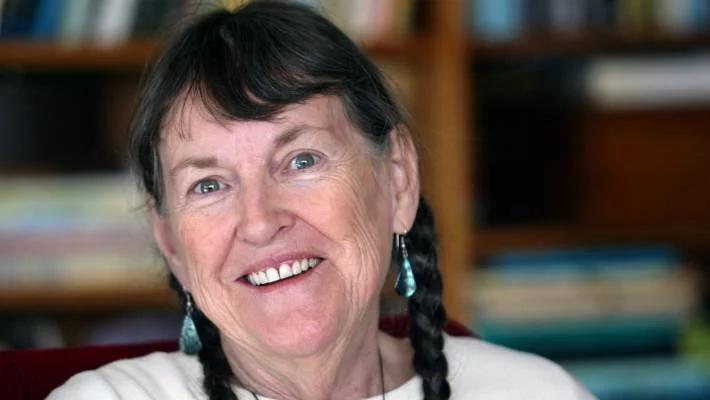
Beryl Fletcher has published short stories, four novels and a volume of memoir The House at Karamu (2003). Her first novel The Word Burners won a regional (Pacific, South East Asia) Commonwealth Writers Prize for Best First Book in 1992.
Her novels take as their theme the re-writing of established power structures, particularly those of the patriarchy. She has been awarded two writers in residence in the USA (1994 and 2005) and two in New Zealand. Her work has been translated into German and Korean. In 2009 she was appointed the Pan-Commonwealth judge of the Commonwealth Writer’s Prize.

What does a place mean? An old kauri villa with a one-roomed school attached is the place that has sustained a writer, Beryl Fletcher, through turbulent years and an obsessive love. Sent away at the age of six for a few months to the house at Karamu, she discovered books and spent many nights reading by candlelight, listening to the call of the moreporks. Karamu became a symbolic landscape of safety that helped her to survive.
2003 | ISBN 9781876756352 | Paperback | 200 x 130 mm | 437 pp

How do you decide to live? Or do others make that decision for you? In this lyrical novel, Beryl Fletcher explores the paradoxes of modern life. As a new academic, Julia finds her beliefs challenged by her students, reinforced by her friend’s mistreatment and dismissed by her family. Just as her mother sought freedom from her family’s rural poverty, Julia and her sister Isobel, search for their own solace finding it in different and disparate places.
2002 | ISBN 9781876756239 | Paperback | 200 x 132 mm | 312 pages

When Josie is sent to Digger Town to conduct her doctoral research, she knows it is a strange place with a strange history. There, the people use no modern technologies, wear nineteenth-century clothing, drive nothing faster than a horse-and-cart, and hand-make all their goods. Even so, she is not prepared for what she finds. An intriguing tale of secrecy, politics and religious and racial intolerance.
1999 | ISBN 9781875559800 | Paperback | 197 x 127 mm | 306 pp
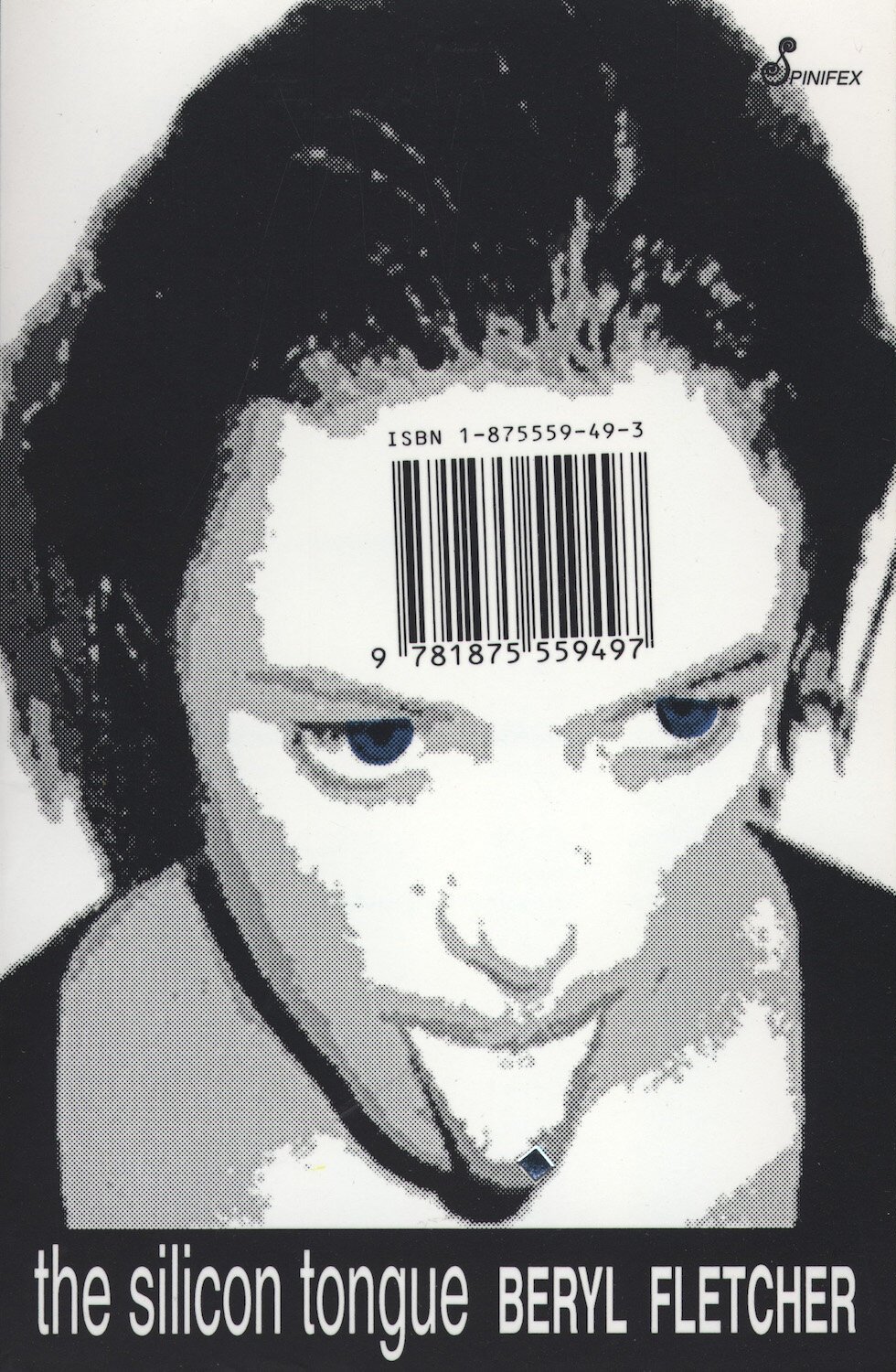
The Silicon Tongue is centred on the life of London-born Alice who was brought to New Zealand as a servant in the 1930s. Tricked by the authorities into believing she was an orphan, Alice tells her story into the tape recorder of a mysterious oral historian and discloses family secrets of rape and adoption. She discovers a kinship with a teenage nethead called Pixel and learns that old women can fly in cyberspace along with the young. Meanwhile, Alice’s daughter Joy finds out that when it comes to family stories there is always more than one version of the truth.
1996 | ISBN 9781875559497 | Paperback | 200 x 130 mm | 235 pages

The first problem is the return of the nightmare. Elena dreams of a white horse lying dead in a river; a mare with a huge pale wound in her side. She lies half out of the water, her wound washed clean and cold by the moving current. Elena attempts to call out the mare’s name but her throat is frozen with grief. Khryse is writing a film script based on The Iliad. As the script unfolds, some of the lives around her also unravel. Khryse notices the refracting Homeric world on the border between the modern city and its seafront.
Narratives of death, betrayal and glory are entangled in lives disrupted by violence, love, sex and obsession.
1993 | ISBN 9781875559220 | Paperback | 200 x 130 mm | 273 pp
Ebooks

When Josie is sent to Digger Town to conduct her doctoral research, she knows it is a strange place with a strange history. There, the people use no modern technologies, wear nineteenth-century clothing, drive nothing faster than a horse-and-cart, and hand-make all their goods. Even so, she is not prepared for what she finds. An intriguing tale of secrecy, politics and religious and racial intolerance.
1999 | 306 pp
The Bloodwood Clan deftly mixes elements of thriller, social commentary and feminist psychology. I'll be disappointed if it's not included in next year's Montana shortlist.
–Iain Sharp, New Zealand Sunday Star Times
The Bloodwood Clan is ... totally engrossing. Fletcher cleverly depicts the closed nature of both communities and the inherent danger for members in maintaining secrets and lies ... this book deserves to be widely read.
–Mary Philip, The Courier-Mail
The Bloodwood Clan is a sociological thriller in which [Fletcher's] growing experience as a writer is obvious in the tight pace of the narrative and all that is left unsaid.
–Margie Thomson, Weekend Herald

When Josie is sent to Digger Town to conduct her doctoral research, she knows it is a strange place with a strange history. There, the people use no modern technologies, wear nineteenth-century clothing, drive nothing faster than a horse-and-cart, and hand-make all their goods. Even so, she is not prepared for what she finds. An intriguing tale of secrecy, politics and religious and racial intolerance.
1999 | 306 pp
The Bloodwood Clan deftly mixes elements of thriller, social commentary and feminist psychology. I'll be disappointed if it's not included in next year's Montana shortlist.
–Iain Sharp, New Zealand Sunday Star Times
The Bloodwood Clan is ... totally engrossing. Fletcher cleverly depicts the closed nature of both communities and the inherent danger for members in maintaining secrets and lies ... this book deserves to be widely read.
–Mary Philip, The Courier-Mail
The Bloodwood Clan is a sociological thriller in which [Fletcher's] growing experience as a writer is obvious in the tight pace of the narrative and all that is left unsaid.
–Margie Thomson, Weekend Herald

What does a place mean? An old kauri villa with a one-roomed school attached is the place that has sustained a writer, Beryl Fletcher, through turbulent years and an obsessive love. Sent away at the age of six for a few months to the house at Karamu, she discovered books and spent many nights reading by candlelight, listening to the call of the moreporks. Karamu became a symbolic landscape of safety that helped her to survive.
2003 | 437 pp

1920, deep in the New Zealand bush, a settlement of Christian fundamentalists live a life of austerity and isolation. It is a place where there is little space for compassion, particularly for the women who can never rid themselves of Eve’s original sin. The elders rule over the women, children and young men, meting out punishments for transgressions as ordinary as self-reflection.
Sisters Juno and Hannah have grown up in the community, but when a stranger washes up on the river bank and Hannah goes to his aid, she finds herself accused of necromancy. The girls flee but are quickly forced to accept help. Hannah, unsure who is friend or foe, finds herself dependent upon and attracted to the man into whose lips she breathed life.
Juno and Hannah is a remarkable novella. The vivid New Zealand landscape reflects the journey of the sisters with its bounty of beauty and resources but also with its scars, wrought during the early days of colonisation.
2013 | 160 pp

The Silicon Tongue is centred on the life of London-born Alice who was brought to New Zealand as a servant in the 1930s. Tricked by the authorities into believing she was an orphan, Alice tells her story into the tape recorder of a mysterious oral historian and discloses family secrets of rape and adoption. She discovers a kinship with a teenage nethead called Pixel and learns that old women can fly in cyberspace along with the young. Meanwhile, Alice’s daughter Joy finds out that when it comes to family stories there is always more than one version of the truth.
1996 | 235 pages

The Silicon Tongue is centred on the life of London-born Alice who was brought to New Zealand as a servant in the 1930s. Tricked by the authorities into believing she was an orphan, Alice tells her story into the tape recorder of a mysterious oral historian and discloses family secrets of rape and adoption. She discovers a kinship with a teenage nethead called Pixel and learns that old women can fly in cyberspace along with the young. Meanwhile, Alice’s daughter Joy finds out that when it comes to family stories there is always more than one version of the truth.
1996 | 235 pages

How do you decide to live? Or do others make that decision for you? In this lyrical novel, Beryl Fletcher explores the paradoxes of modern life. As a new academic, Julia finds her beliefs challenged by her students, reinforced by her friend’s mistreatment and dismissed by her family. Just as her mother sought freedom from her family’s rural poverty, Julia and her sister Isobel, search for their own solace finding it in different and disparate places.
2002 | 312 pages

Translations
The Silicon Tongue by Beryl Fletcher.
Korean: Creative Times Publishing Company;
German: So Weit war das Land: William Goldman Verlag, Random House (HB);
btb, Random House (pb);
Extract in Land der roten Erde: Goldmann;
New edition: Pixels Ahnan: edition fünf.
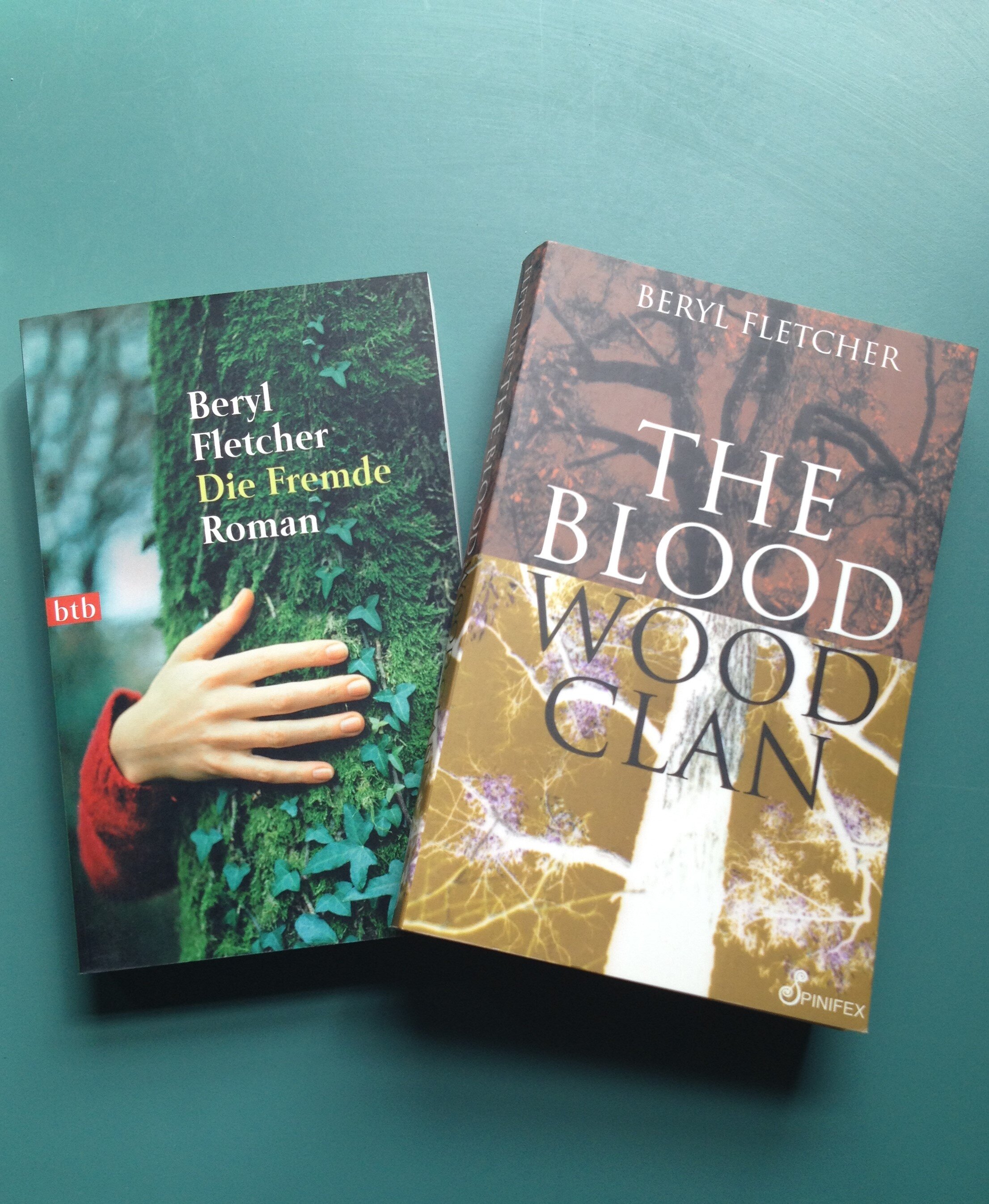
The Bloodwood Clan by Beryl Fletcher: German: Die Fremde: btb.
Beryl Fletcher
1920, deep in the New Zealand bush, a settlement of Christian fundamentalists live a life of austerity and isolation. It is a place where there is little space for compassion, particularly for the women who can never rid themselves of Eve’s original sin. The elders rule over the women, children and young men, meting out punishments for transgressions as ordinary as self-reflection.
Sisters Juno and Hannah have grown up in the community, but when a stranger washes up on the river bank and Hannah goes to his aid, she finds herself accused of necromancy. The girls flee but are quickly forced to accept help. Hannah, unsure who is friend or foe, finds herself dependent upon and attracted to the man into whose lips she breathed life.
Juno and Hannah is a remarkable novella. The vivid New Zealand landscape reflects the journey of the sisters with its bounty of beauty and resources but also with its scars, wrought during the early days of colonisation.
2013 | ISBN 9781742198750 | Paperback | 200 x 130 mm | 160 pp