
Renate Klein

Dr Renate Klein is a long-term women's health researcher and has written extensively on reproductive technologies and feminist theory over the last thirty years. A biologist and social scientist, she was Associate Professor in Women's Studies at Deakin University in Melbourne. She is a co-founder of FINRRAGE (Feminist International Network of Resistance to Reproductive and Genetic Engineering) and an original signatory to Stop Surrogacy Now.

Renate Klein
What happens when an old radical lesbian feminist has an idea of publishing a collection of her papers? She looks at her writings and despairs. She has written too much. The idea gets shelved. Fifteen years later, she revisits the project. But it is worse now because she has written more … But being stared down by her publisher she gets a grip and (painfully) pares down her oeuvre to a manageable size.
This then is a skeleton journey through Renate’s life and her survival in patriarchy. The book starts with her passion for autonomous Women’s Studies as an intellectual necessity and radical feminist research methodology to give women a voice. And why men don’t belong in Women’s Studies classes. Next, she documents her immersion in a critique of reproductive technologies as a member of FINRRAGE. We hear about the exploitation of a desire in IVF followed with problems of egg ‘donations’, cloning, and of course the human rights violation of women and children in surrogacy. A critique of the illusion of ‘choice’ – endorsed by liberal feminists – has to be in the book and with it papers on long-acting contraceptives. Necessary warnings about the unethics of hormone replacement therapy and the French abortion pill RU 486 are included too.
As a feminist women’s health activist, Renate Klein has always been concerned about the fact that women are our bodies and that reproductive technologies in tandem with postmodern and queer theories result in the fragmentation and dismemberment of women: from the one an egg, from the other a uterus … this erasure of women is helped by dissociation and a belief in delusions – such as the assault on women’s existence by transgender ideologues.
Aged 80, Renate Klein continues her quest for the liberation of all women, whatever age, sexuality, abilities and wherever we live. She is ‘not dead yet’ and hopes this collection will stir young women into action to continue the crucial rebellion against the system of patriarchy before it fully crushes women, animals and nature.
9 SEPTEMBER 2025 | ISBN 9781925950960 | Paperback | 152 mm x 229mm | 492 pages

Renate Klein and Susan Hawthorne (eds)
What was it like to participate in the Women’s Liberation Movement? What made millions of women step forward from the 1960s onwards and join it in different ways? Many of the 56 women in this book were there. They describe how they have contributed in multitudinous ways across politics, the arts, health, education, environmentalism, economics and science and created wonderfully rebellious activism. And how they continue this activism today with determined grittiness. Here are women – all over 70 years of age – still railing against the patriarchal systemic oppression of women, still fighting back. “Don’t Call Me Sweetie,” “Never Waste a Good Crisis” and “Still Here, Still Clear and Still Lesbian” is some of what they want us to know.
The contributors to Not Dead Yet have created new analyses with new language and new kinds of organisations always aware of the ways in which the system is stacked against us, particularly against radical feminists. But we persist. We share the revolutionary zest we have carried with us over many decades. There is history, there is subversion and there are many extraordinary acts of courage. The language is full of irony and wit – as well as deadly serious.
The Women’s Liberation Movement has had a profound effect on the lives of millions of women and in turn those women have changed our world. But the struggle continues. May these riveting tales by the foremothers of the movement inspire young women readers. #NotDeadYet
6 JULY 2021 | ISBN 9781925950328 | Paperback | 233 x 150 mm | 464 pages
Renate Klein (eds.)
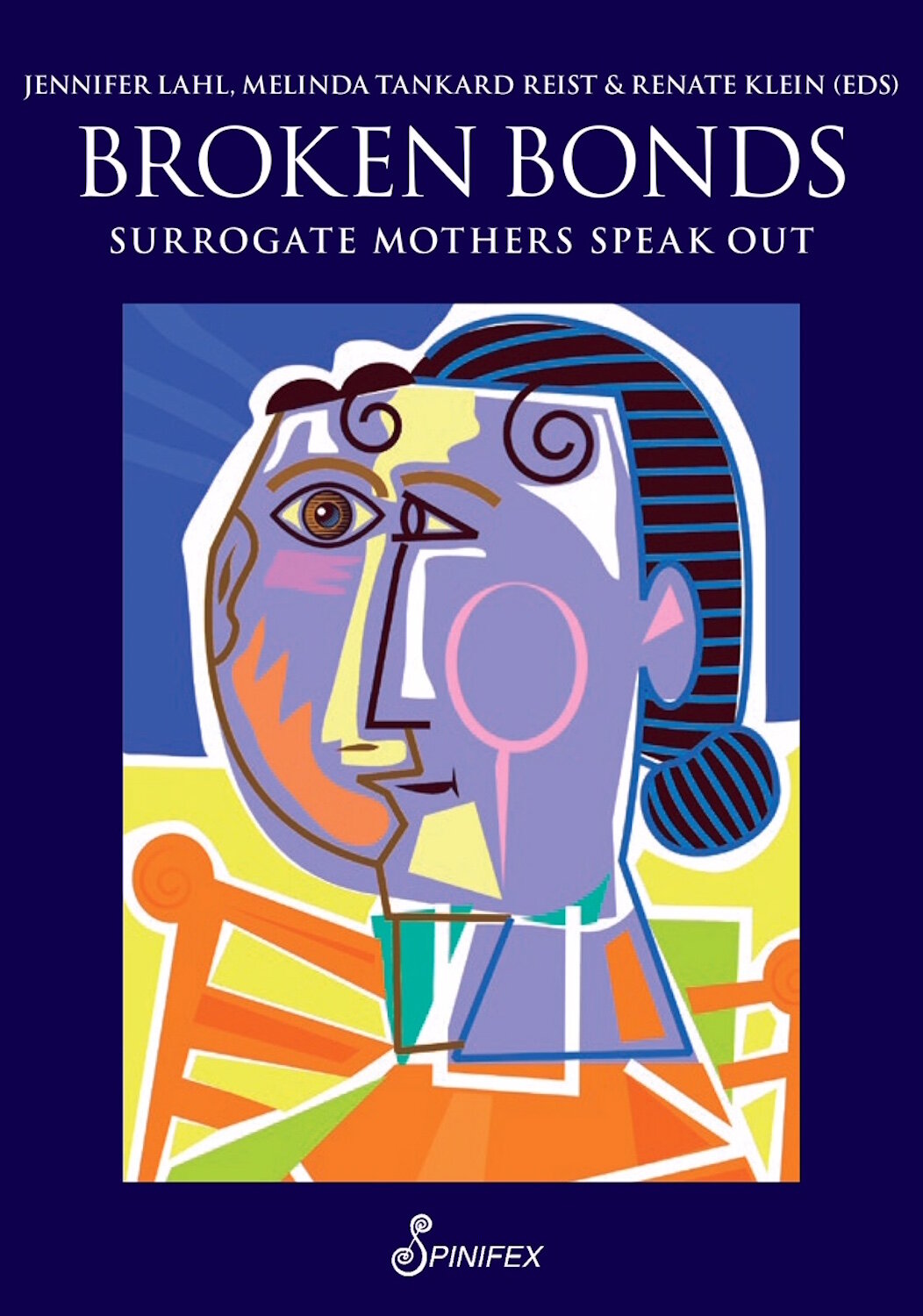
Celebrity couple Kim Kardashian and Kanye West and their sweet new baby Chicago. Tom Daley and Dustin Lance Black and their cute little baby Robert. And thousands of other couples and single people around the world who obtain babies through surrogacy arrangements. The general public is compassionate to their plight and supportive of their 'right' to a baby.
But who are the faceless, nameless women who nurture and give birth to these babies? These women who are left with empty arms and leaking breasts after delivery? Surrogacy-dealing companies call them ‘special angels’ who ‘make miracles possible’, giving ‘an extraordinary gift’. IVF clinics call them ‘gestational surrogates’. The intended parents have promised them healthcare, full reimbursement, and ongoing contact with the baby. What could possibly go wrong?
Everything. Because surrogacy violates the human rights of the women whose bodies are used, and the children who are born. Because it is a fundamentally flawed and misogynist concept to imagine that women are interchangeable. And it is wishful thinking that watertight legal contracts and counselling can fix this.
In this book, strong and courageous women from the USA, the UK, Canada, Australia, India, Austria and Russia share their true stories of becoming 'surrogate' mothers out of kindness and compassion (or need for money), only to be deceived, neglected, abused, harassed, or abandoned by ‘baby buyers’, clinics, and lawyers. Their stories are tragic, shocking, and revelatory of a profit-driven industry that preys on desperation and women’s compassion.
It becomes clear that it is not the occasional dysfunctional relationship or unreasonable surrogate causing problems in the surrogacy industry. Rather, it is the very nature of surrogacy as well as the surrogacy industry to use and abuse and discard. This book throws down a challenge to Big Fertility and its minions: women are not ovens or suitcases, babies are not products. Love is not to be bought.
2019 | ISBN 9781925581553 | Paperback | 215 x 137 mm | 142 pp
THIS BOOK IS PART OF THE RADFEM STARTER LIBRARY & THE STOP SURROGACY NOW COLLECTION

An award-winner when first published, this book has become a classic text for health activists and feminists interested in the complexities of how drugs are developed, marketed and sold to women around the world. In this book the authors review the unusual history of the French abortion pill, RU 486 (mifepristone). They scrutinize the science and politics from inception through to its use on women.
• Is RU 486 a miracle drug for abortion that is a safe and effective alternative to conventional abortion procedures?
• Does it privatize and de-medicalize the abortion experience?
• Is its availability a ‘victory’ for women?
• Is RU 486 safe for use in Third World countries and remote rural areas?
• Who benefits from chemical abortion and how does RU 486 affect existing abortion services?
The authors argue that the positive claims made for RU 486 (mifepristone) are filled with myths and misconceptions. RU 486 used on its own is a failed abortifacient and needs the addition of a prostaglandin, a dangerous drug. But the 'success' rates of the drug cocktail RU 486/prostaglandin remain at 92 to 95 per cent compared with 98 to 99 per cent for suction abortions. Suction abortions, which are best done with a local anesthetic, involve no harmful drugs and are completed in 30 minutes. By contrast, RU 486/PG abortions last for days, sometimes weeks.
Heavy bleeding, transfusions, vomiting, severe pain and infection are among the unpredictable adverse effects. Women have died from sepsis and cardiovascular events. RU 486/PG abortion benefits the medical profession, drug companies and government health economies.
Through painstaking research and analysis the authors uncover the truth that chemical abortion is ill-conceived and unethical. They caution that low-tech abortion services are under threat as the mainstream hails RU 486 abortion as 'safe and effective' which it is not.
2013 | ISBN 9781742198408 | Paperback | 200 x 130 mm | 149 pp

Horses and women have always shared a bond. Why else do little girls plaster their schoolbooks with pony pictures? Why do women spend weekends devotedly mucking out paddocks? Or willingly go out in public wearing tight, unforgiving, pale jodhpurs? How is it that otherwise fastidious females cheerfully fill their cars with hay, their nails with dirt and their boots with mud, while turning out gleaming horses, with barely a tail-hair out of place? It seems that in days when urban sprawl is overtaking paddocks and trails, and country life seems so far away, little girls (and big ones!) still dream of horses.
HorseDreams explores the beautiful, intense and often funny relationships between women and horses – creatures that carry their female friends through life, offering strong, silent companionship, and the chance to escape, if only in their imagination. Humour, devotion, warmth and enthusiasm shine through tales of scruffy childhood ponies, sleek brave thoroughbreds and even the occasional donkey, seahorse or carousel steed.
Contributors include: Marge Piercy, Caroline Taylor, Rebecca Gorman, Jenny Barnes, Di Gatehouse, Julie Copeland, Tatyana Mamonova, Pat Hodgell.
2004 | ISBN 9781876756475 | Paperback | 212 x 212 mm | 220 pp

A sister volume to the internationally successful A Girl's Best Friend, this book explores the relationships between women and their cats - or more aptly, cats and their women.
There are cats of all colours and sizes - from the city, the farm, the bush; cats who can open fridges, sign contracts, and cats-in-drag. They get stuck in strange places and survive amazing ordeals. Some disappear only to return mysteriously; others live on as most treasured memories. They entertain, amuse, frustrate and delight us; they tug at our hearts and offer insight into our lives.
Cat Tales: The Meaning Of Cats In Women's Lives is a delightful collection of writing from women and girls all around the world, accompanied by beautiful photographs of their feline friends.
2003 | ISBN 9781876756376 | Paperback | 212 x 210 mm | 219 pp

The best-selling book that started the series exploring the significance of animals in women’s lives. Eighty-six women and girls from all across the globe contributed to this beautiful collection of stories, letters, poems and photographs, sharing the funny, sad and amazing tales of their relationships with dogs. Readers will cry and laugh as they enjoy this homage to their best friends: dogs they’ve grown up with; dogs with incredible character; dogs who’ve changed – even saved – women’s lives.
2001 | ISBN 9781876756109 | Paperback | 212 x 212 mm | 208 pp
Older Titles

An international anthology of writings on cyberculture and feminist interventions. A diverse and at times fractious discussion of issues raised by these new forms of cultural expression. The contributors engage with a range of questions including: What is cyberfeminism? How does feminism influence multimedia production? What are the possibilities for feminist activism and research on the internet? How are colonisation, cybersex and virtuality to be theorised? How do these technologies affect our theories about bodies and minds? And what are the implications for creative artists?
1999 | ISBN 9781875559688 | Paperback | 217 x 138 mm | 434 pp

Since the 1960s radical feminists have worked to articulate a vision of the world in which all women are safe and are acknowledged as human beings in their own right. Their projects include Take Back the Night campaigns, establishing women’s refuges, rape crisis centres, health centres, organising against pornography and developing courses in Women’s Studies. The richness of the practice and the theory of radical feminism is often misrepresented or unknown. Radically Speaking tells this important story.
1996 | ISBN 9781875559381 | Paperback | 242 x 176 mm | 654 pp
THIS BOOK IS PART OF THE RADFEM STARTER LIBRARY
Renate Klein & Susan Hawthorne (Ed)
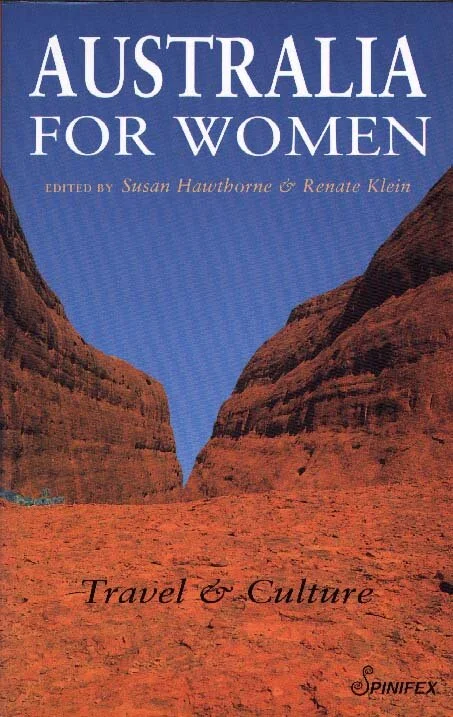
An indispensable book for anyone travelling in Australia who wants to understand how women have contributed to the culture and the history. With contributions from Indigenous writers on land, culture and life and from women who trace their heritage to one of the many waves of migrants over more than 200 years. From landscape to literature, from the history of feminism to women’s involvement in film, theatre and the visual arts, from myth to music this book shows a different side of travelling in Australia.
1994 | ISBN 9781875559275 | Paperback | 218 x 140 mm | 432 pp
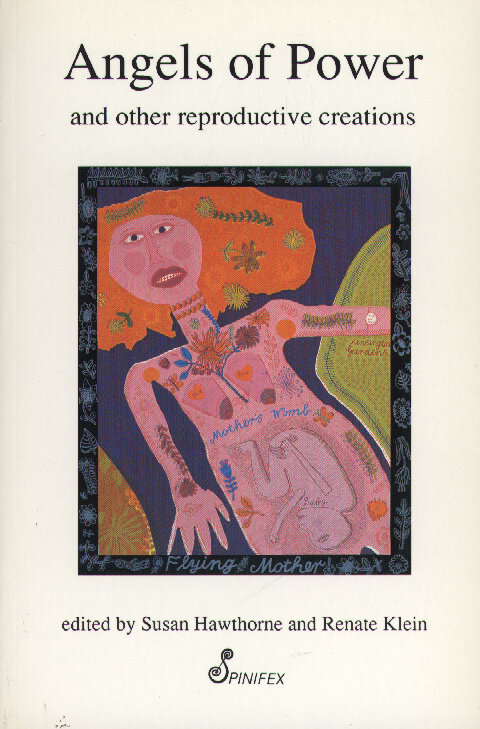
In the tradition of Mary Shelley's Frankenstein, these writers rework images of the body. Imagination, vision and a sense of the absurd come together and demonstrate that women can resist the power of god-like scientists who long to create monsters and angels.
1991 | ISBN 9781875559008 | Paperback | 197 x 130 mm | 252 pp
Ebooks

The best-selling book that started the series exploring the significance of animals in women’s lives. Eighty-six women and girls from all across the globe contributed to this beautiful collection of stories, letters, poems and photographs, sharing the funny, sad and amazing tales of their relationships with dogs. Readers will cry and laugh as they enjoy this homage to their best friends: dogs they’ve grown up with; dogs with incredible character; dogs who’ve changed – even saved – women’s lives.
2001 | 208 pp

The best-selling book that started the series exploring the significance of animals in women’s lives. Eighty-six women and girls from all across the globe contributed to this beautiful collection of stories, letters, poems and photographs, sharing the funny, sad and amazing tales of their relationships with dogs. Readers will cry and laugh as they enjoy this homage to their best friends: dogs they’ve grown up with; dogs with incredible character; dogs who’ve changed – even saved – women’s lives.
2001 | 208 pp

Renate Klein (eds.)
Celebrity couple Kim Kardashian and Kanye West and their sweet new baby Chicago. Tom Daley and Dustin Lance Black and their cute little baby Robert. And thousands of other couples and single people around the world who obtain babies through surrogacy arrangements. The general public is compassionate to their plight and supportive of their 'right' to a baby.
But who are the faceless, nameless women who nurture and give birth to these babies? These women who are left with empty arms and leaking breasts after delivery? Surrogacy-dealing companies call them ‘special angels’ who ‘make miracles possible’, giving ‘an extraordinary gift’. IVF clinics call them ‘gestational surrogates’. The intended parents have promised them healthcare, full reimbursement, and ongoing contact with the baby. What could possibly go wrong?
Everything. Because surrogacy violates the human rights of the women whose bodies are used, and the children who are born. Because it is a fundamentally flawed and misogynist concept to imagine that women are interchangeable. And it is wishful thinking that watertight legal contracts and counselling can fix this.
In this book, strong and courageous women from the USA, the UK, Canada, Australia, India, Austria and Russia share their true stories of becoming 'surrogate' mothers out of kindness and compassion (or need for money), only to be deceived, neglected, abused, harassed, or abandoned by ‘baby buyers’, clinics, and lawyers. Their stories are tragic, shocking, and revelatory of a profit-driven industry that preys on desperation and women’s compassion.
It becomes clear that it is not the occasional dysfunctional relationship or unreasonable surrogate causing problems in the surrogacy industry. Rather, it is the very nature of surrogacy as well as the surrogacy industry to use and abuse and discard. This book throws down a challenge to Big Fertility and its minions: women are not ovens or suitcases, babies are not products. Love is not to be bought.
2019 | ISBN 9781925581584 | Paperback | 215 x 137 mm | 142 pp

Renate Klein (eds.)
Celebrity couple Kim Kardashian and Kanye West and their sweet new baby Chicago. Tom Daley and Dustin Lance Black and their cute little baby Robert. And thousands of other couples and single people around the world who obtain babies through surrogacy arrangements. The general public is compassionate to their plight and supportive of their 'right' to a baby.
But who are the faceless, nameless women who nurture and give birth to these babies? These women who are left with empty arms and leaking breasts after delivery? Surrogacy-dealing companies call them ‘special angels’ who ‘make miracles possible’, giving ‘an extraordinary gift’. IVF clinics call them ‘gestational surrogates’. The intended parents have promised them healthcare, full reimbursement, and ongoing contact with the baby. What could possibly go wrong?
Everything. Because surrogacy violates the human rights of the women whose bodies are used, and the children who are born. Because it is a fundamentally flawed and misogynist concept to imagine that women are interchangeable. And it is wishful thinking that watertight legal contracts and counselling can fix this.
In this book, strong and courageous women from the USA, the UK, Canada, Australia, India, Austria and Russia share their true stories of becoming 'surrogate' mothers out of kindness and compassion (or need for money), only to be deceived, neglected, abused, harassed, or abandoned by ‘baby buyers’, clinics, and lawyers. Their stories are tragic, shocking, and revelatory of a profit-driven industry that preys on desperation and women’s compassion.
It becomes clear that it is not the occasional dysfunctional relationship or unreasonable surrogate causing problems in the surrogacy industry. Rather, it is the very nature of surrogacy as well as the surrogacy industry to use and abuse and discard. This book throws down a challenge to Big Fertility and its minions: women are not ovens or suitcases, babies are not products. Love is not to be bought.
2019 | ISBN 9781925581584 | Paperback | 215 x 137 mm | 142 pp

An international anthology of writings on cyberculture and feminist interventions. A diverse and at times fractious discussion of issues raised by these new forms of cultural expression. The contributors engage with a range of questions including: What is cyberfeminism? How does feminism influence multimedia production? What are the possibilities for feminist activism and research on the internet? How are colonisation, cybersex and virtuality to be theorised? How do these technologies affect our theories about bodies and minds? And what are the implications for creative artists?
1999 | 434 pp

An international anthology of writings on cyberculture and feminist interventions. A diverse and at times fractious discussion of issues raised by these new forms of cultural expression. The contributors engage with a range of questions including: What is cyberfeminism? How does feminism influence multimedia production? What are the possibilities for feminist activism and research on the internet? How are colonisation, cybersex and virtuality to be theorised? How do these technologies affect our theories about bodies and minds? And what are the implications for creative artists?
1999 | 434 pp

Renate Klein and Susan Hawthorne (eds)
What was it like to participate in the Women’s Liberation Movement? What made millions of women step forward from the 1960s onwards and join it in different ways? Many of the 56 women in this book were there. They describe how they have contributed in multitudinous ways across politics, the arts, health, education, environmentalism, economics and science and created wonderfully rebellious activism. And how they continue this activism today with determined grittiness. Here are women – all over 70 years of age – still railing against the patriarchal systemic oppression of women, still fighting back. “Don’t Call Me Sweetie,” “Never Waste a Good Crisis” and “Still Here, Still Clear and Still Lesbian” is some of what they want us to know.
The contributors to Not Dead Yet have created new analyses with new language and new kinds of organisations always aware of the ways in which the system is stacked against us, particularly against radical feminists. But we persist. We share the revolutionary zest we have carried with us over many decades. There is history, there is subversion and there are many extraordinary acts of courage. The language is full of irony and wit – as well as deadly serious.
The Women’s Liberation Movement has had a profound effect on the lives of millions of women and in turn those women have changed our world. But the struggle continues. May these riveting tales by the foremothers of the movement inspire young women readers. #NotDeadYet

Renate Klein and Susan Hawthorne (eds)
What was it like to participate in the Women’s Liberation Movement? What made millions of women step forward from the 1960s onwards and join it in different ways? Many of the 56 women in this book were there. They describe how they have contributed in multitudinous ways across politics, the arts, health, education, environmentalism, economics and science and created wonderfully rebellious activism. And how they continue this activism today with determined grittiness. Here are women – all over 70 years of age – still railing against the patriarchal systemic oppression of women, still fighting back. “Don’t Call Me Sweetie,” “Never Waste a Good Crisis” and “Still Here, Still Clear and Still Lesbian” is some of what they want us to know.
The contributors to Not Dead Yet have created new analyses with new language and new kinds of organisations always aware of the ways in which the system is stacked against us, particularly against radical feminists. But we persist. We share the revolutionary zest we have carried with us over many decades. There is history, there is subversion and there are many extraordinary acts of courage. The language is full of irony and wit – as well as deadly serious.
The Women’s Liberation Movement has had a profound effect on the lives of millions of women and in turn those women have changed our world. But the struggle continues. May these riveting tales by the foremothers of the movement inspire young women readers. #NotDeadYet
What happens when an old radical lesbian feminist has an idea of publishing a collection of her papers? She looks at her writings and despairs. She has written too much. The idea gets shelved. Fifteen years later, she revisits the project. But it is worse now because she has written more … But being stared down by her publisher she gets a grip and (painfully) pares down her oeuvre to a manageable size.
This then is a skeleton journey through Renate’s life and her survival in patriarchy. The book starts with her passion for autonomous Women’s Studies as an intellectual necessity and radical feminist research methodology to give women a voice. And why men don’t belong in Women’s Studies classes. Next, she documents her immersion in a critique of reproductive technologies as a member of FINRRAGE. We hear about the exploitation of a desire in IVF followed with problems of egg ‘donations’, cloning, and of course the human rights violation of women and children in surrogacy. A critique of the illusion of ‘choice’ – endorsed by liberal feminists – has to be in the book and with it papers on long-acting contraceptives. Necessary warnings about the unethics of hormone replacement therapy and the French abortion pill RU 486 are included too.
As a feminist women’s health activist, Renate Klein has always been concerned about the fact that women are our bodies and that reproductive technologies in tandem with postmodern and queer theories result in the fragmentation and dismemberment of women: from the one an egg, from the other a uterus … this erasure of women is helped by dissociation and a belief in delusions – such as the assault on women’s existence by transgender ideologues.
Aged 80, Renate Klein continues her quest for the liberation of all women, whatever age, sexuality, abilities and wherever we live. She is ‘not dead yet’ and hopes this collection will stir young women into action to continue the crucial rebellion against the system of patriarchy before it fully crushes women, animals and nature.
SEPTEMBER 2025 | ISBN 9781925950977 | 473 pages
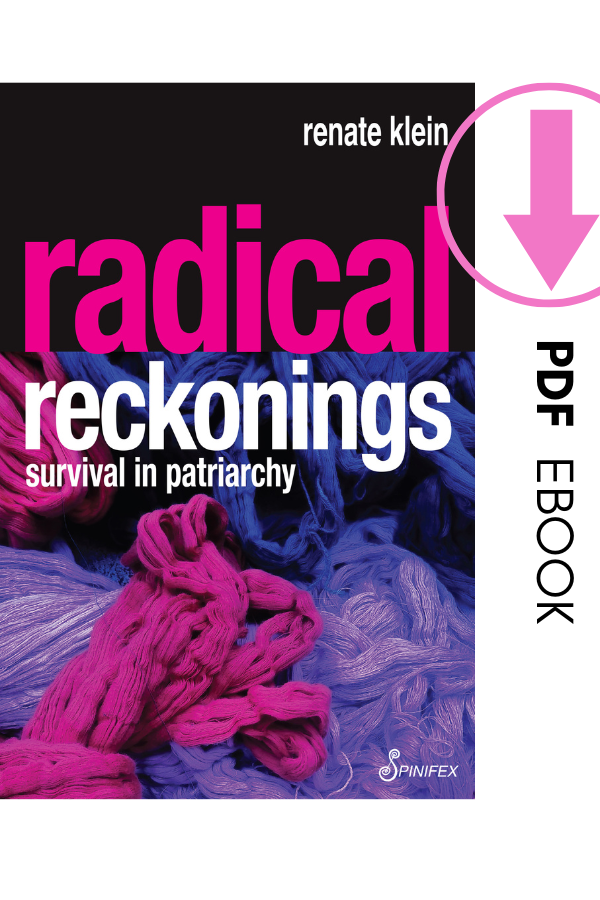
What happens when an old radical lesbian feminist has an idea of publishing a collection of her papers? She looks at her writings and despairs. She has written too much. The idea gets shelved. Fifteen years later, she revisits the project. But it is worse now because she has written more … But being stared down by her publisher she gets a grip and (painfully) pares down her oeuvre to a manageable size.
This then is a skeleton journey through Renate’s life and her survival in patriarchy. The book starts with her passion for autonomous Women’s Studies as an intellectual necessity and radical feminist research methodology to give women a voice. And why men don’t belong in Women’s Studies classes. Next, she documents her immersion in a critique of reproductive technologies as a member of FINRRAGE. We hear about the exploitation of a desire in IVF followed with problems of egg ‘donations’, cloning, and of course the human rights violation of women and children in surrogacy. A critique of the illusion of ‘choice’ – endorsed by liberal feminists – has to be in the book and with it papers on long-acting contraceptives. Necessary warnings about the unethics of hormone replacement therapy and the French abortion pill RU 486 are included too.
As a feminist women’s health activist, Renate Klein has always been concerned about the fact that women are our bodies and that reproductive technologies in tandem with postmodern and queer theories result in the fragmentation and dismemberment of women: from the one an egg, from the other a uterus … this erasure of women is helped by dissociation and a belief in delusions – such as the assault on women’s existence by transgender ideologues.
Aged 80, Renate Klein continues her quest for the liberation of all women, whatever age, sexuality, abilities and wherever we live. She is ‘not dead yet’ and hopes this collection will stir young women into action to continue the crucial rebellion against the system of patriarchy before it fully crushes women, animals and nature.
SEPTEMBER 2025 | ISBN 9781925950977 | 473 pages
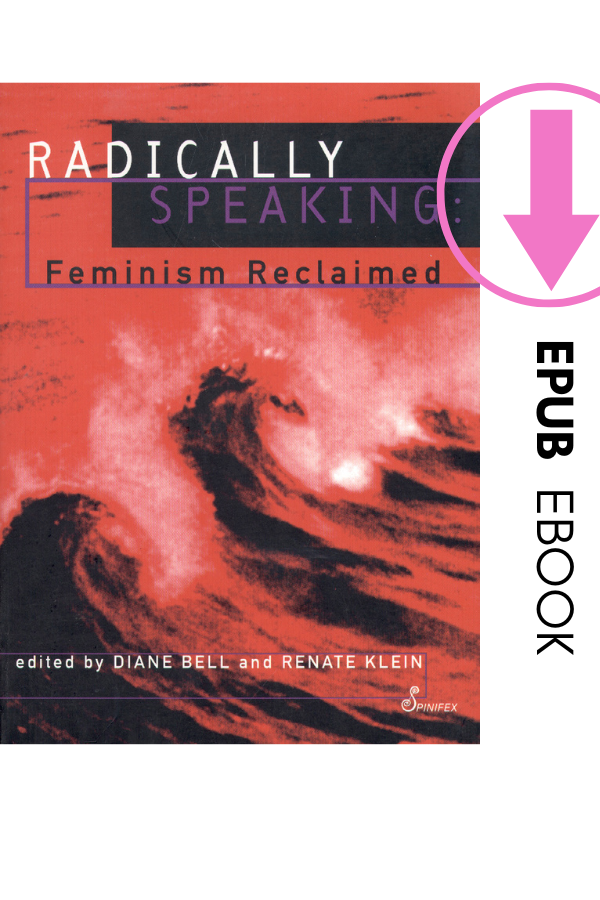
Since the 1960s radical feminists have worked to articulate a vision of the world in which all women are safe and are acknowledged as human beings in their own right. Their projects include Take Back the Night campaigns, establishing women’s refuges, rape crisis centres, health centres, organising against pornography and developing courses in Women’s Studies. The richness of the practice and the theory of radical feminism is often misrepresented or unknown. Radically Speaking tells this important story.
1996 | 654 pp

Since the 1960s radical feminists have worked to articulate a vision of the world in which all women are safe and are acknowledged as human beings in their own right. Their projects include Take Back the Night campaigns, establishing women’s refuges, rape crisis centres, health centres, organising against pornography and developing courses in Women’s Studies. The richness of the practice and the theory of radical feminism is often misrepresented or unknown. Radically Speaking tells this important story.
1996 | 654 pp

WITH NEW PREFACE
Pared down to cold hard facts, surrogacy is the commissioning/buying/ renting of a woman into whose womb an embryo is inserted and who thus becomes a ‘breeder’ for a third party.
Surrogacy is heavily promoted by the stagnating IVF industry which seeks new markets for women over 40, and gay men who believe they have a ‘right’ to their own children and ‘family foundation’. Pro-surrogacy groups in rich countries such as Australia and Western Europe lobby for the shift to commercial surrogacy. Their capitalist neo-liberal argument is that a well-regulated fertility industry would avoid the exploitative practices of poor countries.
Central to the project of cross-border surrogacy is the ideology that legalised commercial surrogacy is a legitimate means to provide infertile couples and gay men with children who share all or part of their genes. Women, without whose bodies this project is not possible, are reduced to incubators, to ovens, to suitcases. And the ‘product child’ is a tradable commodity who has never consented to being a ‘take away baby’: removed from their birth mother and given to strangers aka ‘intended parents’. Still, those in favour of this practice of reproductive slavery speak of ‘Fair Trade Surrogacy’ and ‘responsible surrogacy’.
In Surrogacy: A Human Rights Violation Renate Klein details her objections to surrogacy by examining the short- and long-term harms done to the so-called surrogate mothers, egg providers and the female partner in a heterosexual commissioning couple. Klein also looks at the rights of children and compares surrogacy to (forced) adoption practices. She concludes that surrogacy, whether so-called altruistic or commercial can never be ethical and outlines forms of resistance to Stop Surrogacy Now. www.stopsurrogacynow.com
It is the global advertising campaigns that groom infertile couples and gay men that have led to the establishment of multibillion cross-border industries: money made literally from women’s flesh.
MARCH 2026 | ISBN 9781922964373 | 209 pages

Renate Klein
WITH NEW PREFACE
Pared down to cold hard facts, surrogacy is the commissioning/buying/ renting of a woman into whose womb an embryo is inserted and who thus becomes a ‘breeder’ for a third party.
Surrogacy is heavily promoted by the stagnating IVF industry which seeks new markets for women over 40, and gay men who believe they have a ‘right’ to their own children and ‘family foundation’. Pro-surrogacy groups in rich countries such as Australia and Western Europe lobby for the shift to commercial surrogacy. Their capitalist neo-liberal argument is that a well-regulated fertility industry would avoid the exploitative practices of poor countries.
Central to the project of cross-border surrogacy is the ideology that legalised commercial surrogacy is a legitimate means to provide infertile couples and gay men with children who share all or part of their genes. Women, without whose bodies this project is not possible, are reduced to incubators, to ovens, to suitcases. And the ‘product child’ is a tradable commodity who has never consented to being a ‘take away baby’: removed from their birth mother and given to strangers aka ‘intended parents’. Still, those in favour of this practice of reproductive slavery speak of ‘Fair Trade Surrogacy’ and ‘responsible surrogacy’.
In Surrogacy: A Human Rights Violation Renate Klein details her objections to surrogacy by examining the short- and long-term harms done to the so-called surrogate mothers, egg providers and the female partner in a heterosexual commissioning couple. Klein also looks at the rights of children and compares surrogacy to (forced) adoption practices. She concludes that surrogacy, whether so-called altruistic or commercial can never be ethical and outlines forms of resistance to Stop Surrogacy Now. www.stopsurrogacynow.com
It is the global advertising campaigns that groom infertile couples and gay men that have led to the establishment of multibillion cross-border industries: money made literally from women’s flesh.
MARCH 2026 | ISBN 9781922964373 | 209 pages

Renate Klein
Übersetzt von Doris Hermanns
Dr. Renate Klein, schweiz-australische Biologin und Sozialwissenschaftlerin und langjährige Frauengesundheitsaktivistin, beschreibt in diesem Buch die katastrophalen Folgen der frauenfeindlichen und rassistischen Ausbeutung von unterprivilegierten Frauen als „Brutöfen“ und Eizellen-„Spenderinnen“ in der internationalen Mietmutterschafts-Industrie.
Auch die Menschenrechte der Kinder werden verletzt, da sie nie einwilligten „Take-Away“-Babys zu sein.
Das Buch beschreibt was Mietmutterschaft ist und welche Leute es betrifft. Ich argumentiere, dass Mietmutterschaft eine Menschenrechtsverletzung von Frauen und Kindern ist, und dass sie weltweit abgeschafft werden muss. In Deutschland, der Schweiz und Österreich ist sie verboten und das muss auch so bleiben. Bei Mietmutterschaft bestellen sich Leute, die es sich leisten können ein Kind - also ein Objekt, dass einfach so gekauft wird.
Mietmutterschaft kann als reproduktive Prostitution beschrieben werden, sowie auch als Kindsverkauf. Sie widerspricht allen UN-Konventionen und speziell der UN Konvention zum Recht des Kindes.
Renate Klein warnt vor kapitalistisch-neoliberalen Versuchen, Mietmutterschaft zu regulieren und fordert den totalen und globalen Stop dieser unethischen Industrie.
SEPTEMBER 2022 | ISBN 9781925950755 | Seitenanzahl: 230
Translations & Rights Sales

Radically Speaking edited by Diane Bell and Renate Klein
Selections in Complex Chinese: Fembooks;
UK: Zed Books

Australia for Women edited by Susan Hawthorne and Renate Klein
German: Australien der Frauen, Frauenoffensive.
Commissioned by Frauenoffensive in 1989. They were released almost simultaneously and also published by The Feminist Press USA.

RU 486 by Renate Klein, Janice Raymond and Lynette Dumble: Bangladesh: Narigrantha Prabartana; USA: Institute on Women and Technology; German: Die Abtreibungspille RU486: Wundermittel oder Gefahr: Konkret Literatur Verlag.
Second Aust edition 2013
Co-edition rights donated to Narigrantha Prabartana, Bangladesh
WITH NEW PREFACE
Renate Klein
Pared down to cold hard facts, surrogacy is the commissioning/buying/ renting of a woman into whose womb an embryo is inserted and who thus becomes a ‘breeder’ for a third party.
Surrogacy is heavily promoted by the stagnating IVF industry which seeks new markets for women over 40, and gay men who believe they have a ‘right’ to their own children and ‘family foundation’. Pro-surrogacy groups in rich countries such as Australia and Western Europe lobby for the shift to commercial surrogacy. Their capitalist neo-liberal argument is that a well-regulated fertility industry would avoid the exploitative practices of poor countries.
Central to the project of cross-border surrogacy is the ideology that legalised commercial surrogacy is a legitimate means to provide infertile couples and gay men with children who share all or part of their genes. Women, without whose bodies this project is not possible, are reduced to incubators, to ovens, to suitcases. And the ‘product child’ is a tradable commodity who has never consented to being a ‘take away baby’: removed from their birth mother and given to strangers aka ‘intended parents’. Still, those in favour of this practice of reproductive slavery speak of ‘Fair Trade Surrogacy’ and ‘responsible surrogacy’.
In Surrogacy: A Human Rights Violation Renate Klein details her objections to surrogacy by examining the short- and long-term harms done to the so-called surrogate mothers, egg providers and the female partner in a heterosexual commissioning couple. Klein also looks at the rights of children and compares surrogacy to (forced) adoption practices. She concludes that surrogacy, whether so-called altruistic or commercial can never be ethical and outlines forms of resistance to Stop Surrogacy Now. www.stopsurrogacynow.com
It is the global advertising campaigns that groom infertile couples and gay men that have led to the establishment of multibillion cross-border industries: money made literally from women’s flesh.
MARCH 2026 | ISBN 9781922964366 | Paperback | 180 x 135 mm | 272 pp
THIS BOOK IS PART OF THE SPINIFEX SHORTS COMPLETE COLLECTION & THE STOP SURROGACY NOW COLLECTION