
Suniti Namjoshi

Suniti Namjoshi was born in Mumbai, India. She has worked as an Officer in the Indian Administrative Service and in academic posts in India and Canada. From 1972 to 1988, she taught in the Department of English at the University of Toronto and now lives and writes in Devon, England.
She has published numerous poems, fables and reviews: in anthologies, collections and literary and Women's Studies journals, in India, Canada, the US and Britain. She has published several books of poetry including The Authentic Lie (1982) and From the Book of Nightmares (1984). Feminist Fables (1981), was reissued by Spinifex Press (1993) and Virago (1994). Her other books include The Conversations of Cow and The Mothers of Maya Diip. Spinifex published St Suniti and the Dragon in 1993, Building Babel in 1996 and Goja in 2000.
Sycorax: New Fables and Poems was published by Penguin, India in 2006. She is also the author of a dozen children’s books in the Aditi series published by Tulika Publishers, Chennai.
In 2023 she was elected as Fellow of the Royal Society of Literature.

What do you do when you fall in love with your next-door neighbour? You peer at each other through a hole in the fence and eventually climb over.
Sybil is a member of The Good-Hearted Gardeners, a Society for Well-Meaning Efforts for the Betterment of Language and the Salvation of the Planet, which her lover, Demo, is allowed to join. It’s funded by MI5, who ask them to monetise and weaponise the English language. Soon afterwards they discover that English is even more widespread than anyone had thought. Even the birds and the fish, the cows and the kangaroos can speak it – when they choose. The Good-Hearted Gardeners set about trying to talk to anyone – crows, magpies, robins, goldfish, cows, horses, rats, mice – who will talk to them.
With climate change and technology gone mad, what’s in store is a frightening scenario that threatens everyone – humans, animals, plants. Can the headlong rush to extinction be halted?
When the birds, and the cows and the horses and the mice and all the rest come together, much is made possible. But at what cost? Will the planet and its inhabitants be saved?
A comedic allegory for our future.
NOVEMBER 2023 | ISBN 9781922964007 | Paperback | 112 pages | 148 x 210 mm
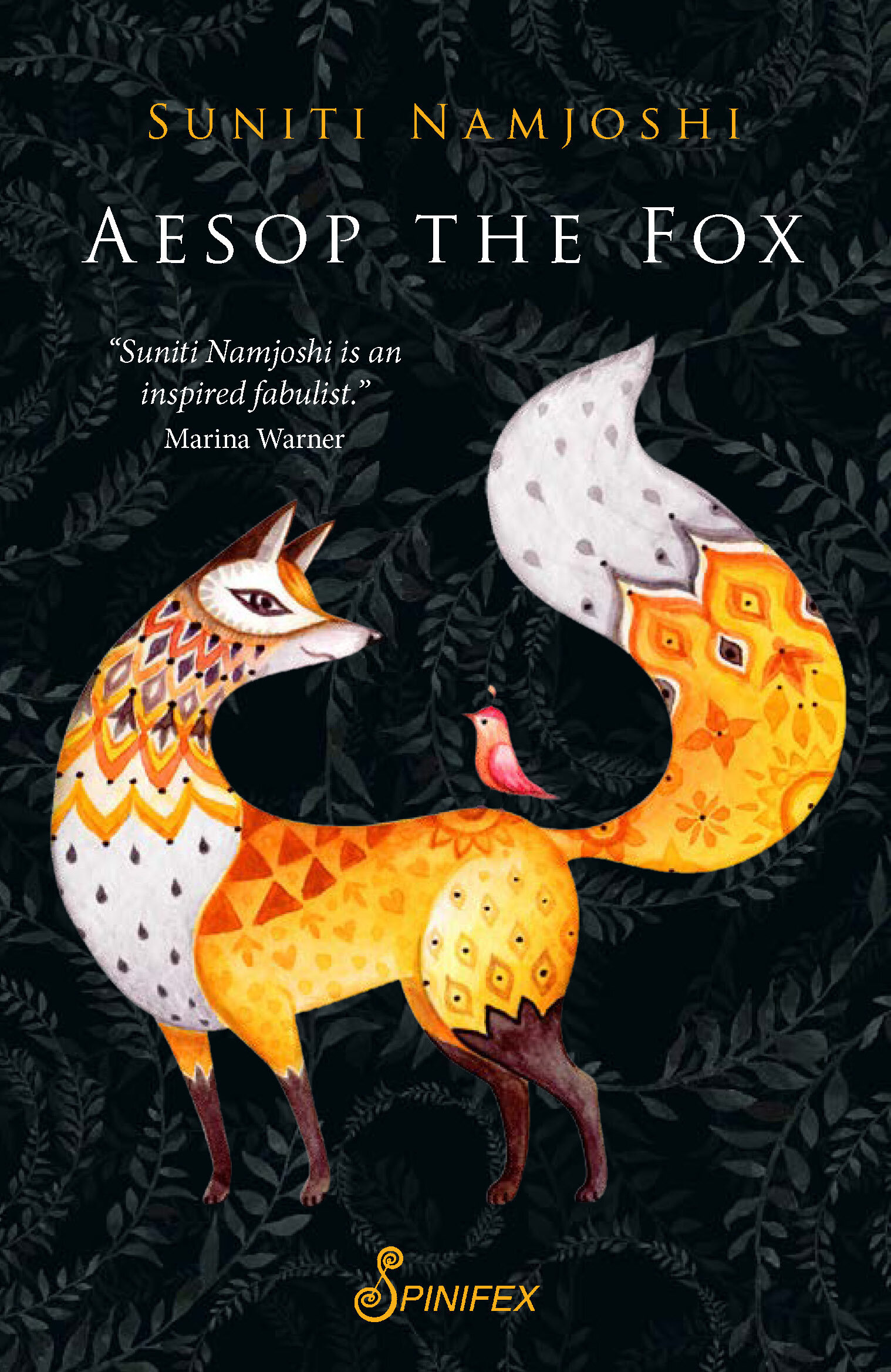
Aesop’s fables are brought to life by the timely intervention of Sprite from the future, who prods Aesop into debate about the meaning of stories: are they for fun, or do they have the chance to change the world? This book offers a virtuoso display into how the building blocks of fables can enchant, enrage, enlighten and educate us all.
Very little is known about Aesop who was supposed to have been a slave on the island of Samos in the sixth century BCE. It is his fables (and those attributed to him) that have come down to us through the centuries. In these tales, a fabulist from the future, referred to as Sprite, hoicks herself back to his century. “Why didn’t you save the world?” That’s the Sprite’s cry. Aesop, meanwhile, is trying to save his skin, make up his fables and live his life. Given the pitfalls of human nature, are the fables an Instruction Manual for staying out of trouble? What about morals, what about reform, what about the castigation of social evils? Sprite nags and cajoles and begins to wonder how much power a writer really has.
The book offers a virtuoso display of how the building blocks of a fable can be used in a variety of ways. It’s witty, it’s satirical and the Sprite herself is a comical figure. But at the end, when she has to return to her own time, that is to our own time and to our broken world, her central question suddenly seems less absurd, and far more urgent.
Endorsements
Suniti Namjoshi is an inspired fabulist.
—Marina Warner
2018 | ISBN 9781925581515 | Paperback | 130 pages | 198 x 128 mm

In Suki, fabulist Suniti Namjoshi weaves a witty and delightful tapestry from threads of longing, loss, memory, metaphor, and contemplation. Suki is a lightly fictionalised memoir of one woman and her cat. Comparable to J.R. Ackerley’s My Dog Tulip, Nilanjana Roy’s The Wildings and Paul Auster’s Mr Bones, the book is full of tender wisdom and sharp insight into the unique relationship between human and animal.
“Let’s face it, “ I told her one day. “The reason we get on is because we’re a pair of murderous animals and we acknowledge it.” I had lapsed – once again – from being vegetarian and was trying to think profound and moral thoughts about the food chain. Suki wasn’t having any of it. “I don’t spend my time committing murder,” she told me. “I spend it sleeping.”
“Well, that’s a waste of time!”
“When I sleep, I dream.”
“What do you dream about?”
“About life,” she replied in a superior fashion.
2014 | 9781742198880 | Paperback | 132 pp

It was on a sabbatical in England in the late 1970s that Suniti Namjoshi discovered feminism – or rather, she discovered that other feminists existed, and many among them shared her thoughts and doubts, her questions and visions.
Since then she has been writing–fables, poetry, prose, autobiography, children’s stories– about power, about inequality, about oppression, effectively using the power of language and the literary tradition to expose what she finds absurd and unacceptable.
This new collection brings together in one volume a huge range of Namjoshi’s writings, starting with her classic collection, Feminist Fables, and coming right up to her latest work.
2012 | ISBN 9781742198217 | Paperback | 200 x 130 mm | 253 pp
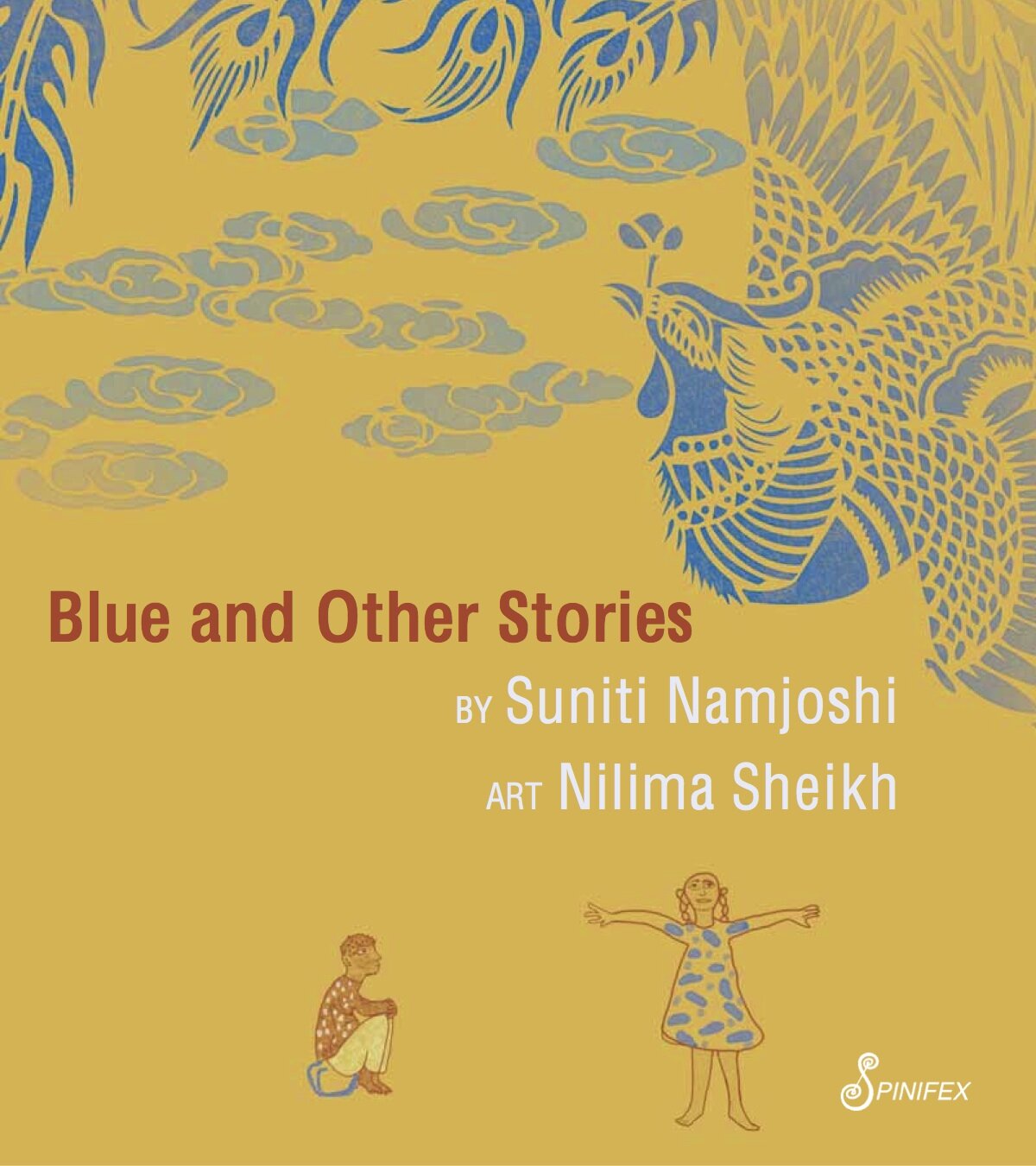
Nilima Sheikh (Artist)
Suniti Namjoshi, internationally acclaimed fabulist and poet, brings both depth and lightness of touch to Blue and Other Stories. Playful and gentle, each of these stories effectively traverses layers of myth to speak to both children and adults.
Nilima Sheikh’s paintings hang in galleries all over the world, including Australia. The sensuous colours and delicate textures of her art match and enhance Suniti’s subtlety. Blue and Other Stories is the coming together of two fine minds to create a contemporary classic.
2012 | ISBN 9781742198392 | Paperback | 222 x 200 mm | 36 pp
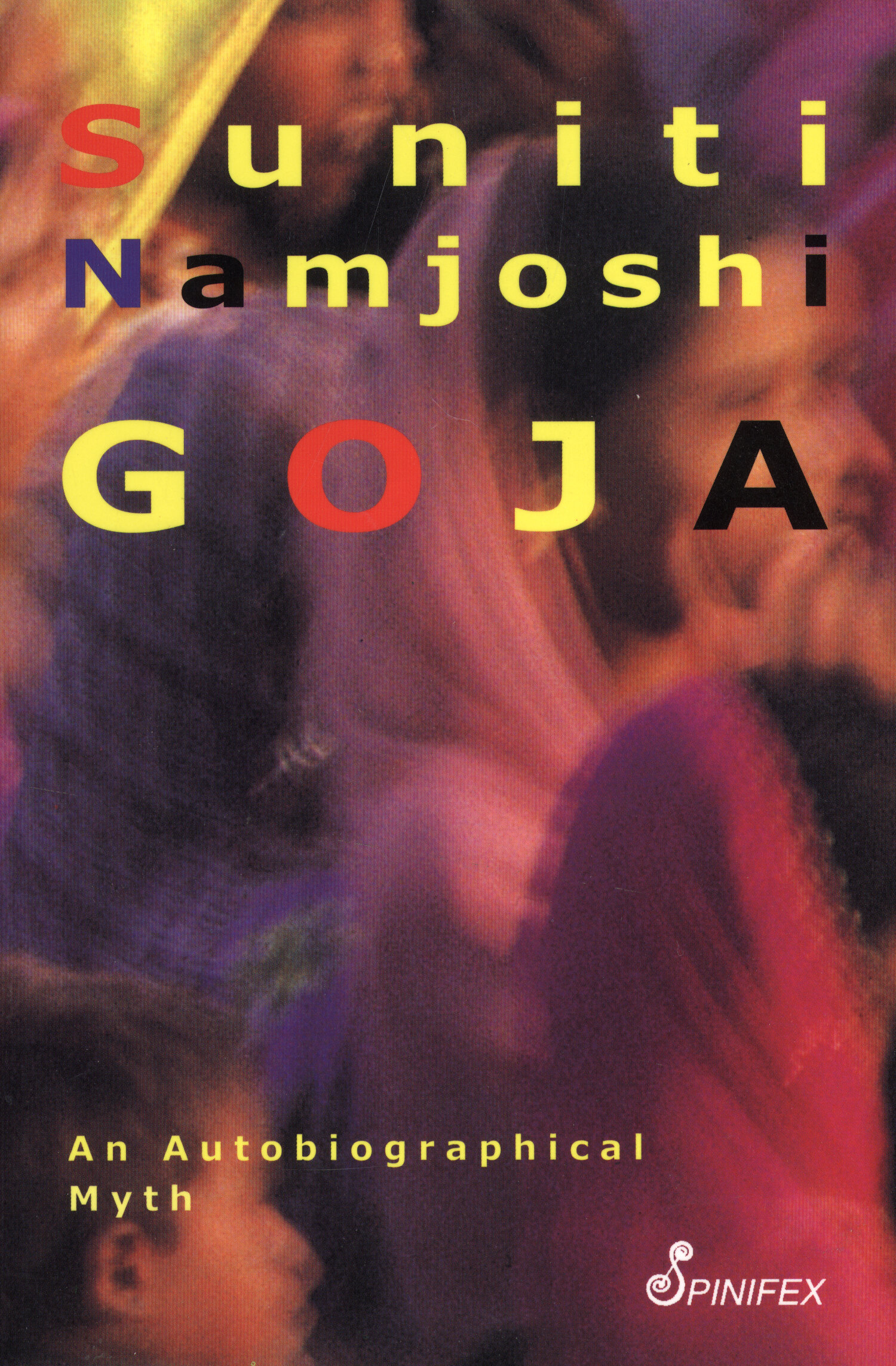
I had thought once that I felt most at home in a plane in mid-air, but that isn't true. I belong to India and to the West. Both belong to me and both reject me. I have to make sense of what has been and what there is.
Suniti Namjoshi traverses the cultures of the East and of the West. She muses on the patterns of her life, and of the impact of colonisation, both the resistances and the acceptances of it. Growing up a princess in the ruling house of Maharashtra, the two most important relationships in her life were with her grandmother, the Ranisaheb, and with Goja, the servant woman who slept beside her bed. When she was ten, her test pilot father was killed in an air accident and Suniti was sent away to boarding school. After working in the Indian Civil Service for some years, she decided that she wanted to be a poet and she moved to the West. In the US and Canada she became just another brown-skinned immigrant without the privileges of her childhood. In beautifully crafted prose, Suniti Namjoshi converses in her head with Goja and grandmother Goldie. They talk about the East and the West, about class privilege and poverty, about language and literacy, and about all the contradictions which Suniti’s life has brought into their relationship. Suniti Namjoshi has a marvellously rich story to tell and she tells it with poetic charm and a light touch. She delves deeply into the paradoxes of her life, and has much to share with others. She is articulate and a fine conversationalist. Suniti Namjoshi is a fabulist, poet, novelist, and now, autobiographer.
2000 | ISBN 9781875559978 | Paperback | 200 x 132 mm | 157 pages
Older Titles

Every retelling of a myth is a reworking of it. Every hearing or reading of a myth is a recreation of it. It is only when we engage with a myth that it resonates, becomes charged and recharged with meaning. And so it is in Building Babel, a book that re-engages with myth through the cyberworld, where worlds intersect and are transformed.
1996 | ISBN 9781875559565 | Paperback | 200 x 130 mm | 192 pp

There was once a man who thought he could do anything, even be a woman. So he acquired a baby, changed its diapers and fed the damn thing three times a night. He did all the housework, was deferential to men, and got worn out. But he had a brother, Jack Cleverfellow, who hired a wife and got it all done.
Suniti Namjoshi is elegant and subversive in creating new patterns of meaning through stories that are simultaneously spare and full of richness. An ingenious reworking of fairy tales from East and West.
1993 | ISBN 9781875559190 | Paperback | 205 x 120 mm | 134

Once she had reconciled herself to the view that a garden snake, however beautiful, was not evil, Suniti decided to set about the matter in a more businesslike way. She put an ad in the paper: ‘Elderly gentlewoman seeks to make a bargain with the devil’.
Where are good and evil to be found? What is the path to sainthood? Is it through poetry or good deeds? St Suniti talks to angels and flowers, dragons, saints and ordinary people in her quest. Suniti Namjoshi has original imagination full of surprises encompassing saints and wolves, Beowulf and Bangladesh, Grendel and Star Trek.
It’s hilarious, witty, elegantly written, hugely inventive, fantastic, energetic, up to the minute, analytic, touching.
1993 | ISBN 9781875559183 | Paperback | 198 x 125 mm | 126 pp
Ebooks

Aesop’s fables are brought to life by the timely intervention of Sprite from the future, who prods Aesop into debate about the meaning of stories: are they for fun, or do they have the chance to change the world? This book offers a virtuoso display into how the building blocks of fables can enchant, enrage, enlighten and educate us all.
Very little is known about Aesop who was supposed to have been a slave on the island of Samos in the sixth century BCE. It is his fables (and those attributed to him) that have come down to us through the centuries. In these tales, a fabulist from the future, referred to as Sprite, hoicks herself back to his century. “Why didn’t you save the world?” That’s the Sprite’s cry. Aesop, meanwhile, is trying to save his skin, make up his fables and live his life. Given the pitfalls of human nature, are the fables an Instruction Manual for staying out of trouble? What about morals, what about reform, what about the castigation of social evils? Sprite nags and cajoles and begins to wonder how much power a writer really has.
The book offers a virtuoso display of how the building blocks of a fable can be used in a variety of ways. It’s witty, it’s satirical and the Sprite herself is a comical figure. But at the end, when she has to return to her own time, that is to our own time and to our broken world, her central question suddenly seems less absurd, and far more urgent.
Endorsements
Suniti Namjoshi is an inspired fabulist.
—Marina Warner

Aesop’s fables are brought to life by the timely intervention of Sprite from the future, who prods Aesop into debate about the meaning of stories: are they for fun, or do they have the chance to change the world? This book offers a virtuoso display into how the building blocks of fables can enchant, enrage, enlighten and educate us all.
Very little is known about Aesop who was supposed to have been a slave on the island of Samos in the sixth century BCE. It is his fables (and those attributed to him) that have come down to us through the centuries. In these tales, a fabulist from the future, referred to as Sprite, hoicks herself back to his century. “Why didn’t you save the world?” That’s the Sprite’s cry. Aesop, meanwhile, is trying to save his skin, make up his fables and live his life. Given the pitfalls of human nature, are the fables an Instruction Manual for staying out of trouble? What about morals, what about reform, what about the castigation of social evils? Sprite nags and cajoles and begins to wonder how much power a writer really has.
The book offers a virtuoso display of how the building blocks of a fable can be used in a variety of ways. It’s witty, it’s satirical and the Sprite herself is a comical figure. But at the end, when she has to return to her own time, that is to our own time and to our broken world, her central question suddenly seems less absurd, and far more urgent.
Endorsements
Suniti Namjoshi is an inspired fabulist.
—Marina Warner

Every retelling of a myth is a reworking of it. Every hearing or reading of a myth is a recreation of it. It is only when we engage with a myth that it resonates, becomes charged and recharged with meaning. And so it is in Building Babel, a book that re-engages with myth through the cyberworld, where worlds intersect and are transformed.

Every retelling of a myth is a reworking of it. Every hearing or reading of a myth is a recreation of it. It is only when we engage with a myth that it resonates, becomes charged and recharged with meaning. And so it is in Building Babel, a book that re-engages with myth through the cyberworld, where worlds intersect and are transformed.

What do you do when you fall in love with your next-door neighbour? You peer at each other through a hole in the fence and eventually climb over.
Sybil is a member of The Good-Hearted Gardeners, a Society for Well-Meaning Efforts for the Betterment of Language and the Salvation of the Planet, which her lover, Demo, is allowed to join. It’s funded by MI5, who ask them to monetise and weaponise the English language. Soon afterwards they discover that English is even more widespread than anyone had thought. Even the birds and the fish, the cows and the kangaroos can speak it – when they choose. The Good-Hearted Gardeners set about trying to talk to anyone – crows, magpies, robins, goldfish, cows, horses, rats, mice – who will talk to them.
With climate change and technology gone mad, what’s in store is a frightening scenario that threatens everyone – humans, animals, plants. Can the headlong rush to extinction be halted?
When the birds, and the cows and the horses and the mice and all the rest come together, much is made possible. But at what cost? Will the planet and its inhabitants be saved?
A comedic allegory for our future.
NOVEMBER 2023 | 112 pages

What do you do when you fall in love with your next-door neighbour? You peer at each other through a hole in the fence and eventually climb over.
Sybil is a member of The Good-Hearted Gardeners, a Society for Well-Meaning Efforts for the Betterment of Language and the Salvation of the Planet, which her lover, Demo, is allowed to join. It’s funded by MI5, who ask them to monetise and weaponise the English language. Soon afterwards they discover that English is even more widespread than anyone had thought. Even the birds and the fish, the cows and the kangaroos can speak it – when they choose. The Good-Hearted Gardeners set about trying to talk to anyone – crows, magpies, robins, goldfish, cows, horses, rats, mice – who will talk to them.
With climate change and technology gone mad, what’s in store is a frightening scenario that threatens everyone – humans, animals, plants. Can the headlong rush to extinction be halted?
When the birds, and the cows and the horses and the mice and all the rest come together, much is made possible. But at what cost? Will the planet and its inhabitants be saved?
A comedic allegory for our future.
NOVEMBER 2023 | 112 pages

Shouldn’t there be a bridge from the known to the unknown?
In this exquisite elegy, Suniti Namjoshi reflects on the life of her sister Bharati, their overlapping yet disparate lives, their nearness and distance, and what it means to belong and to be valued.
The two sisters love one another and they love birds; but they live on different continents and think in different languages. Is this what sisterhood is really about – to acknowledge difference and still to understand and to care?
This richly textured book with its tender and elegant language is full of both joy and grief. It is a generous yet poignant invitation from the author to us to contemplate our own experiences.
If the casual, implacable insolence of death could be answered by building a monument or by writing an elegy, perhaps it would do till language crumbled and the edifice fell.
JUNE 2024 | 120 pages

Shouldn’t there be a bridge from the known to the unknown?
In this exquisite elegy, Suniti Namjoshi reflects on the life of her sister Bharati, their overlapping yet disparate lives, their nearness and distance, and what it means to belong and to be valued.
The two sisters love one another and they love birds; but they live on different continents and think in different languages. Is this what sisterhood is really about – to acknowledge difference and still to understand and to care?
This richly textured book with its tender and elegant language is full of both joy and grief. It is a generous yet poignant invitation from the author to us to contemplate our own experiences.
If the casual, implacable insolence of death could be answered by building a monument or by writing an elegy, perhaps it would do till language crumbled and the edifice fell.
JUNE 2024 | 120 pages

In Suki, fabulist Suniti Namjoshi weaves a witty and delightful tapestry from threads of longing, loss, memory, metaphor, and contemplation. Suki is a lightly fictionalised memoir of one woman and her cat. Comparable to J.R. Ackerley’s My Dog Tulip, Nilanjana Roy’s The Wildings and Paul Auster’s Mr Bones, the book is full of tender wisdom and sharp insight into the unique relationship between human and animal.
“Let’s face it, “ I told her one day. “The reason we get on is because we’re a pair of murderous animals and we acknowledge it.” I had lapsed – once again – from being vegetarian and was trying to think profound and moral thoughts about the food chain. Suki wasn’t having any of it. “I don’t spend my time committing murder,” she told me. “I spend it sleeping.”
“Well, that’s a waste of time!”
“When I sleep, I dream.”
“What do you dream about?”
“About life,” she replied in a superior fashion.
2014 | 132 pp
In Suki, fabulist Suniti Namjoshi weaves a witty and delightful tapestry from threads of longing, loss, memory, metaphor, and contemplation. Suki is a lightly fictionalised memoir of one woman and her cat. Comparable to J.R. Ackerley’s My Dog Tulip, Nilanjana Roy’s The Wildings and Paul Auster’s Mr Bones, the book is full of tender wisdom and sharp insight into the unique relationship between human and animal.
“Let’s face it, “ I told her one day. “The reason we get on is because we’re a pair of murderous animals and we acknowledge it.” I had lapsed – once again – from being vegetarian and was trying to think profound and moral thoughts about the food chain. Suki wasn’t having any of it. “I don’t spend my time committing murder,” she told me. “I spend it sleeping.”
“Well, that’s a waste of time!”
“When I sleep, I dream.”
“What do you dream about?”
“About life,” she replied in a superior fashion.
2014 | 132 pp
Translations

Feminist Fables - Spinifex edition and the Turkish edition
Suniti Namjoshi
Shouldn’t there be a bridge from the known to the unknown?
In this exquisite elegy, Suniti Namjoshi reflects on the life of her sister Bharati, their overlapping yet disparate lives, their nearness and distance, and what it means to belong and to be valued.
The two sisters love one another and they love birds; but they live on different continents and think in different languages. Is this what sisterhood is really about – to acknowledge difference and still to understand and to care?
This richly textured book with its tender and elegant language is full of both joy and grief. It is a generous yet poignant invitation from the author to us to contemplate our own experiences.
If the casual, implacable insolence of death could be answered by building a monument or by writing an elegy, perhaps it would do till language crumbled and the edifice fell.
JUNE 2024 | ISBN 9781922964083 | Paperback | 120 pages | 128 × 198 mm
Endorsements