
With the recent publication of Not Dead Yet: Feminism, Passion and Women’s Liberation Susan Hawthorne delved through the Spinifex Press catalogue to re-discover all our anthologies. In the process she discovered we’ve published 37 anthologies in 30 years! (Update 2023: and two more since this original blog post)
Quite a feat, wouldn’t you say. They are all listed here for readers and librarians interested in cataloguing our publications.
Spinifex anthologies by date
1991 Angels of Power and Other Reproductive Creations, edited by Susan Hawthorne and Renate Klein https://www.spinifexpress.com.au/backlist/p/9781875559008
1992 Women’s Studies, Women’s Lives: Theory and Practice in South and Southeast Asia, edited by the Committee on Women’s Studies https://www.spinifexpress.com.au/backlist/p/9781875559299
1993 The Peaceful Army, edited by Flora Eldershaw (original publishing dates 1938 and 1988)
1994 Australia for Women: Travel and Culture, edited by Susan Hawthorne and Renate Klein https://www.spinifexpress.com.au/backlist/p/9781875559275
1995 China for Women: Travel and Culture, edited by Anna Gertschlacher and Margit Miosga
1995 To Sappho, My Sister: Lesbian Sisters Write about Their Lives, edited by Lee Fleming https://www.spinifexpress.com.au/backlist/p/9781875559480
1995 Wee Girls: Women Writing from an Irish Perspective, edited by Lizz Murphy https://www.spinifexpress.com.au/backlist/p/9781875559510
1996 Radically Speaking: Feminism Reclaimed, edited by Diane Bell and Renate Klein https://www.spinifexpress.com.au/backlist/p/9781875559381
1997 Car Maintenance Explosives and Love and Other Contemporary Lesbian Writings, edited by Cathie Dunsford, Susan Hawthorne and Susan Sayer https://www.spinifexpress.com.au/backlist/p/9781875559626
1997 Women’s Circus: Leaping Off the Edge, edited by Adrienne Liebmann, Jen Jordan, Deb Lewis, Louise Radcliffe-Smith, Patricia Sykes and Jean Taylor https://www.spinifexpress.com.au/backlist/p/9781875559558
1998 Don’t Shoot Darling! Women’s Independent Filmmaking in Australia, edited by Annette Blonski, Barbara Creed and Freda Freiberg (original publishing date 1987)
1999 Talking Up: Young Women’s Take on Feminism, edited by Rosamund Else-Mitchell and Naomi Flutter https://www.spinifexpress.com.au/backlist/p/9781875559664
1999 CyberFeminism: Connectivity, Critique and Creativity, edited by Susan Hawthorne and Renate Klein https://www.spinifexpress.com.au/backlist/p/9781875559688?rq=CyberFeminism
These four Sybylla books are ebooks
2000 Sybylla imprint: Frictions: An Anthology of Fiction by Women, edited by Anna Gibbs and Alison Tilson (original publishing date 1982) https://www.spinifexpress.com.au/ebook-store/p/frictions-ebook-epub
2000 Motherlode: Excavation, exploration, new possibilities, edited by Stephanie Holt and Maryanne Lynch (original publishing date 1996)
https://www.spinifexpress.com.au/ebook-store/p/motherlode-ebook-pdf | https://www.spinifexpress.com.au/ebook-store/p/motherlode-ebook-epub
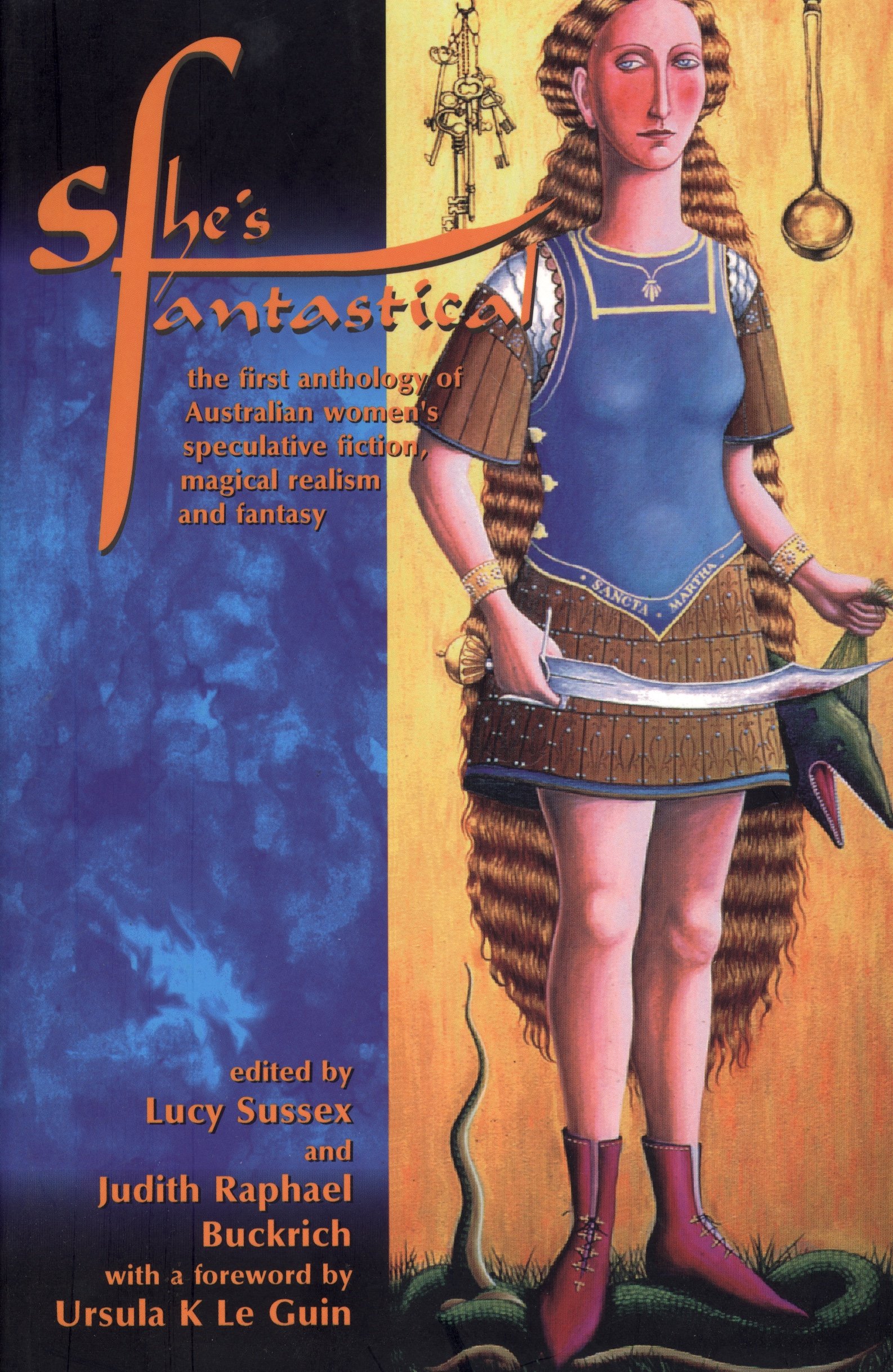
2000 She’s Fantastical, edited by Lucy Sussex and Judith Raphael Buckrich (original publishing date 1995)
https://www.spinifexpress.com.au/ebook-store/p/shes-fantastical-ebook-pdf | https://www.spinifexpress.com.au/ebook-store/p/shes-fantastical-ebook-epub
2000 Second Degree Tampering: Writing by Women, edited by Sybylla Collective (original publishing date 1992)
2001 A Girl’s Best Friend: The Meaning of Dogs in Women’s Lives, edited by Jan Fook and Renate Klein https://www.spinifexpress.com.au/shop/p/9781876756109
2001 There is an Alternative: Subsistence and Worldwide Resistance to Corporate Globalization, edited by Veronika Bennholdt-Thomsen, Nicholas Faraclas and Claudia Werlof https://www.spinifexpress.com.au/shop/p/9781876756178
2002 September 11, 2001: Feminist Perspectives, edited by Susan Hawthorne and Bronwyn Winter https://www.spinifexpress.com.au/shop/p/9781876756277
2003 Cat Tales: The Meaning of Cats in Women’s Lives, edited by Jan Fook, Susan Hawthorne and Renate Klein https://www.spinifexpress.com.au/shop/p/9781876756376
2003 Long Life: Positive HIV Stories, edited by Johnathan Bambanani Women’s Group and Others https://www.spinifexpress.com.au/shop/p/9781876756420
2004 HorseDreams: The Meaning of Horses in Women’s Lives, edited by Jan Fook, Susan Hawthorne and Renate Klein https://www.spinifexpress.com.au/shop/p/9781876756475
2004 Not For Sale: Feminists Resisting Prostitution and Pornography, edited by Christine Stark and Rebecca Whisnant https://www.spinifexpress.com.au/shop/p/9781876756499
2005 Honour: Crimes, Paradigms, and Violence against Women, edited by Sara Hossain and Lynn Welchman https://www.spinifexpress.com.au/shop/p/9781876756611
2006 Defiant Birth: Women Who Resist Medical Eugenics, edited by Melinda Tankard Reist https://www.spinifexpress.com.au/shop/p/9781925581911
2007 Listen to Ngarrindjeri Women Speaking/Kungun Ngarrindjeri Miminar Yunnan, edited by Diane Bell for the Ngarrindjeri Nation https://www.spinifexpress.com.au/shop/p/9781876756697
2009 Eco-Sufficiency and Global Justice: Women Write Political Ecology, edited by Ariel Salleh https://www.spinifexpress.com.au/shop/p/9781876756710
2009 Getting Real: Challenging the Sexualisation of Girls, edited by Melinda Tankard Reist https://www.spinifexpress.com.au/shop/p/9781876756758
2011 Big Porn Inc: Exposing the Harms of the Global Pornography Industry, edited by Melinda Tankard Reist and Abigail Bray https://www.spinifexpress.com.au/shop/p/9781876756895
2012 The Unfinished Revolution: Voices from the Global Fight for Women’s Rights, edited by Minky Worden https://www.spinifexpress.com.au/shop/p/9781742198224
2012 Seeking Palestine: New Palestinian Writing on Exile and Home, edited by Penny Johnson and Raja Shehadeh https://www.spinifexpress.com.au/shop/p/9781742198231
2015 Seed Sovereignty, Food Security: Women in the Vanguard, edited by Vandana Shiva https://www.spinifexpress.com.au/shop/p/9781742199566
2016 Prostitution Narratives: Stories of Survival in the Sex Trade, edited by Caroline Norma and Melinda Tankard Reist https://www.spinifexpress.com.au/shop/p/9781742199863
2016 The Great Climate Robbery: How the Food System Drives Climate Change, edited by Grain https://www.spinifexpress.com.au/shop/p/9781742199917
2019 Broken Bonds: Surrogate Mothers Speak Out, edited by Jennifer Lahl, Melinda Tankard Reist and Renate Klein https://www.spinifexpress.com.au/shop/p/9781925581553
2021 Not Dead Yet: Feminism, Passion and Women’s Liberation, edited by Renate Klein and Susan Hawthorne https://www.spinifexpress.com.au/shop/p/9781925950328
UPDATE
2021 The Women’s Pool, edited by Lynne Spender https://www.spinifexpress.com.au/shop/p/9781925950458
2022 It’s All Connected, edited by Pauline Hopkins https://www.spinifexpress.com.au/shop/p/9781925950564

Pauline Hopkins (editor)
Feminists have long known that it’s all connected. The stories, the families, the country, the River.In this anthology, poets and short story writers create worlds with words. This book includes stories that draw on mythic traditions rewritten for our time. There are thieves, grandmothers, teenagers breaking out, dark caves to explore and real estate to sell; there are mysteries from the grave, experiments that go wrong, road trips, a circus, an opera, families that break and families that hold together; there are birds and animals and babies, and there is the pandemic. There is stillness and movement; closeness and distance.
This eclectic range of authors brings their unique perspectives to storytelling as they each grapple to understand the past and meet the challenges ahead, daring to share their joy and pain, their fear and anger, their hopes and disappointments. These are women who dare to remember, to claim their own stories and to wonder what may have been.
Memory’s a burden, forgetting even more so.
—‘Lost Bird’ by Merlinda BobisAll the stories I can think of turn out to be full of traps for the unsuspecting.
—‘Keep Telling’ by Marion Molteno
DECEMBER 2022 | ISBN 9781925950564 | Paperback | 248 pages | 228 mm x 152 mm

Lynne Spender (ed)
These heart-warming tales of trials tribulations and trysts at Australia’s only ocean pool just for women – will make you want to dive in, naked at midnight, to revel in all that joyous aquatic camaraderie.
—Kathy Lette, Writer, ocean swimmer and shameless sea pool skinny dipper.
The history of Coogee’s McIver’s Ladies Baths – Australia’s only ocean pool reserved for women – is eloquently told in these stories from women who have found friendship, sanctuary and sheer pleasure as they have gathered and swum at ‘the Women’s Pool’.
Humorously told tales of encounters at the pool sit together with stories of sorrow and regret. Older women tell of the history of the pool and the famed ‘Thursday Married Ladies Club’; younger women detail their delight at the natural beauty, the safety and the sense of freedom that the pool offers. No aquatic manspreading here.
In this book, women from a diverse range of cultures reveal the role that the women’s pool has played in their lives. From the ‘365ers’ who brave the elements all year round to the younger women who seek summer sun on the rocks, a picture emerges of a place of natural beauty and a space for women to simply be themselves.
The ancient seasonal cycles find their own rhythm at our pool, at our place of ‘women’s business’. In the vastness of the largest Continent on Earth, it is a tiny space of companionship if wanted, or solitude if needed.
—Mary Goslett
The Baths welcomes us to its shelves of stone and grass for drying off, to doze, to talk, to preen, to gaze into the aqua green, ivory and midnight blue pool, to the rocks and outcrops either side, and the Pacific Ocean beyond.
—Jane Messer
NOVEMBER 2021 | ISBN 9781925950458 | Paperback | 140 x 210 mm | 160 pp

Renate Klein and Susan Hawthorne (eds)
What was it like to participate in the Women’s Liberation Movement? What made millions of women step forward from the 1960s onwards and join it in different ways? Many of the 56 women in this book were there. They describe how they have contributed in multitudinous ways across politics, the arts, health, education, environmentalism, economics and science and created wonderfully rebellious activism. And how they continue this activism today with determined grittiness. Here are women – all over 70 years of age – still railing against the patriarchal systemic oppression of women, still fighting back. “Don’t Call Me Sweetie,” “Never Waste a Good Crisis” and “Still Here, Still Clear and Still Lesbian” is some of what they want us to know.
The contributors to Not Dead Yet have created new analyses with new language and new kinds of organisations always aware of the ways in which the system is stacked against us, particularly against radical feminists. But we persist. We share the revolutionary zest we have carried with us over many decades. There is history, there is subversion and there are many extraordinary acts of courage. The language is full of irony and wit – as well as deadly serious.
The Women’s Liberation Movement has had a profound effect on the lives of millions of women and in turn those women have changed our world. But the struggle continues. May these riveting tales by the foremothers of the movement inspire young women readers. #NotDeadYet
6 JULY 2021 | ISBN 9781925950328 | Paperback | 233 x 150 mm | 464 pages
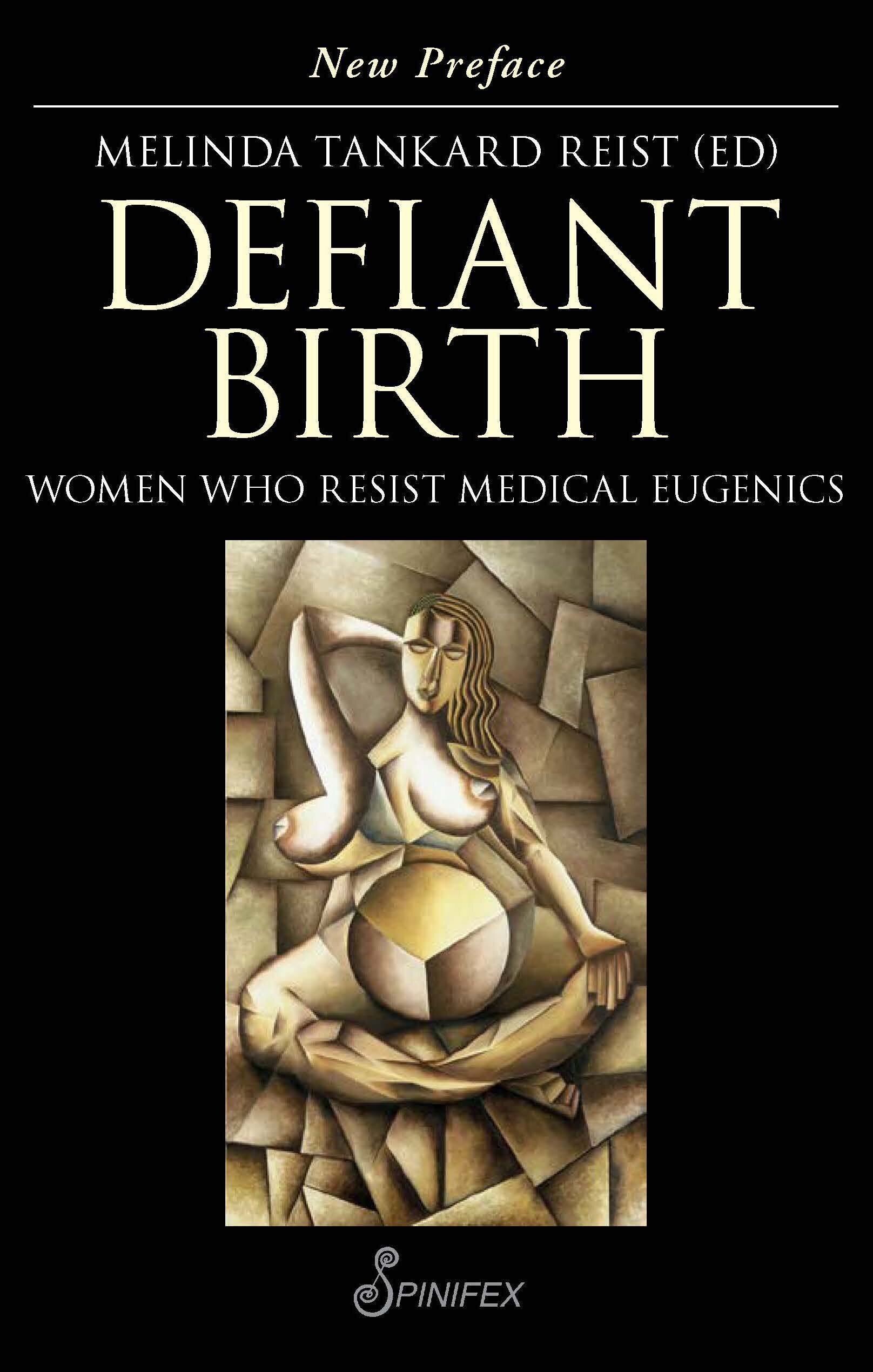
The women in this book may be among the last to have babies without the medical stamp of approval.
Today's society demands physical perfection from all and regards medical and scientific technologies as saviours to be embraced whatever the cost. To have a child who has been diagnosed with a disability is deemed not just unnecessary, but careless and even immoral.
Defiant Birth tells the courageous stories of women who continued their pregnancies despite intense pressure from doctors, family members and social expectations. These women were told they shouldn't have their babies because of a perceived imperfection in the child, or because their own disabilities do not fit within the parameters of what a mother should be. In the face of silent disapproval and open hostility, they have confronted the stigma of disability and had their children anyway.
Some of the writers tell of grave misdiagnosis, others of life-changing experiences, discovering the joy and love in children considered unworthy of life.
Melinda Tankard Reist dares to expose how eugenics is practised today, and how it is condoned, even expected, by mainstream society. More than ever before, doctors are diagnosing babies in the womb as less than perfect. But what if the 'cure' they offer will end the child's life?
An invaluable book.
—Nat Hentoff, columnist for United Media Newspaper Syndicate, the Village Voice and the Washington Times.
2019 | ISBN 9781925581911 | Paperback | 216 x 140 mm | 360 pp
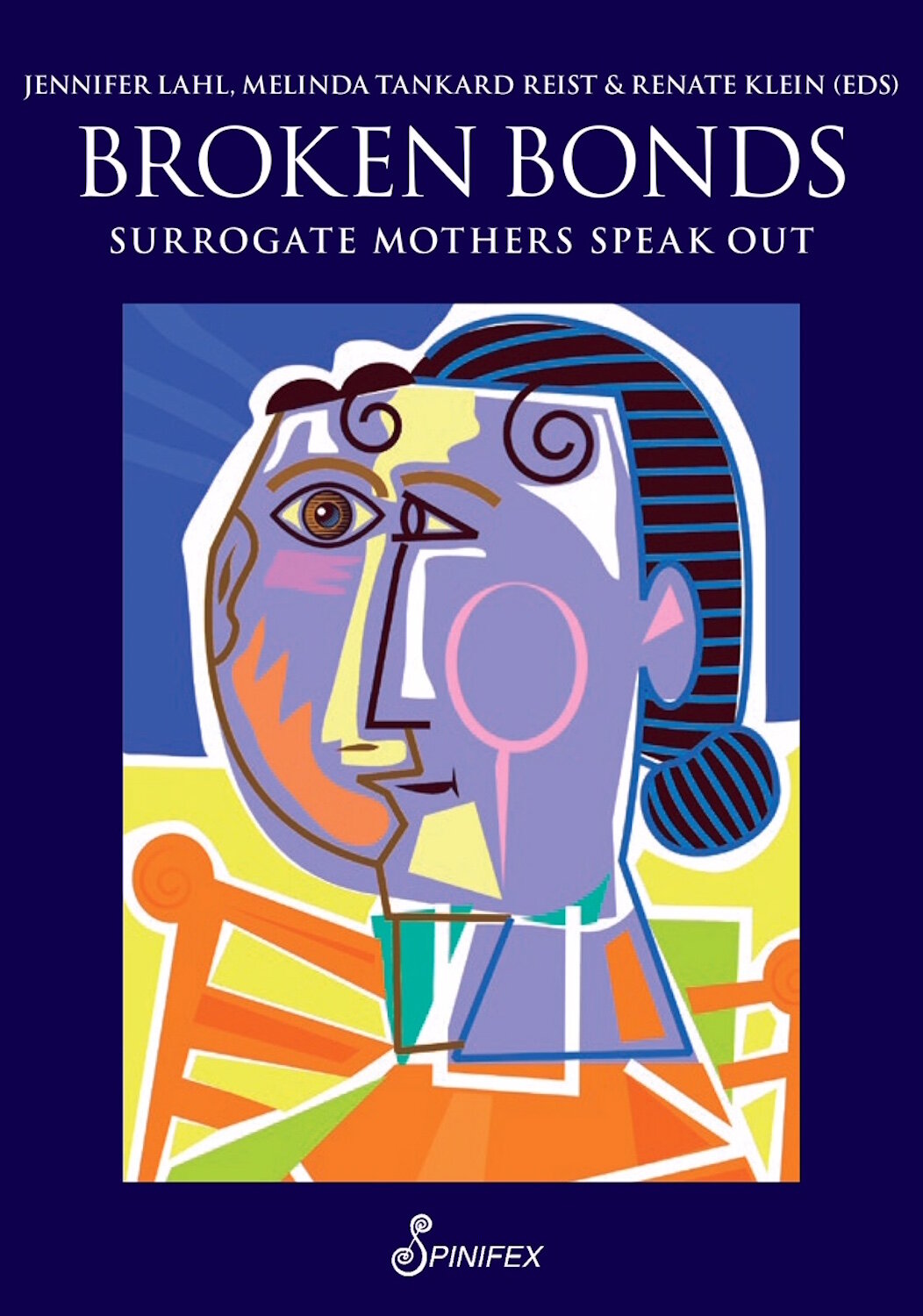
Renate Klein (eds.)
Celebrity couple Kim Kardashian and Kanye West and their sweet new baby Chicago. Tom Daley and Dustin Lance Black and their cute little baby Robert. And thousands of other couples and single people around the world who obtain babies through surrogacy arrangements. The general public is compassionate to their plight and supportive of their 'right' to a baby.
But who are the faceless, nameless women who nurture and give birth to these babies? These women who are left with empty arms and leaking breasts after delivery? Surrogacy-dealing companies call them ‘special angels’ who ‘make miracles possible’, giving ‘an extraordinary gift’. IVF clinics call them ‘gestational surrogates’. The intended parents have promised them healthcare, full reimbursement, and ongoing contact with the baby. What could possibly go wrong?
Everything. Because surrogacy violates the human rights of the women whose bodies are used, and the children who are born. Because it is a fundamentally flawed and misogynist concept to imagine that women are interchangeable. And it is wishful thinking that watertight legal contracts and counselling can fix this.
In this book, strong and courageous women from the USA, the UK, Canada, Australia, India, Austria and Russia share their true stories of becoming 'surrogate' mothers out of kindness and compassion (or need for money), only to be deceived, neglected, abused, harassed, or abandoned by ‘baby buyers’, clinics, and lawyers. Their stories are tragic, shocking, and revelatory of a profit-driven industry that preys on desperation and women’s compassion.
It becomes clear that it is not the occasional dysfunctional relationship or unreasonable surrogate causing problems in the surrogacy industry. Rather, it is the very nature of surrogacy as well as the surrogacy industry to use and abuse and discard. This book throws down a challenge to Big Fertility and its minions: women are not ovens or suitcases, babies are not products. Love is not to be bought.
2019 | ISBN 9781925581553 | Paperback | 215 x 137 mm | 142 pp
THIS BOOK IS PART OF THE RADFEM STARTER LIBRARY & THE STOP SURROGACY NOW COLLECTION

Caroline Norma , Melinda Tankard Reist (eds)
For too long the global sex industry and its vested interests have dominated the prostitution debate repeating the same old line that sex work is just like any job. In large sections of the media, academia, public policy, Government and the law, the sex industry has had its way. Little is said of the damage, violation, suffering, and torment of prostitution on the body and the mind, nor of the deaths, suicides and murders that are routine in the sex industry.
Prostitution Narratives: Stories of Survival in the Sex Trade refutes the lies and debunks the myths spread by the industry through the lived experiences of women who have survived prostitution. These disturbing stories give voice to formerly prostituted women who explain why they entered the sex trade. They bravely and courageously recount their intimate experiences of harm and humiliation at the hands of sex buyers, pimps and traffickers and reveal their escape and emergence as survivors.
Edited by Caroline Norma and Melinda Tankard Reist, Prostitution Narratives documents the reality of prostitution revealing the cost to the lives of women and girls.
Prostitution Narratives: Stories of Survival in the Sex Trade will strengthen and support the global campaign to abolish prostitution, provide solidarity and solace to those who bear its scars and hopefully help women and girls exit this dehumanising industry.
2016 | ISBN 9781742199863 | Paperback | 140 x 220mm | 246 pages

The Great Climate Robbery provides valuable information about how the industrial food system causes climate change, how food and agribusiness corporations are getting away with it, and what can be done to turn things around. The various chapters in this collection document the ill effects of this industrial food system such as the growing hunger, the destruction of rural peoples’ livelihoods, the loss of biodiversity and cultures, the exploitation of labour and a range of health calamities.
This timely anthology by the international NGO Grain shows how food sovereignty is critical to any lasting and just solution to climate change. With governments, particularly those from the main polluting countries, abdicating their responsibility to deal with the problem, it has become ever more critical for people to take action into their own hands. Changing the food system is perhaps the most important and effective place to start.
2016 | ISBN 9781742199917 | Paperback | 246 pp

This unique, international offering on an issue of critical importance today, demonstrates how women as activists, scientists and scholars are at the forefront of shaping new scientific and economic paradigms to reclaim seed sovereignty and food security across the world. Women in the North and South are leading movements to change both practice and paradigm: how we grow and transform our food. As seed keepers and food producers, as mothers and consumers, they are engaged in renewing a food system that is better aligned with the ecological processes of the earth’s renewal, the laws of human rights and social justice and the means through which our bodies stay well and healthy.
2015 | 9781742199566 | Paperback | 376 pages

"Palestine-in-exile," says Rana Barakat, "is an idea, a love, a goal, a movement, a massacre, a march, a parade, a poem, a thesis, a novel and yes, a commodity, as well as a people scattered, displaced, dispossessed and determined."
How do Palestinians live, imagine and reflect on home and exile in this period of a stateless and transitory Palestine, a deeply contested and crisis-ridden national project, and a sharp escalation in Israeli state violence and accompanying Palestinian oppression? How can exile and home be written?
Fifteen innovative and outstanding Palestinian writers–essayists, poets, novelists, critics, artists and memorists–respond with their reflections, experiences, memories and polemics. What is it like, in the words of Lila Abu-Lughod to be "drafted into being Palestinian?" What happenes when you take your American children, as Sharif Elmusa does, to the refugee camp where you were raised? And how can you convince, as Suad Amiry attempts to do, a weary airport official to continue searching for a code for a country that isn't recognised.
Contributors probe the past through unconventional memories, reflecting on 1948 when it all began. But they are also deeply interested in beginnings, imagining, in the words of Mischa Hiller, "a Palestine that reflects who we are now and who we hope to become." Their contributions–poignant, humorous, intimate, reflective, intensely political–make an offering that is remarkable for the candour and grace with which it explores the many individual and collective experiences of waiting, living for, and seeking Palestine.
2012 | ISBN 9781742198231 | Paperback | 210 x 137 mm | 220 pp
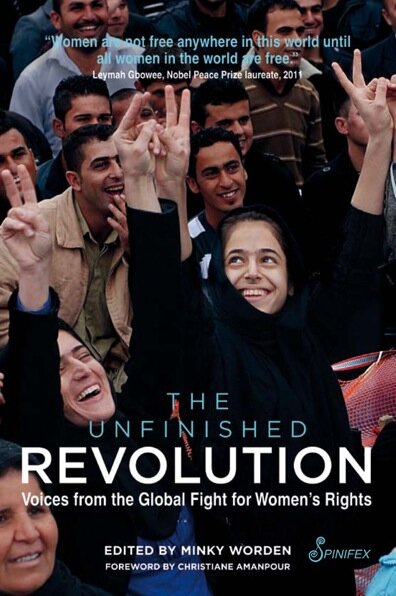
Foreword by Christiane Amanpour
The Unfinished Revolution tells the story of the global struggle to secure basic rights for women and girls, including in the Middle East where the Arab Spring raised high hopes, but the political revolutions are so far insufficient to guarantee progress.
Around the world, women and girls are trafficked into forced labour and sex slavery, trapped in conflict zones where rape is a weapon of war, prevented from attending school, and kept from making deeply personal choices in their private lives, such as whom and when to marry. In many countries, women are second-class citizens by law. In others, religion and traditions block freedoms such as the right to work, study or access health care. Even in the United States, women who are victims of sexual violence often do not see their attackers brought to justice.
More than 30 writers — Nobel Prize laureates, leading activists, top policy makers, and former victims— have contributed to this anthology. Drawing from their rich personal experiences, they tackle some of the toughest questions and offer bold new approaches to problems affecting hundreds of millions of women.
This volume is indispensable reading, providing thoughtful analysis from a never-before assembled group of advocates. It shows that the fight for women’s equality is far from over. As Leymah Gbowee, 2011 Nobel Peace Prize Laureate says, “Women are not free anywhere in this world until all women in the world are free.”
2012 | ISBN 9781742198224 | Paperback | 211 x 140 mm | 410 pages
eBook Available
Lucy Sussex and Judith Buckrich (Eds)
The first anthology of Australian women’s speculative fiction, magic realism and fantasy.
A pregnant spaceman. A witch. A knight-errant princess. The nuns of St Mary Magdalene. A time traveller. Love and lyrebirds. Dreams and poetry. Philosophy. The creation of the universe. Two very different angels. Were marsupials – and more.
Fantasy has always been a rebel’s mode, a means of sneakily saying unwelcome or disturbing things about society, or of offering a more or less plausible alternative to it. The stories and poems in this book are all, one way or another, fantastic; all are rebellious, subversive, critical, or teasing, cheerfully or fiercely knocking the posts from under the Status Quo.… Mothers and daughters, women friends, women lovers, women and children, women and animals – the book is full of pairings, interweavings, minglings, transformations, transgressions of boundaries between generations, between species, between realms. Borders which we’re used to seeing well sprayed and marked with neat piles of scat become crossings, trysting places, meeting grounds…
—Ursula K. Le Guin
Shortlisted, World Fantasy Award
MAY 2011 | ISBN 9780908205127 | Paperback | 210 x 140 mm | 260 pages | OUT OF STOCK
For more paperback copies, please visit IPG Book in the US or Gazelle Book Services in the UK

It is now widely acknowledged that the unprecedented mainstreaming of the global pornography industry is transforming the sexual politics of intimate and public life, popularising new forms of hardcore misogyny, and strongly contributing to the sexualisation of children. Yet challenges to the pornography industry continue to be dismissed as uncool, anti-sex and moral panics.
With contributions from leading world experts and activists, Big Porn Inc offers a cutting edge exposé of the hidden realities of a multi-billion dollar global industry that promotes itself as a fashionable life-style choice.
Unmasking the lies behind the selling of porn as ‘just a bit of fun’ Big Porn Inc reveals the shocking truths of an industry that trades in violence, crime and degradation. This fearless book will change the way you think about pornography forever.
Contributors include: (Australia) Maggie Hamilton, Nina Funnell, Christopher Kendall, Susan Hawthorne, Sheila Jeffreys, Caroline Taylor, Meagan Tyler, Robi Sonderegger, Caroline Norma, Renate Klein, Helen Pringle, Betty McLellan, Melinda Tankard Reist, Abigail Bray, Melinda Liszewski.
(International) Gail Dines, Catharine A MacKinnon, Melissa Farley, Diana Russell, Robert Jensen, Jeffrey Masson, Chyng Sun, Julia Long, Diane L Rosenfeld, Linda Thompson, Hiroshi Nakasatomi, Anne Mayne, Ruchira Gupta, Asja Armanda, Natalie Nenadic, Anna van Heeswijk, Matt McCormack Evans.
2011 | ISBN 9781876756895 | Paperback | 225 x 150 mm | 343 pages

As the twenty-first century faces a crisis of democracy and sustainability, this book attempts to bring academics and alternative globalisation activists into conversation. Through studies of global neoliberalism, ecological debt, climate change, and the ongoing devaluation of reproductive and subsistence labour, these uncompromising essays by internationally distinguished women thinkers expose the limits of current scholarship in political economy, ecological economics, and sustainability science. The book introduces groundbreaking theoretical concepts for talking about humanity-nature links and will be a challenging read for activists and for students of political economy, environmental ethics, global studies, sociology, women's studies, and critical geography.
2009 | ISBN 9781876756710 | Paperback | 215 x 135 mm | 324 pp
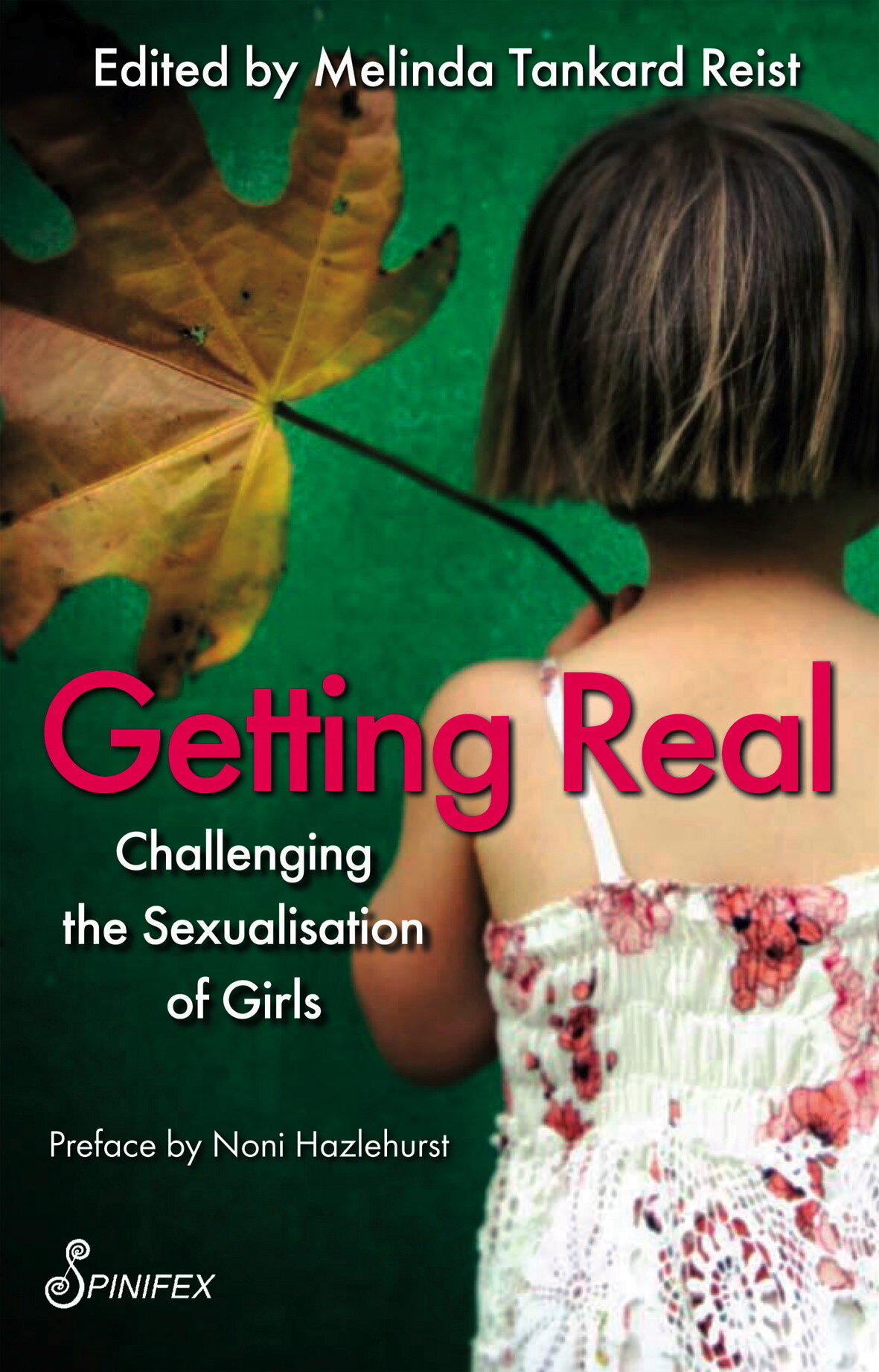
Girls are portrayed as sexual at younger ages, pressured to conform to a 'thin, hot, sexy' norm. Clothing, music, magazines, toys and games send girls the message that they are merely the sum of their body parts. The effects of prematurely sexualising girls are borne out in their bodies and minds, with a rise in self-destructive behaviours such as eating disorders and self-harm, along with anxiety, depression and low self-esteem.
2009 | ISBN 9781876756758 | Paperback | 215 x 140 mm | 224 pages
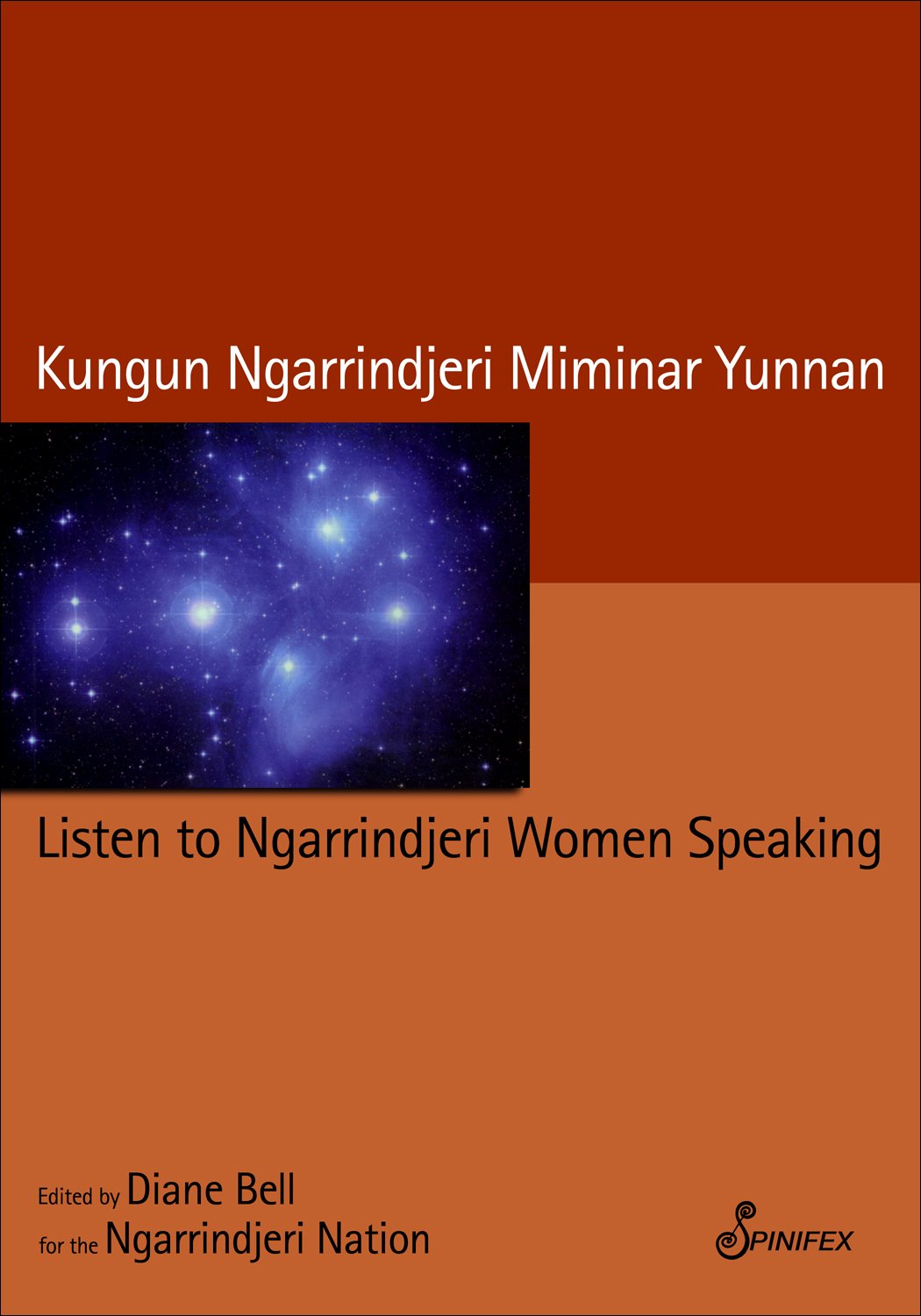
When the Ngarrindjeri women of South Australia asked Diane Bell if she would work with them in the running of some workshops to develop a booklet about culture and governance, none of them realised quite where it would take them. This book is the result. It has developed from a booklet to a book that outlines their visions for the future. A future in which their culture is respected, their stories heard, their laws carried out.
2008 | ISBN 9781876756697 | Paperback | 248 x 176 mm | 145 pp

Norma Khouri brought the issue of honour killings into the news in Australia. Whatever one thinks of Khouri, the story she had to tell was based on the reality of many women’s lives, not only in Jordan but also in Italy, Kurdistan, Latin America, the UK, South Asian and Nordic countries. The purpose of this book is to support human rights activists, policy-makers and lawyers by explaining what constitutes honour crimes and how they vary across different country contexts. It develops a human rights framework as an alternative to a cultural relativist approach. It urges the reform of many national legal systems which enable men to rely on the pretext of ‘honour crimes’ in order to get a reduced sentence. Like other acts of violence against women, they have no justification.
In the Australian context, the provocation rule could be considered a descendent of the ‘honour’ defence. This rule has enabled men to claim provocation – an insult to their honour – as an excuse for murdering wives, girlfriends and former partners. Amnesty International is running a massive campaign dealing with violence against women. This book draws out those further connections by focussing on the legal protections, the social ‘obligations’ and the deadly consequences for women.
This marvellous collection of essays is an important contribution to our collective understanding of the range of violence, mainly against women, that goes under the shorthand of 'honour crimes'. Like many such terms, it silences and conceals structures of domination, of violence and sexual regulation as much as it reveals the kind of defences that patriarchy summons to its aid.
2006 | ISBN 9781876756611 | Paperback | 236 x 158 mm | 400 pp

Horses and women have always shared a bond. Why else do little girls plaster their schoolbooks with pony pictures? Why do women spend weekends devotedly mucking out paddocks? Or willingly go out in public wearing tight, unforgiving, pale jodhpurs? How is it that otherwise fastidious females cheerfully fill their cars with hay, their nails with dirt and their boots with mud, while turning out gleaming horses, with barely a tail-hair out of place? It seems that in days when urban sprawl is overtaking paddocks and trails, and country life seems so far away, little girls (and big ones!) still dream of horses.
HorseDreams explores the beautiful, intense and often funny relationships between women and horses – creatures that carry their female friends through life, offering strong, silent companionship, and the chance to escape, if only in their imagination. Humour, devotion, warmth and enthusiasm shine through tales of scruffy childhood ponies, sleek brave thoroughbreds and even the occasional donkey, seahorse or carousel steed.
Contributors include: Marge Piercy, Caroline Taylor, Rebecca Gorman, Jenny Barnes, Di Gatehouse, Julie Copeland, Tatyana Mamonova, Pat Hodgell.
2004 | ISBN 9781876756475 | Paperback | 212 x 212 mm | 220 pp

A 1985 Canadian report on the sex industry in that country reported that women in prostitution suffer a mortality-rate forty times the national average. –Sheila Jeffreys
As an activist, I explain that I’m not against sex and nudity but that women do more than just have sex … whether it’s Vogue, or pornography or beer ads – the message is that women get power through our sexuality and this is how women excel. –Ann Simonton
Fundamentally, the baseline for human governance – now and in the future – must be whether any society takes seriously what happens when someone is harmed so that someone else can have ‘sex’. –John Stoltenberg
This international anthology brings together research, heartbreaking personal stories from survivors of the sex industry, and theory from over thirty women and men – activists, survivors, academics and journalists. Not For Sale is groundbreaking in its breadth, analysis and honesty.
2004 | ISBN 9781876756499 | Paperback | 228 x 152 mm | 480 pp

Jonathan Morgan
South Africa is in the throes of a new struggle brought on by the AIDS pandemic. Long Life shines a light behind the grim statistics to illuminate the human face of HIV/AIDS in Cape Town's largest township, Khayelitsha. Long Life tells the stories of thirteen remarkable women who are all HIV positive. These women, all part of the Memory Box Project, relate their stories through the use of body maps that reflect their life histories. Through personal stories, photographs and paintings they share their insights with humour and frankness. Woven between are the daily struggles of health-care workers and campaigners.
2003 | ISBN 9781876756420 | Paperback | 282 x 210 mm | 176 pp

After September 11, feminists around the world spoke out, wrote for newspapers, for email lists and for the Internet. But in the male-dominated mass media, it was hard to find feminist perspectives. This collection brings together women who discuss the connections between war, terrorism, fundamentalism, racism, global capitalism and male violence. From the USA to Afghanistan, from Pakistan to Palestine, from Australia to Europe they have deconstructed this story and retold it from a feminist perspective in a powerful indictment of current global politics. Contributors include Barbara Kingsolver and Ani DiFranco, Naomi Klein.
2002 | ISBN 9781876756277 | Paperback | 228 x 152 mm | 538 pp

This thought-provoking collection of essays from radical speakers from around the world moves beyond criticism of the current trends of globalization and deregulation to challenge Thatcher-inspired economic rationalists with both theoretical and practical alternatives for our world. If there is no alternative to corporate globalization, doesn’t that mean this society, and our current military struggles are as good as life is going to get?
Inspired by the ground-breaking work of Maria Mies and her colleagues in developing the elaboration of the ‘subsistence perspective’, There is an Alternative defies popular Western thought with concrete cases of resistance to globalization in Africa, Asia, the Americas, Australia and the Pacific. Anyone who refuses to believe that corporate globalization is our inevitable destiny will find this book a solid basis for formulating ideas and implementing strategies for the creation of a future in the image and interest of the world’s people.
Featuring pieces by Vandana Shiva, Christa Muller, Gustavo Esteva, Helena Norberg-Hodge, Fradia Akhter, Theresa Wolfwood, Susan Hawthorne and Renate Klein.
2001 | ISBN 9781876756178 | Paperback | 210 x 137 mm | 240 pp
Kara Dansky (editor)
Just over a decade ago, and gaining steam thereafter, a massive debate began raging about what a woman is, whether or not sex is real, and if it is, whether it matters less than claimed ‘gender identities’. This debate has been raging globally. It has been raging loudly for those of us in the middle of it, but much more quietly for the multitudes who do not yet quite understand it. As the contributors from around the world explain, the debate started in the 1990s, but it took some time to erupt in the mainstream. These are the ‘gender wars’, or, if you like, the ‘trans wars’.
The ‘gender wars’ arose because women and men who call themselves ‘transgender’ started to impose their beliefs on others. Men who call themselves women (‘transgender women’) demanded that women and girls agree with them. They demanded access to female-only spaces such as toilets, locker rooms, and changing rooms. They demanded access to lesbian spaces such as clubs and dating apps. They demanded to be permitted to participate and compete in women’s sports. They wanted access to everything that is meant to be exclusively for women and girls.
And so, out of the wilderness grew a community of women labeled ‘TERFs’. The acronym originally stood for ‘trans exclusionary radical feminist’. It was meant to refer to the radical feminists who, early on, fought the idea that some men could be women if they put on a dress, or if they had their penises removed, or even if they just said they were women (self-ID). Many women would go on to reclaim the acronym for ourselves. We are the TERFS, or its plural, Terven. We are all over the world, and we are the women winning the gender wars on behalf of women and girls as a sex class and on behalf of the material reality of sex.
6 OCTOBER 2026 | 9781922964427 | Paperback | 152 × 229 mm | 248 pages