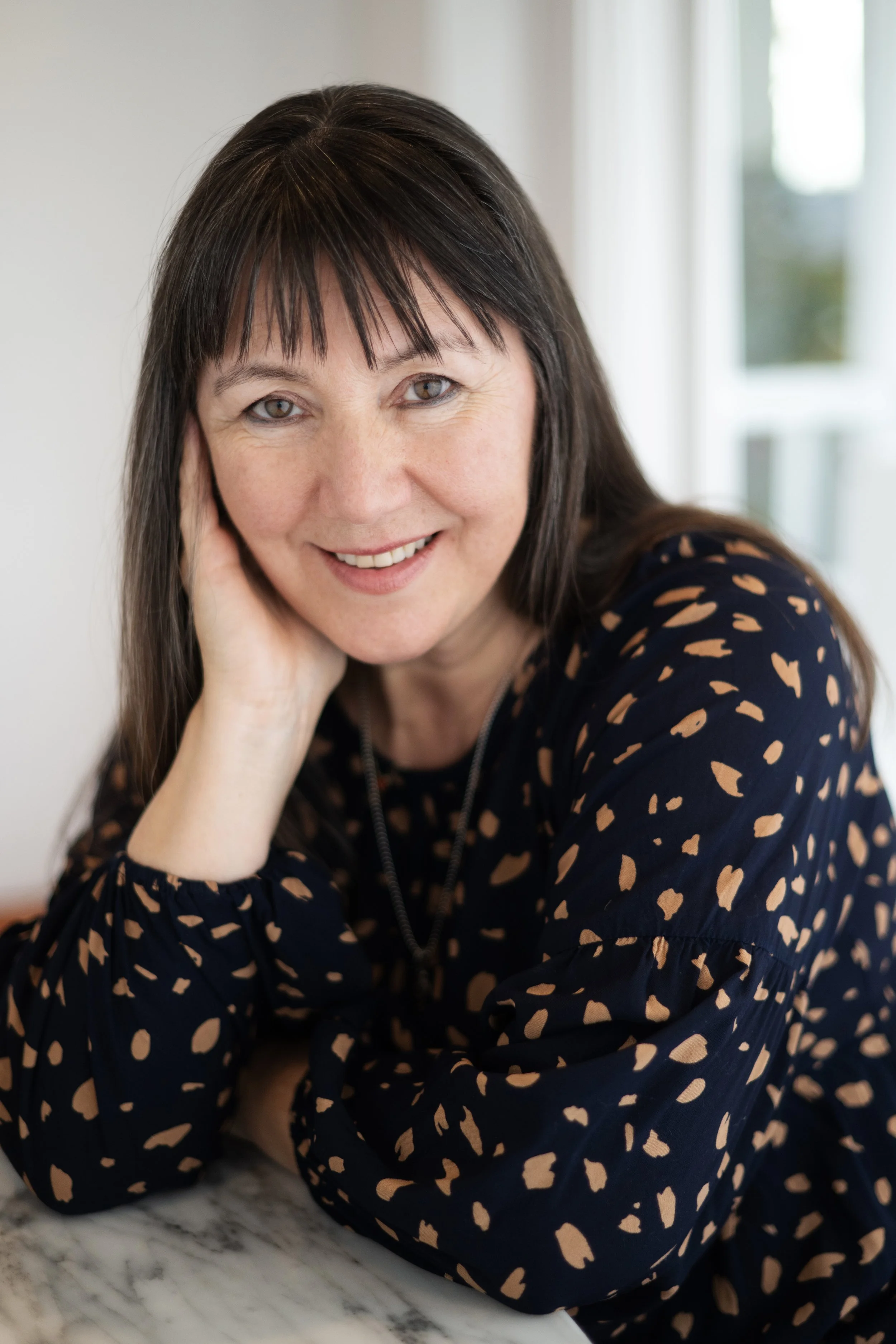
Penny Mackieson

Read Penny’s incredible story here.

Take advantage of this special Collection and save when you buy both books. Order here.
Penny Zagarelou-Mackieson is an Australian author who was adopted as a newborn in 1963 and ‘de-adopted’ in 2022. A social worker by profession, Penny achieved several qualifications from the University of Melbourne and worked for three decades in the child and family services sector. Penny’s PhD research explored Permanent Care Orders for children in Victoria’s child protection and out-of-home care system. From 2014 to 2019, Penny was Chair of VANISH Inc., a community-based organisation providing search and support services to people separated from their families through adoption. Penny lives with her partner and their adult son in inner Melbourne.

All I’ve ever wanted is the deep sense of belonging associated with knowing and being connected with who and where I’ve come from.
Penny Zagarelou-Mackieson always knew she was adopted. But she didn’t know she was swapped at birth.
After a lifetime grappling with issues of identity and belonging, outlined in her earlier book Adoption Deception, Penny discovered that her natural mother, according to her adoption records, is genetically unrelated to her. Penny’s family reunion of two decades was based on falsehoods. Her ancestry is Greek, not Celtic-Anglo as she was led to believe.
So begins Penny’s new quest to learn about her origins. She confronts a shocking legacy of babies misidentified in the heyday of Australia’s forced and closed adoptions and appalling medical record-keeping – meaning many adoptees may never know their true origins.
Penny’s quest leads her to court seeking legal recognition of her true identity, involving her ‘de-adoption’ – termination of the Adoption Order imposed on her in infancy.
This remarkable story of one woman’s determination to uncover the truth and restore her dignity reveals human rights violations inherent in adoption. Penny questions continuing laws and practices that cement stigmatising secrecy and harm adopted people, arguing for wide-reaching reforms.
26 OCTOBER 2023 | ISBN 9781925950793 | Paperback | 152 x 229 mm | 232 pages

What is it like to be adopted, have your identity changed and never feel quite at home in your new family, despite being loved? What is it like to become a social worker and be faced with the challenges and consequences of other adoptions every day? What is it like to hear the moving National Apology for Forced Adoptions by Prime Minister Julia Gillard in 2013 only to be faced a few months later by a new prime minister intent on forgetting all the lessons learnt and championing a deregulated parent-centred market-driven adoption industry?
Penny Mackieson takes us on her journey with the unique perspective of both an adopted person and a professional who worked in intercountry adoption for over a decade. She unravels the complexities, debunks the myths, analyses the policies and raises important questions about the ethical and human rights dilemmas in adoption.
Adoption Deception: A personal and professional journey is a passionate, heart-wrenching and unflinchingly honest account of one woman’s life as an adopted person and her campaign for change. The author presents a compelling argument for Permanent Care instead of adoption for vulnerable children unable to be raised by their families in the light of continuing issues of exploitation, identity loss and the priority given to adults’ wishes over children’s rights.
2015 | ISBN 9781742199740 | Paperback | 178 pp

What is it like to be adopted, have your identity changed and never feel quite at home in your new family, despite being loved? What is it like to become a social worker and be faced with the challenges and consequences of other adoptions every day? What is it like to hear the moving National Apology for Forced Adoptions by Prime Minister Julia Gillard in 2013 only to be faced a few months later by a new prime minister intent on forgetting all the lessons learnt and championing a deregulated parent-centred market-driven adoption industry?
Penny Mackieson takes us on her journey with the unique perspective of both an adopted person and a professional who worked in intercountry adoption for over a decade. She unravels the complexities, debunks the myths, analyses the policies and raises important questions about the ethical and human rights dilemmas in adoption.
Adoption Deception: A personal and professional journey is a passionate, heart-wrenching and unflinchingly honest account of one woman’s life as an adopted person and her campaign for change. The author presents a compelling argument for Permanent Care instead of adoption for vulnerable children unable to be raised by their families in the light of continuing issues of exploitation, identity loss and the priority given to adults’ wishes over children’s rights.
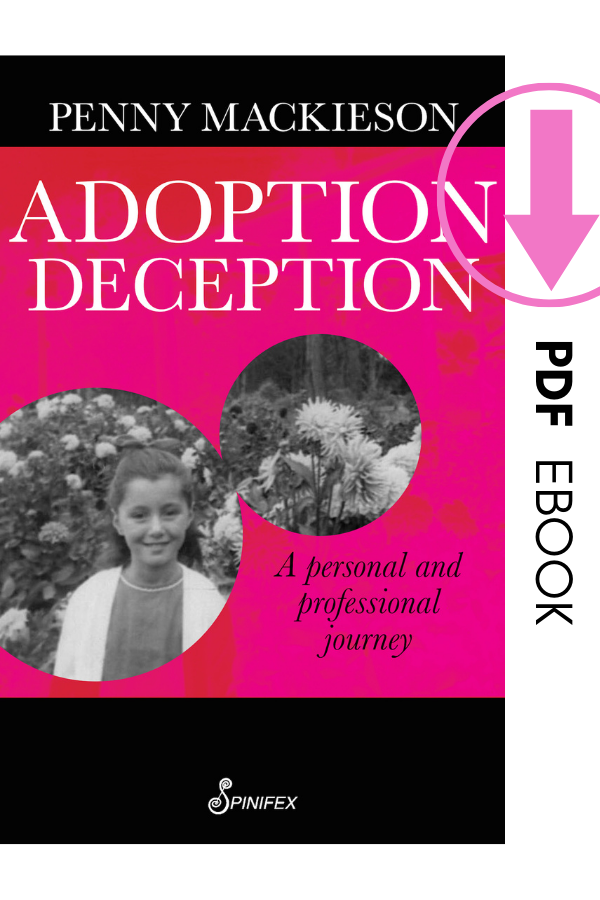
What is it like to be adopted, have your identity changed and never feel quite at home in your new family, despite being loved? What is it like to become a social worker and be faced with the challenges and consequences of other adoptions every day? What is it like to hear the moving National Apology for Forced Adoptions by Prime Minister Julia Gillard in 2013 only to be faced a few months later by a new prime minister intent on forgetting all the lessons learnt and championing a deregulated parent-centred market-driven adoption industry?
Penny Mackieson takes us on her journey with the unique perspective of both an adopted person and a professional who worked in intercountry adoption for over a decade. She unravels the complexities, debunks the myths, analyses the policies and raises important questions about the ethical and human rights dilemmas in adoption.
Adoption Deception: A personal and professional journey is a passionate, heart-wrenching and unflinchingly honest account of one woman’s life as an adopted person and her campaign for change. The author presents a compelling argument for Permanent Care instead of adoption for vulnerable children unable to be raised by their families in the light of continuing issues of exploitation, identity loss and the priority given to adults’ wishes over children’s rights.

All I’ve ever wanted is the deep sense of belonging associated with knowing and being connected with who and where I’ve come from.
Penny Zagarelou-Mackieson always knew she was adopted. But she didn’t know she was swapped at birth.
After a lifetime grappling with issues of identity and belonging, outlined in her earlier book Adoption Deception, Penny discovered that her natural mother, according to her adoption records, is genetically unrelated to her. Penny’s family reunion of two decades was based on falsehoods. Her ancestry is Greek, not Celtic-Anglo as she was led to believe.
So begins Penny’s new quest to learn about her origins. She confronts a shocking legacy of babies misidentified in the heyday of Australia’s forced and closed adoptions and appalling medical record-keeping – meaning many adoptees may never know their true origins.
Penny’s quest leads her to court seeking legal recognition of her true identity, involving her ‘de-adoption’ – termination of the Adoption Order imposed on her in infancy.
This remarkable story of one woman’s determination to uncover the truth and restore her dignity reveals human rights violations inherent in adoption. Penny questions continuing laws and practices that cement stigmatising secrecy and harm adopted people, arguing for wide-reaching reforms.
OCTOBER 2023 | 232 pages

All I’ve ever wanted is the deep sense of belonging associated with knowing and being connected with who and where I’ve come from.
Penny Zagarelou-Mackieson always knew she was adopted. But she didn’t know she was swapped at birth.
After a lifetime grappling with issues of identity and belonging, outlined in her earlier book Adoption Deception, Penny discovered that her natural mother, according to her adoption records, is genetically unrelated to her. Penny’s family reunion of two decades was based on falsehoods. Her ancestry is Greek, not Celtic-Anglo as she was led to believe.
So begins Penny’s new quest to learn about her origins. She confronts a shocking legacy of babies misidentified in the heyday of Australia’s forced and closed adoptions and appalling medical record-keeping – meaning many adoptees may never know their true origins.
Penny’s quest leads her to court seeking legal recognition of her true identity, involving her ‘de-adoption’ – termination of the Adoption Order imposed on her in infancy.
This remarkable story of one woman’s determination to uncover the truth and restore her dignity reveals human rights violations inherent in adoption. Penny questions continuing laws and practices that cement stigmatising secrecy and harm adopted people, arguing for wide-reaching reforms.
OCTOBER 2023 | 232 pages
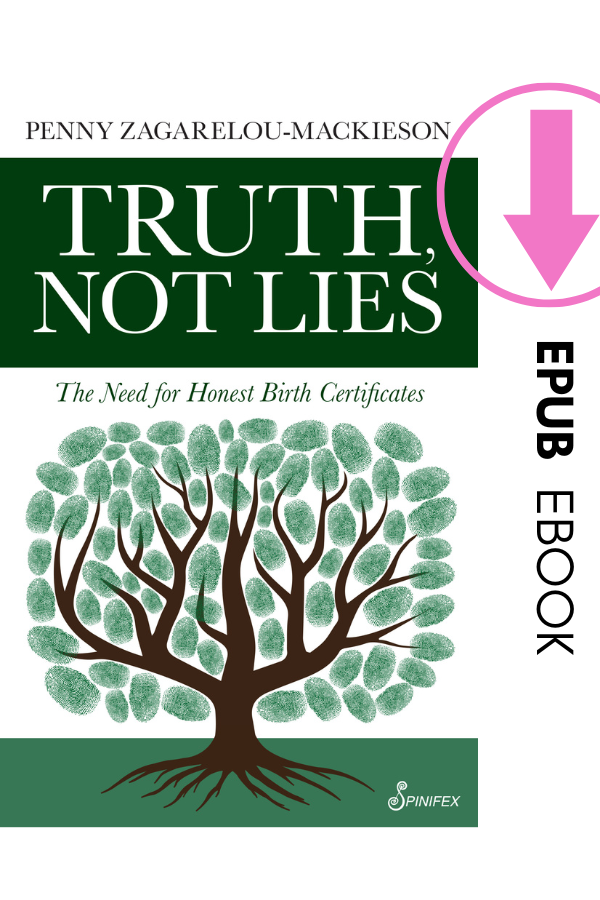
Dr Penny Zagarelou-Mackieson delves into the minefield of issues and political interests associated with the seemingly mundane topic of birth certificates.
She outlines why a birth certificate is an important legal document of universal concern – because it is a person’s primary means of identification throughout their entire life with intergenerational significance for the identities of their offspring.
Penny highlights that for certain individuals, however – those who are adopted, donor-conceived, or born of surrogacy – governments treat the parentage information on their official birth certificate differently to most people’s.
In the case of adoptees, the original birth certificate is cancelled and replaced with a new birth certificate that records the name(s) of the adoptive parents – as if the adoptee were naturally born to them. Penny provides an extensive history of changes to birth registration requirements and birth certificates in Australia since compulsory birth registration was introduced there in 1838, demonstrating that the treatment of birth certificates in adoptions was designed last century for the purpose of secrecy. Increasingly, closed adoption practices were intended to prevent adoptees from knowing that they were adopted, the identities of their natural parents, and their own natural identity.
In the cases of those who are donor-conceived and born from surrogacy arrangements, the parentage information recorded on their official birth certificates is treated in a similarly deceptive manner through the application of legal presumptions and mechanisms of parentage – which are genetically/biologically incorrect. As in adoption, these practices promote secrecy and erasure of birth mothers.
Penny addresses several significant challenges and harms associated with the intentionally different treatment of parentage information on birth certificates; considers options to address those problems; and argues a case for birth certificate reform – with a view to achieving equal treatment of genetic/biological parentage information on all birth certificates regardless of the circumstances of one’s conception, birth or socio-legal parenting arrangements.
This book is an important read for people genuinely concerned about human rights, identity, birth mothers and equality.
AUGUST 2026 | 9781922964472 | 270 pages
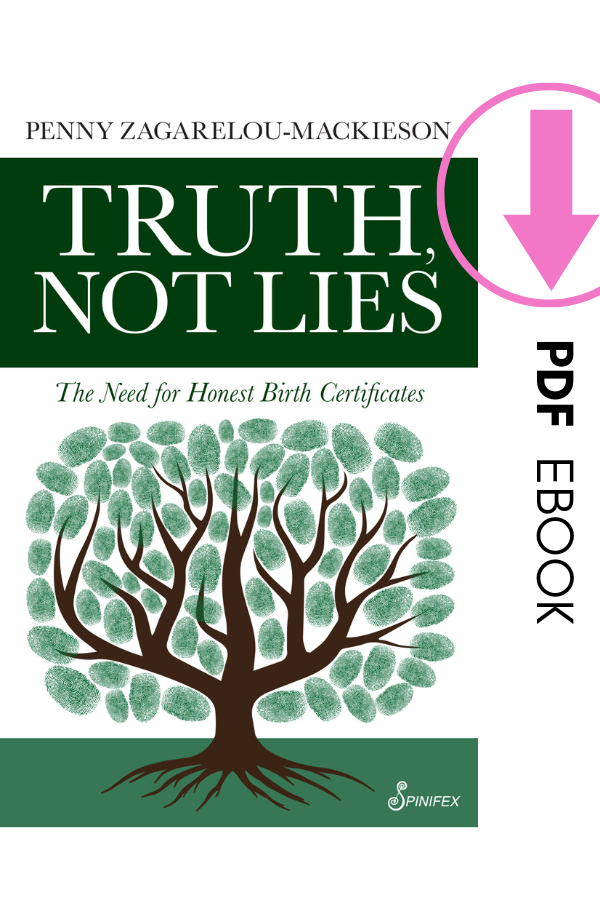
Dr Penny Zagarelou-Mackieson delves into the minefield of issues and political interests associated with the seemingly mundane topic of birth certificates.
She outlines why a birth certificate is an important legal document of universal concern – because it is a person’s primary means of identification throughout their entire life with intergenerational significance for the identities of their offspring.
Penny highlights that for certain individuals, however – those who are adopted, donor-conceived, or born of surrogacy – governments treat the parentage information on their official birth certificate differently to most people’s.
In the case of adoptees, the original birth certificate is cancelled and replaced with a new birth certificate that records the name(s) of the adoptive parents – as if the adoptee were naturally born to them. Penny provides an extensive history of changes to birth registration requirements and birth certificates in Australia since compulsory birth registration was introduced there in 1838, demonstrating that the treatment of birth certificates in adoptions was designed last century for the purpose of secrecy. Increasingly, closed adoption practices were intended to prevent adoptees from knowing that they were adopted, the identities of their natural parents, and their own natural identity.
In the cases of those who are donor-conceived and born from surrogacy arrangements, the parentage information recorded on their official birth certificates is treated in a similarly deceptive manner through the application of legal presumptions and mechanisms of parentage – which are genetically/biologically incorrect. As in adoption, these practices promote secrecy and erasure of birth mothers.
Penny addresses several significant challenges and harms associated with the intentionally different treatment of parentage information on birth certificates; considers options to address those problems; and argues a case for birth certificate reform – with a view to achieving equal treatment of genetic/biological parentage information on all birth certificates regardless of the circumstances of one’s conception, birth or socio-legal parenting arrangements.
This book is an important read for people genuinely concerned about human rights, identity, birth mothers and equality.
AUGUST 2026 | 9781922964472 | 270 pages
Penny Zagarelou-Mackieson
Dr Penny Zagarelou-Mackieson delves into the minefield of issues and political interests associated with the seemingly mundane topic of birth certificates.
She outlines why a birth certificate is an important legal document of universal concern – because it is a person’s primary means of identification throughout their entire life with intergenerational significance for the identities of their offspring.
Penny highlights that for certain individuals, however – those who are adopted, donor-conceived, or born of surrogacy – governments treat the parentage information on their official birth certificate differently to most people’s.
In the case of adoptees, the original birth certificate is cancelled and replaced with a new birth certificate that records the name(s) of the adoptive parents – as if the adoptee were naturally born to them. Penny provides an extensive history of changes to birth registration requirements and birth certificates in Australia since compulsory birth registration was introduced there in 1838, demonstrating that the treatment of birth certificates in adoptions was designed last century for the purpose of secrecy. Increasingly, closed adoption practices were intended to prevent adoptees from knowing that they were adopted, the identities of their natural parents, and their own natural identity.
In the cases of those who are donor-conceived and born from surrogacy arrangements, the parentage information recorded on their official birth certificates is treated in a similarly deceptive manner through the application of legal presumptions and mechanisms of parentage – which are genetically/biologically incorrect. As in adoption, these practices promote secrecy and erasure of birth mothers.
Penny addresses several significant challenges and harms associated with the intentionally different treatment of parentage information on birth certificates; considers options to address those problems; and argues a case for birth certificate reform – with a view to achieving equal treatment of genetic/biological parentage information on all birth certificates regardless of the circumstances of one’s conception, birth or socio-legal parenting arrangements.
This book is an important read for people genuinely concerned about human rights, identity, birth mothers and equality.
4 AUGUST 2026 | 9781922964465 | Paperback | 152 × 228 mm | 270 pages