
Laura Lecuona presents Gender Identity at FiLiA
Laura Lecuona, author of Gender Identity. Lies and Dangers
Radical Voices: Spinifex Panel 2, FiLiA, Brighton UK, 12 October 2025
https://www.spinifexpress.com.au/shop/p/9781925950908
Laura Lecuona writes
Back in 2017, when I first noticed people who should know better were claiming that a girl with a dislike for dolls and dresses might be a boy deep down, I got very interested in that discussion and, besides reading blogs and articles on the internet, I started to desperately look for books on the subject.
In those days I read the article ‘Gender Is Not a Spectrum’ by British political philosopher Rebecca Reilly-Cooper. I soon learned she was writing a whole book about the gender identity issue. She had a job in Warwick University and in her profile she stated: ‘I have written extensively about the nature of sex, gender and identity, and am currently in the process of completing a book on the subject, entitled The Politics of Gender Identity. A Feminist Critique, to be published by Palgrave in late 2016’. But this was early 2017 and the book was nowhere to be found. I awaited eagerly for some months. If I remember correctly, I even tried to reach to her and ask about it, with no avail. A couple years later it became clear that the publisher had got cold feet. Also, Reilly-Cooper had no longer that university post, and she sort of disappeared from public view. She became a mother. Her blog, ‘More Radical With Age,’ was no longer available. Transactivists had been cruel to her, as they usually are. I gathered she no longer wanted to receive their vicious attacks, quite understandably.
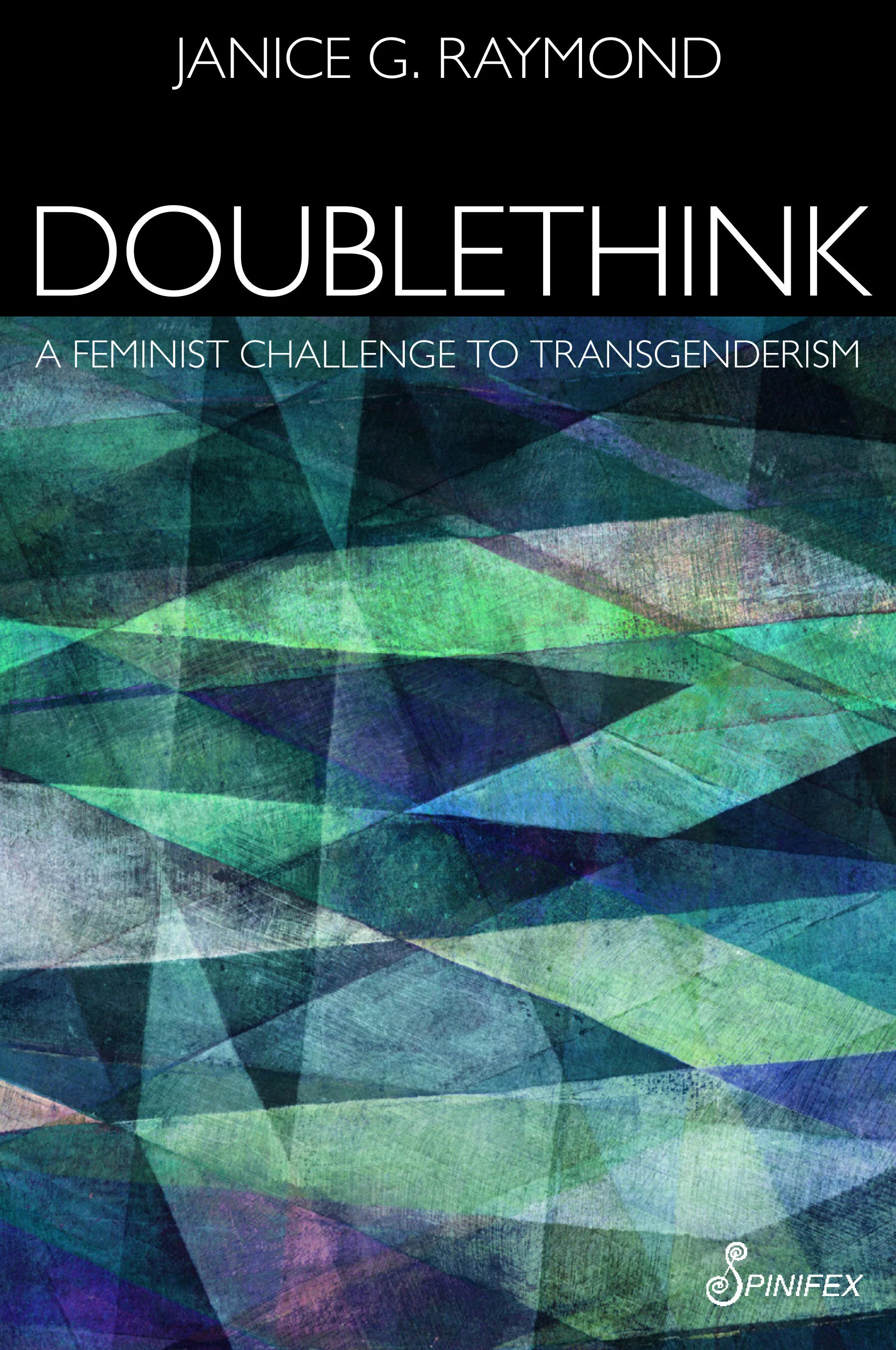
Of course, in my search for reading material I downloaded Janice Raymond’s The Transsexual Empire. The Making of the She-Male, originally published in 1979 —and available for free on her website— and I put my hands on Gender Hurts. A Feminist Analysis of the Politics of Transgenderism, by Sheila Jeffreys, published in 2014, as soon as I could. I remember the excitement I felt while reading those two books. Raymond and Jeffreys saw the transgenderist backlash coming with great clarity. All the best arguments and analyses and the most insightful observations were there. I’m sure they are more impressive now that we know for certain that they were right (so right!). There was one other book, the compendium Female Erasure, edited by Ruth Barret, and that’s about it. There was plenty of reading and audiovisual material in the internet, typically in blogs, podcasts, social media (for example, Meghan Murphy’s Feminist Current podcast), but a glaring scarcity of books.
Years later, as the problem with transgenderism became more pressing and widespread, some books came out: In 2020, Abigail Shrier’s Irreversible Damage: The Transgender Craze Seducing Our Daughters. In 2021, Helen Joyce’s Trans: When Ideology Meets Reality, and Kathleen Stock’s Material Girls: Why Reality Matters to Feminism. I believe they are among the best selling books on transgenderism written from a critical viewpoint. They are good reading material, for sure, and there’s a lot to learn from them. The problem is, I think, they weren’t feminist enough. And all three of them referred to men who do womanface as ‘she’. This was a huge problem. As Julia Long has been warning for years, when you call a man she you are participating in the delusion which gave rise to the problem in the first place.
But there’s something else: they seem not to know that some great feminists were writing about the subject years before. If their books had been a dissertation, the thesis advisor would have told them: ‘You have to do a research and find what has been written about this topic before’. But no, they didn’t do the research on their own, and nor Helen Joyce nor Abigail Shier quote Jeffreys or Raymond. Stock only mentions Jeffreys once, and to make an invalid argument at that.
In 2022 I was invited by a Mexican publisher to write a book on the subject. They understood there had to be an open public discussion about transgenderism, and a book explaining what was all that about was needed in the Spanish-speaking world. I wrote it, and it still is the only comprehensive book on gender identity and transgenderism from a feminist viewpoint written in Spanish, but in the end they didn’t publish it, because of threats by transactivists. I self-published it in Spanish that same year, and Spinifex Press, to whom I am very grateful, gave it a place in their wonderful radical feminist catalog in 2024, with some changes and additions, the result of fruitful comments by Susan Hawthorne and Renate Klein, that enriched it. I must say a new edition in Spanish, now published in Spain by Planeta, with the same revisions as the English edition, is available.
I wrote the book I myself was looking for in February 2017, when I started to obsessively research into the matter. So, in 2022, when I sat in front of the keyboard, most of the work was already done. It was clear to me that the future of feminism and of women’s rights depended on countering the awfully misogynistic ideas spread by gender identity ideology, and it was an urgent task, one of the most crucial for feminism in our time.
Now I had to organise the information, present both sides in a truthful way from the main sources, state the arguments as clearly as possible. While writing it, the biggest challenge was to be original to a certain point, even if Raymond and Jeffreys had already written the best books about the subject.
But many things had happened since 1979, of course, and even since 2014, when Gender Hurts came out. In the second decade of the 21st century, transactivism grew exponentially around the world, as well as a vibrant global feminist movement trying to counter it, with infinitely fewer money but with much better arguments, and truth and justice on their side. So, the history to be told was happening right in that moment, and many people, especially women, now were speaking and writing about it. There were several new developments on gender identity ideology and practice around the world, which offered great examples to be presented and studied.
New generations of readers were beginning arriving to some stand against female erasure and all the dangers posed by trans rights activism, but without necessarily having the much needed feminist clarity. Many of them were, so to say, spontaneous feminists. Which is great, but going a little deeper into the theory wouldn’t do them any harm. I have no doubt in my mind that the radical feminist analysis started by Raymond and built upon by Jeffreys has the most predictive, explanatory and descriptive power. In other words, it is the best way to approach the subject.
Not only transgenderism is incompatible with feminism, but nobody with a truly feminist understanding of how society works and how children are groomed for femininity and masculinity could ever believe there is such a thing as a man trapped in a woman’s body, or entertain for just a second the idea of there being trans children. Also, familiarising themselves with feminism is way better and more effective than any psychological therapy for girls who think they are transgender. Many detransitioners can assert it.
Even so, I see many feminists, including ones who call themselves radical or abolitionist, who oppose transgenderism but believe there might be a way to reach a compromise and, moreover, that this is somehow desirable! Maybe, they think, they could accept some men as women, because ‘not all transwomen’… For example, those who really are dysphoric… or those who don’t go along with the excesses of transgenderism… or those who have gone through some kind of surgical procedure… Every time a feminist claims something like this, she is sadly showing she lacks feminist analysis.
So, in short, what I aimed to do with this book was presenting, both to feminists and the general public, the history of the theory and practice of gender identity, it’s brazen lies, it’s worrying and plentiful dangers to women and society on the whole, while bringing feminist analysis closer to them and offering information and arguments to help them refine their own thoughts on the subject using critical thinking.
The great concept at the heart of all this is that of gender identity. But this concept is a trap. Far from being liberating, the idea that people have a gender identity is not only false but counterproductive – it reinforces sexist roles and it is a serious backlash to women’s and girls’ rights.
The concept of gender identity does not come alone, but in a package: an ideological package favoured or actively promoted by governments, the mainstream media, the entertainment industry and the companies that control social media. There is wide access to the views of believers on gender identity but little access to the views of agnostics and atheists. In such circumstances it is difficult or impossible for the public to form a free and informed opinion. My book seeks to reduce that imbalance.
I do not claim to be impartial. It would be an unattainable aspiration, and I am not interested in disguising my position, but in making it clear. I present the position and reasoning of other parties in their own words, without lying or misrepresenting them, straight from the sources whenever possible, be they books, articles, tweets, lectures, outbursts or TikToks. I criticize not them, but their ideas, and with facts and arguments, not emotional manipulations. It is much more interesting and fun to analyze their discourse than to hurl insults and disqualify them beforehand, as is often the case when believers in gender identity criticize us.
For those watching from the sidelines, it can all be very confusing, starting with the fact that both sides claim to be feminist and also because there is a key concept, gender, which everyone uses in their own way, with sometimes opposing meanings. One of my main aims in what follows is to dispel the confusion. But I did not want to write a book that would be a sterile introduction to the subject and its basic aspects. I do not stay on the surface: I rather dive into the discussions and ideas so that the reader who is on neither side is critically involved and has, let’s say, an immersive experience. I also tried to bring new reflections, points of view and arguments, even to those who know the subject well and share my position.
Understanding all things related to gender is easier than the language commonly employed would lead one to believe. The first chapter, ‘Gender: “It’s Complicated”’ traces the origins of the current uses of the term, tells a bit of history, and lays the groundwork for further discussion around transgenderism. I wrote it, like this whole book, in such a way that it is very clear to those who are new to these issues but also poses something different and new to those who know them well. I explain the concept of gender identity and argue that replacing the verifiable material category of sex with the unprovable esoteric category of gender identity in laws and policies of lay countries is a serious anomaly, with damaging consequences.
The second chapter, ‘Three Theories Around Transgenderism’, also analyzes a concept, in this case that of transsexuality, as well as the ideas that feed it and the context in which it arose. Historical background is provided and the main positions (medical-sexological, transgender and radical feminist) are reviewed and schematized to show their weaknesses and strengths. All this helps to put into perspective the agreements and disagreements between the different models and to assess which of the three has the most revolutionary and subversive power. In one section, I take a typical transgenderist allegation and then calmly break it down and highlight its flaws. The same exercise can be repeated with all transgender discourses before allowing oneself to be blindsided by them.
The onslaught of gender identity doctrine and militancy against women begins in the realm of language. With the imposition of invented meanings and a contrived use of words, a whole system of beliefs and a politics are imposed, which bring with them considerable social damage. In the third chapter, ‘In the Beginning Was the Pronoun’, I argue that it is a very bad idea to give in to blackmail and use so-called preferred pronouns. When we talk about a man in the feminine, we are accepting the interlocutor’s conclusion right off the bat. The statement ‘Trans women are women’ is false, and calling a man who claims to have a female gender identity a woman or referring to him as she makes us participate in that farce in a condescending way. We are told that it is basic empathy and that it costs us nothing, but this too is false. It starts with using their pronouns and ends with ceding women’s spaces and annihilating our sex-based rights.
Chapter 4, ‘The Idea of the Transgender Child’, recounts when, how and why the concept was created and what political purposes it serves. I argue, yes, that trans kids do not exist, but I provide ample arguments and data to support the claim. This, of course, does not mean that there are no children and adolescents who wish to be the other sex or who, influenced by ideas floating around, say they are trans, but the interpretation favoured in this book is very different from that given by the transgenderist and medical-sexological models. To accept that there are trans kids is to accept a set of beliefs that are deeply sexist and to endorse a form of child abuse and a rejection of homosexuality. Gender identity doctrine claims to question and wanting to end sexist roles and stereotypes that are instilled through socialization, but at the same time postulates that children who reject those stereotypes are a special category of people who were born with a gender identity that does not match their sex: that is, sexist roles are both a social construct and an innate trait. Posing the existence of transgender kids instrumentalizes children for the transgender cause and, far from celebrating difference, contributes to its destruction.
To those who ask, ‘And what is the problem? How does it affect you?’ the final chapters give 14 different answers with their respective examples, arguments and evidence. Feminism and women-only spaces (toilets, shelters, prisons) are the main target of transgenderism. Indeed, feminism is a word devoid of meaning if we are unable to recognize female oppression because we pretend it’s impossible to tell a woman from a man. Women-only spaces disappear the minute a man who claims he’s a woman is admitted – but the need for these female enclaves does not fade away just because some theorists declared sex is irrelevant and many people are buying it. The doctrine of gender identity also wreaks havoc on children and young people, on some families, on our ability to study and deal with male violence, on measures to ensure equal representation in politics, on the gay and so-called LGBT community, on the lesbian movement, on some people who have made a gender transition, on the partners and wives of trans-identified people, on women’s sport, on democracy, and so on. It is particularly damaging to freedom of speech and our aspirations to live in an open and fair society. The institutionalization of an anti-scientific and anti-women doctrine should not only concern feminists, but anyone interested in respect for human beings and their fundamental rights.
In 2025 we are witnessing how every day somebody opens their eyes and reaches the famous ‘peak trans’… Soon they are the biggest experts, many of them males, without having even heard about the feminists who knew it and analysed it long before. Not only they are reinventing the wheel, but they are not giving credit where it is due. Genevieve Gluck and the Reddux team know this very well.
Also, without a radical feminist analysis, the risk of backlash is huge. If people like Matt Walsh (remember the guy from the What is a Woman 2022 documentary?) have their way, as soon as women have their rights back from trans rights activists, old school men’s righst activists will take them away once again. The reaction against transgenderism will be yet another backlash against feminism. Non-feminists don’t want harmful sexual stereotypes done with: they only want them restored to their proper place.
People are increasingly angry about the transgendering of kids, the transgender indoctrination in schools, the invasion of women’s sports by men who claim to be women, the cancellations, the attacks against free speech and against logic, the absurdity of it all… That is a good thing. But… they blame feminists for it! The public at large knows no nuances regarding this. They lump together feminism and transactivism. This is not surprising, since so many so-called feminists have turned their backs on women and have handed feminism to men in womanface on a silver platter. We saw some of them here at the entrance, proudly stating ‘This woman supports her trans sisters’.
It is essential that lesbian radical feminists are recognized as the ones who first alerted us as to the dangers of transgenderism if we want to avoid a scapegoating of feminism. Also, it is the only way out of male domination and all kinds of men’s rights movements, including transgenderism.
But let’s make sure that in this struggle we recognise the women who came before us. Feminism doesn’t have to be reinvented from scratch each time. Let’s make use of the feminist analysis already done to build upon it and go forward. Otherwise, not only are we losing valuable time and making avoidable mistakes along the way, but by not recognising their work, we are also doing to fellow feminists that which men have done to women writers and women’s rights activists since time immemorial: erase them from history, pretend they never existed, so as to destroy their movement and their huge potential to change society and put an end to male domination.

Thousands of pages of books, millions of characters in tweets and hundreds of blogs have been devoted to explaining the distinction between sex and gender, but far from clarifying anything, bewilderment for ordinary people is only growing.
The concept of gender is central to a vaguely progressive-looking set of ideas based on the maxim that people possess a so-called ‘gender identity’. The real problem arises when this nebulous concept, bandied about with different and even incompatible meanings by different groups, is used as a prop to introduce policies that mark a huge setback for the rights of women and girls. The general public, watching the controversy from the sidelines, is confused by conflicting claims about whose rights are being infringed.
In this incisive book, Laura Lecuona sets the record straight by reviewing the origin of the current uses of the key term gender and exploring the main theories of transgenderism. She discusses what lies behind the claims about pronoun usage and warns about the consequences of promoting the recognition of so-called transgender children. She points out the collateral damage arising from this activism, from the perpetuation of sexist roles to limitations on freedom of speech. She dares to confront the accusations of transphobia that often inhibit those who question the foundations of this financially-driven and increasingly dominant ideology and shows the devastating effects transactivism is having on women, both socially and politically.
Gender Identity: Lies and Dangers is essential reading for the urgently needed conversation we need to have about whose interests are being served with the advancement of transgender ideology and what this means for women’s sex-based rights.
Laura Lecuona’s book is remarkable in scope and a dose of political sanity that is badly needed.
—Janice G. Raymond
FEBRUARY 2024 | ISBN 9781925950908 | Paperback | 378 pages


Read more about Laura Lecuona here.
Reading list recommendations




Laura Lecuona
Thousands of pages of books, millions of characters in tweets and hundreds of blogs have been devoted to explaining the distinction between sex and gender, but far from clarifying anything, bewilderment for ordinary people is only growing.
The concept of gender is central to a vaguely progressive-looking set of ideas based on the maxim that people possess a so-called ‘gender identity’. The real problem arises when this nebulous concept, bandied about with different and even incompatible meanings by different groups, is used as a prop to introduce policies that mark a huge setback for the rights of women and girls. The general public, watching the controversy from the sidelines, is confused by conflicting claims about whose rights are being infringed.
In this incisive book, Laura Lecuona sets the record straight by reviewing the origin of the current uses of the key term gender and exploring the main theories of transgenderism. She discusses what lies behind the claims about pronoun usage and warns about the consequences of promoting the recognition of so-called transgender children. She points out the collateral damage arising from this activism, from the perpetuation of sexist roles to limitations on freedom of speech. She dares to confront the accusations of transphobia that often inhibit those who question the foundations of this financially-driven and increasingly dominant ideology and shows the devastating effects transactivism is having on women, both socially and politically.
Gender Identity: Lies and Dangers is essential reading for the urgently needed conversation we need to have about whose interests are being served with the advancement of transgender ideology and what this means for women’s sex-based rights.
FEBRUARY 2024 | 378 pages